
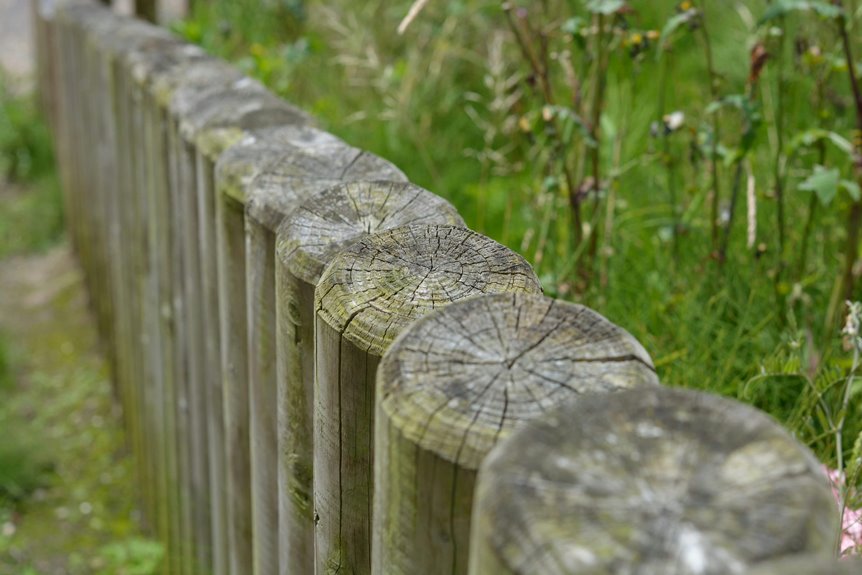
I’ve buried fence posts way too shallow—trust me, frost heave and wind don’t forgive that mistake. The trick’s using the 1/3 rule: bury at least one-third of your post’s length underground. So a 6-foot fence needs a 9-foot post buried 3 feet deep. But here’s where I learned the hard way: taller fences in windy areas need deeper holes, and your soil type matters big time. Stick with me through these five steps, and you’ll nail the exact depth for your situation.
Step 1: Check Frost Line Depth and Local Code Requirements
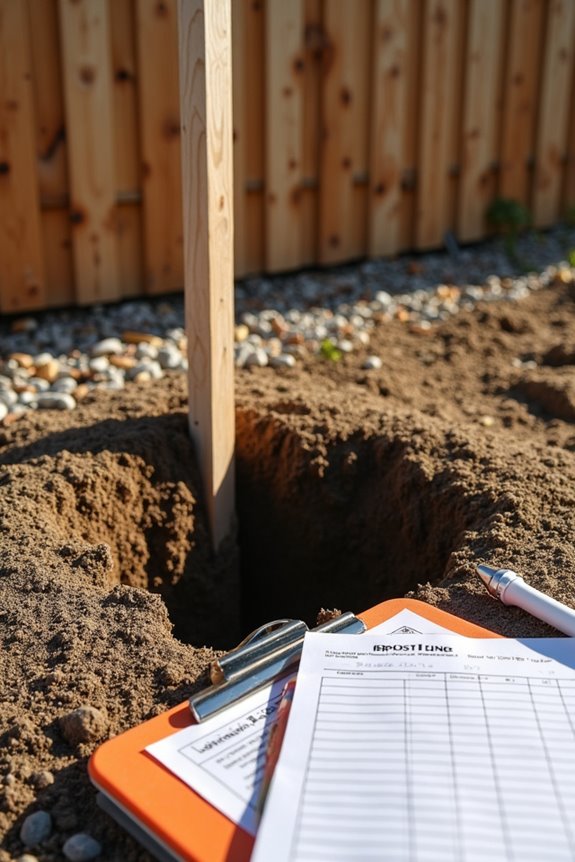
Why does it matter how deep you dig? Because frost heave—that sneaky force of frozen soil—can push your fence posts right out of the ground come spring. I learned this the hard way after my first fence project went sideways.
The frost line is where ground freezes in winter, and digging below it keeps your posts stable through seasonal shifts. Your local building codes tell you exactly how deep you need to go in your area. In Nashville, for example, the frost line sits around 6–10 inches, so frost heave risk is pretty minor.
Before you even rent a auger, check your local code requirements and call for utility guidelines. Trust me, knowing your soil conditions and digging guidelines upfront saves major headaches. Get this step right, and you’re golden.
Step 2: Calculate Post Depth Using the 1/3 Rule
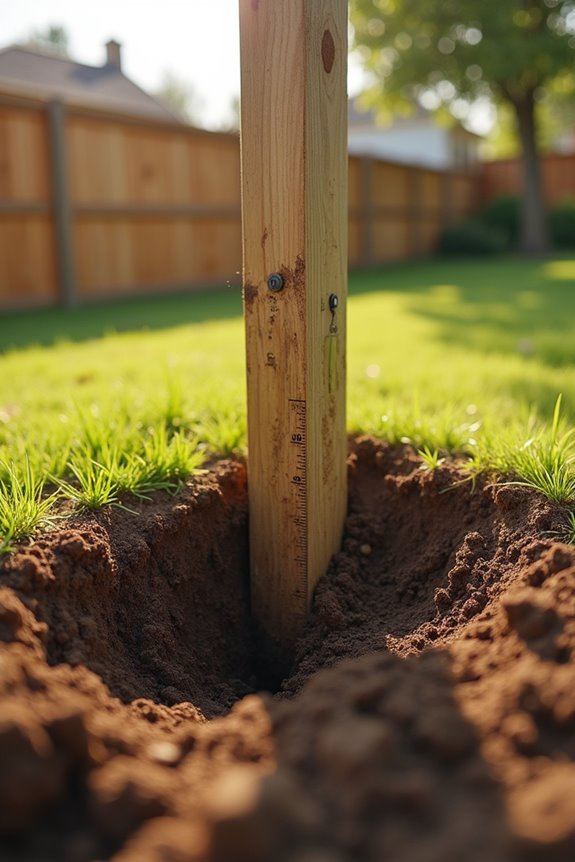
Now comes the math part—and don’t worry, it’s way simpler than it sounds. I’ll use the 1/3 rule, which means burying at least one-third of your post’s total length underground. This protects against wind load and frost heave, especially on Nashville’s exposed terrain.
Here’s your quick reference:
| Fence Height | Total Post Length | Burial Depth |
|---|---|---|
| 4 feet | 6 feet | 2 feet |
| 6 feet | 9 feet | 3 feet |
| 8 feet | 12 feet | 4 feet |
That said, soil type matters. Clay soils need deeper installation depth than sandy soils do. If you’re digging in clay, go toward the higher end. Sandy ground? Stay closer to minimum. Check your soil before finalizing post depth—it’s the difference between a fence that lasts decades and one that wobbles after two winters.
Step 3: Increase Post Depth for Wind and Fence Height
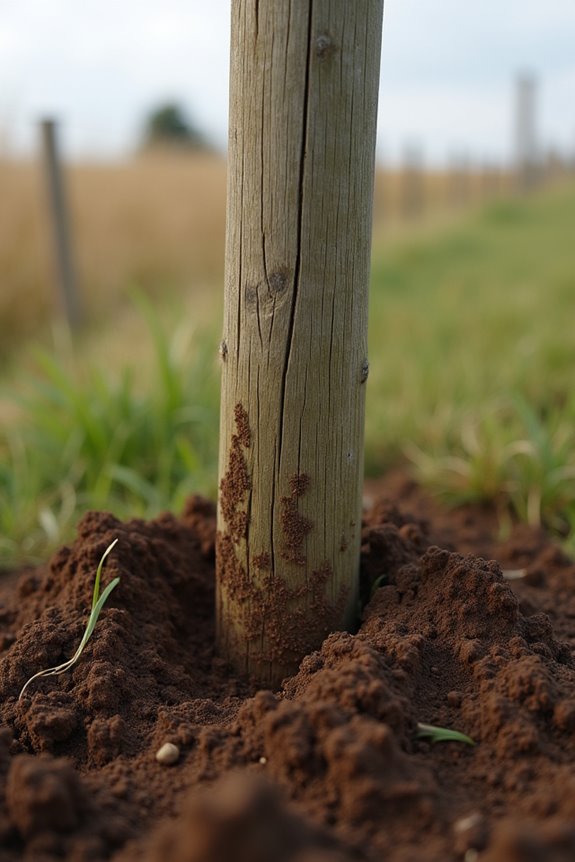
that 1/3 rule I mentioned? It’s really just your starting point. If you’re dealing with taller fences or windy terrain—especially hillside exposure—you’ll need to dig deeper. Wind-load forces push hard against your posts, creating lateral forces that’ll make shorter embeds fail faster than you’d expect.
I learned this the hard way on my Nashville lot. My 6-foot fence needed serious reinforcement. I increased my post depth to 36 inches minimum, then added concrete sets and ballast gravel for extra stability. Your soil type matters too—rocky bedrock demands different approaches than clay.
Check your frost line and trench depth requirements for your area. Deeper posts plus proper concrete anchoring mean your fence stays standing through whatever weather comes.
Step 4: Dig the Right Hole and Set Posts in Concrete
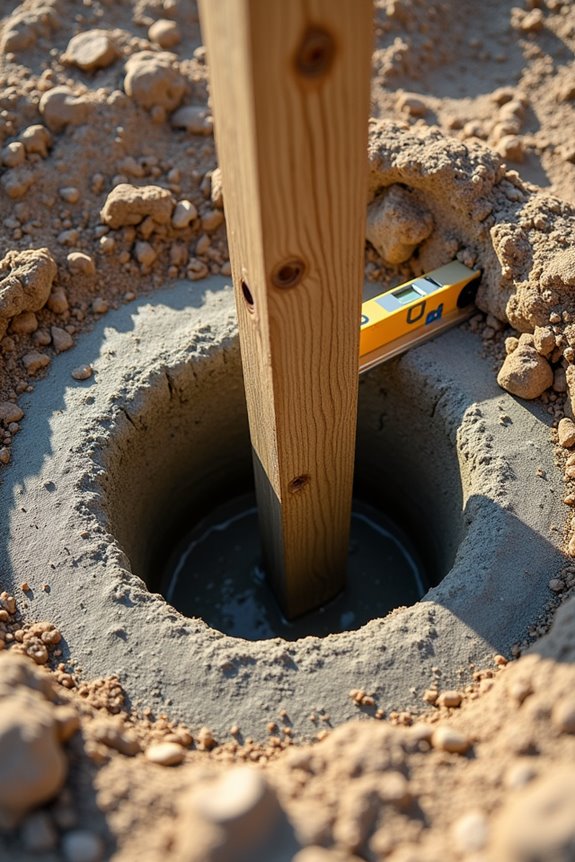
Here’s where things get physical—you’ve got to dig the right hole or everything above it’ll wobble.
I’ve learned this the hard way. Start by digging your post hole 24–30 inches deep, making the width about three times your post diameter. For a standard 8-foot post, aim for at least 80 centimeters deep. Add 10–15 centimeters of gravel bed at the bottom for drainage. Your soil type matters—clay needs deeper holes, sandy soil less so.
| Soil Type | Hole Depth | Special Notes |
|---|---|---|
| Clay | 32+ inches | Compact, holds moisture |
| Sandy | 24 inches | Drains quickly |
| Rocky | 30 inches | May need adjustment |
When backfilling, use your level constantly to keep alignment perfect. Set posts in concrete and let it cure fully before attaching anything.
Step 5: Require a Written Warranty and Verify Installation Quality
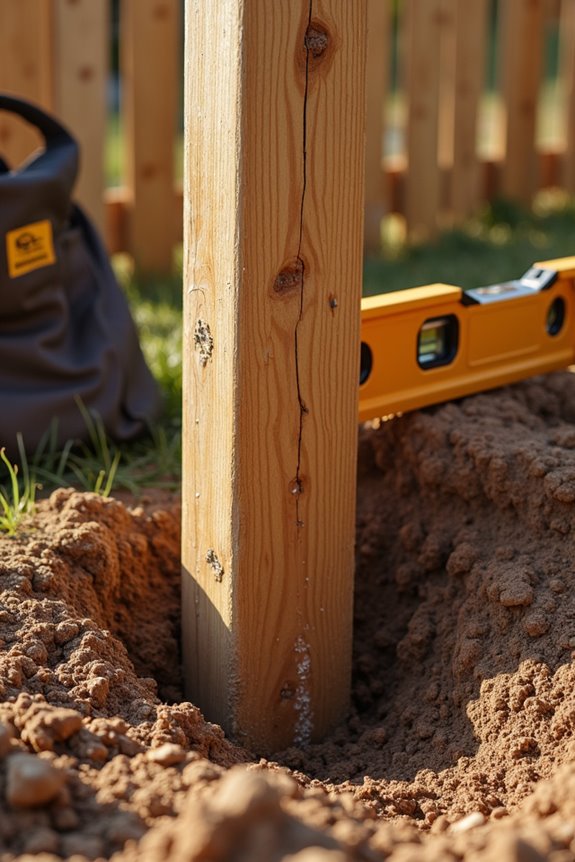
Once your posts are set in concrete and curing, you’ve done the hard part—but don’t celebrate yet. A written workmanship warranty protects you when things go wrong. I’ve learned this the hard way after watching a neighbor’s fence lean after just two years.
Your warranty should cover these essentials:
- Specific fence post depth targets and concrete setting standards tied to Nashville conditions
- Rock-terrain fee disclosures and soil-based depth adjustments upfront, so no surprises later
- Coverage across all site conditions, including hillside lots and limestone bedrock
Before signing anything, verify the contractor’s licensing and association status. Ask how long that post-depth warranty lasts and whether it covers installation quality issues. Trust me—getting this documented now saves serious headaches down the road.