Before you break ground, I’ve seen folks waste $80K because they skipped the basics. First, call your planning department—zoning rules vary wildly by location. Walk your actual lot, not just the property lines, to spot utility lines and real space constraints. Budget $50K–$150K minimum, then add cushion for surprises. Design around your actual needs, whether it’s a guest room or rental income. Decide if you’re grid-connected or off-grid. Know your city’s setback and height limits. Finally, hire professionals for permits and foundations—DIY mistakes cost way more than you’d save. Stick around for the breakdown of each step.
Before Building a Backyard Tiny Home: Check Zoning Laws
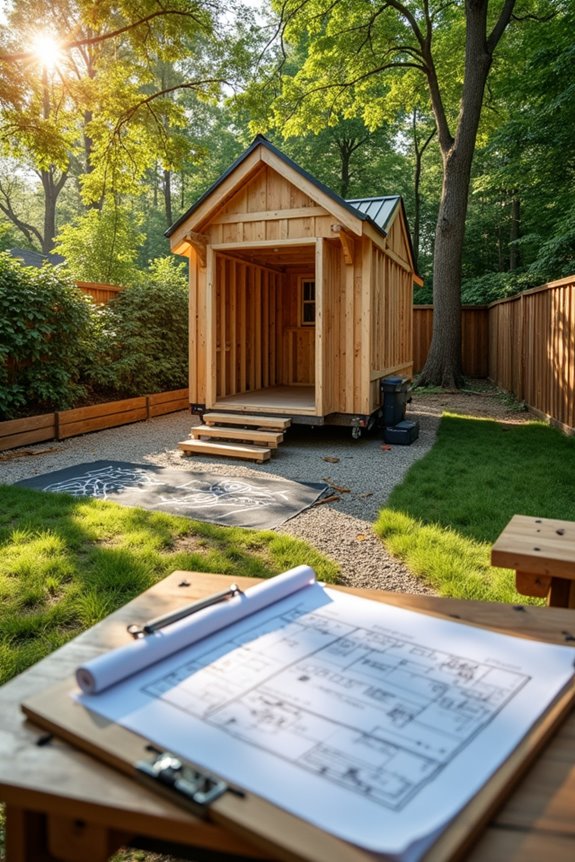
Have you ever noticed how one neighbor’s backyard shed looks totally different from another’s, even though they live on the same street? That’s zoning laws at work, and I learned this the hard way when I almost built my tiny home without checking first.
Before you grab a shovel, you’ve got to understand your local zoning laws. Different cities treat backyard structures differently. Some classify them as ADUs—accessory dwelling units—with specific rules about size, setbacks (that’s the distance from property lines), and occupancy limits.
I called my municipal planning department, and honestly? Best decision ever. They explained which permits I’d need and whether my structure could be permanent or had to stay relocatable. Trust me, checking early saves headaches later.
Walk Your Lot: What You’re Actually Working With
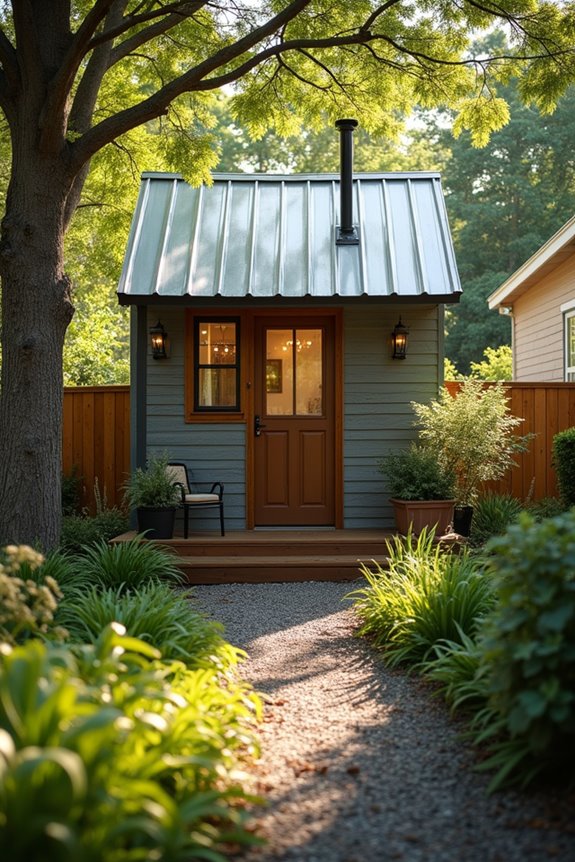
Before you break ground, I’d grab a measuring tape and actually walk your property—you’d be surprised how different 50 feet looks on paper versus in person. Check where your water line, sewer connection, and electrical boxes sit, because trenching to reach utilities can eat up your budget faster than you’d think. Then map out where you’re placing that tiny home, keeping in mind setback requirements and making sure you’ve got a clear path for delivery trucks to haul materials without destroying your neighbor’s fence (trust me, I learned that one the hard way).
Assessing Property Dimensions
When’s the last time you actually measured your backyard? I’ll admit—I didn’t either until I started planning my tiny home. You’ll need your lot dimensions and property boundaries mapped out before anything else happens. Grab a tape measure, and walk the perimeter. Check your local ADU regulations and zoning codes; they’ll tell you exactly how much space you can actually use. Setbacks are the real game-changer here. Most places require 5–20 feet between your structure and property lines, which shrinks your usable footprint faster than you’d think. I learned this the hard way. Call your local planning department or check online—they’ve got the specifics for your area. Knowing these constraints upfront saves headaches and money down the road.
Utility Access and Placement
Now that you’ve got your lot mapped out, it’s time to figure out where the water, power, and sewer lines actually are—and where they need to go. I’ll be honest: I underestimated this step on my first project, and it cost me extra time and money.
Connecting to existing utilities simplifies construction, though permits and extensions run $5,000–$15,000. Your electrical upgrades might require a licensed electrician to run new circuits from the main panel if your tiny home’s load exceeds current capacity.
For water/sewer connections, you’ve got options. Grid-connected means professional installation, while off-grid systems like rainwater harvesting and composting toilets offer independence but demand upfront investment and regulatory navigation.
Here’s my advice: plan your lot layout strategically. Consider setbacks, trenching accessibility, and future maintenance. This groundwork transforms utility access from stressful to manageable.
Backyard Tiny Home Costs: Budget $50K–$150K (Plus Hidden Costs)
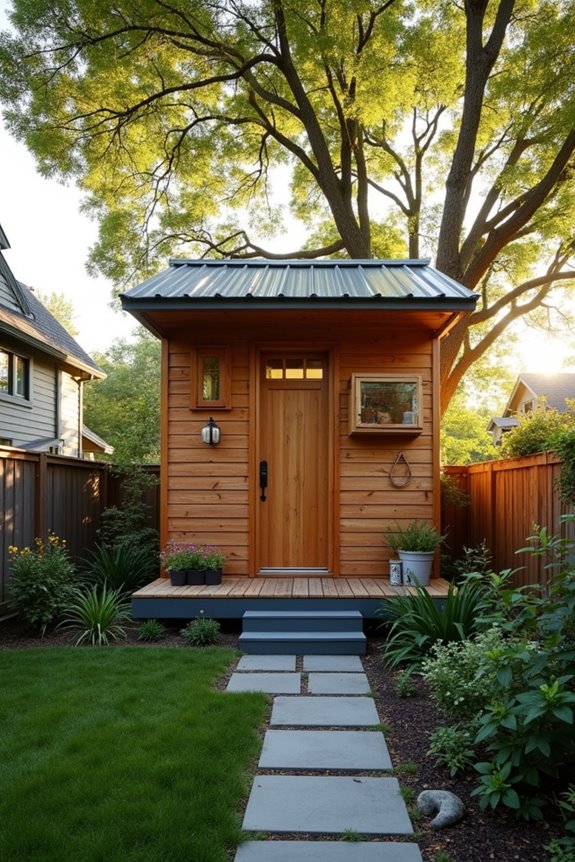
How much’ll it actually cost to build a tiny home in your backyard? I’ll be honest—it’s a bigger investment than I initially thought. Most projects run $50,000 to $150,000 total, and that’s before hidden costs sneeak up on you.
Here’s how your budget typically breaks down:
- Design and permits ($5,000–$15,000)
- Site prep work ($3,000–$10,000)
- Shell construction ($25,000–$60,000)
- Systems and finishes ($30,000–$75,000 combined)
The tricky part? Utility connection fees, landscaping restoration, and potential property tax increases can add thousands more. I’ve seen projects balloon quickly when unexpected expenses pop up. Financing options like home equity loans or personal loans help spread costs, though they affect your monthly payments long-term. Plan conservatively—you’ll thank yourself later.
Design Your Space Around What You’ll Actually Use It For
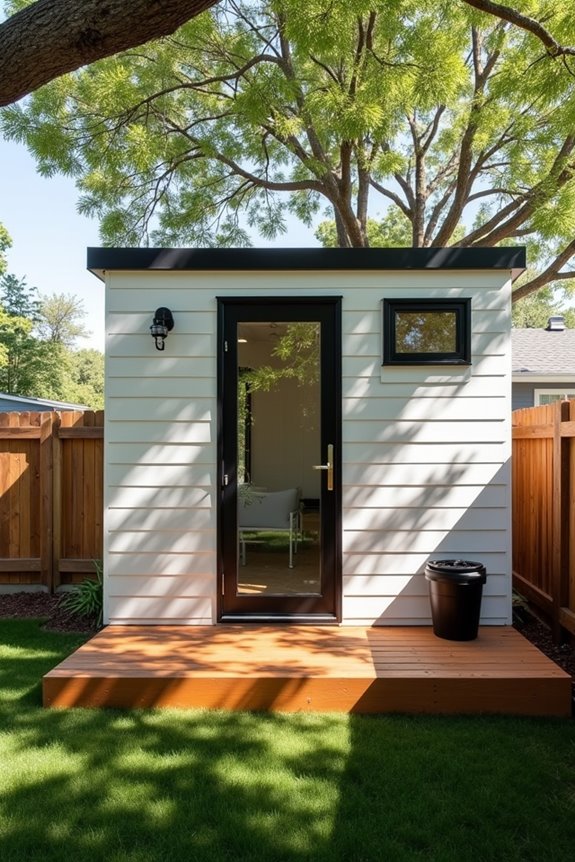
Before you nail down a single design choice, I’d ask myself: what’s this space really for—a home office, guest room, rental income, or something that shifts between all three? Your layout should follow your lifestyle, not the other way around, because I’ve seen too many tiny homes with fancy features that nobody actually uses. Once you nail down your primary purpose, you can make smarter calls about everything from desk placement to kitchen size, which honestly saves money and keeps you from building regret into your foundation.
Intended Purpose Drives Layout
Why does your tiny home’s layout matter so much? Because cramming furniture into random spots won’t work—you’ll end up frustrated and wasting precious square footage.
Your intended purpose drives everything. Before you nail down a single layout decision, I’d ask myself these questions:
- Will I work from home? If yes, carve out dedicated workspace with natural light and soundproofing away from sleeping areas.
- Do I need guest accommodations? Consider flexible spaces with convertible furniture like Murphy beds.
- How many people sleep here regularly? This determines whether you prioritize one sleeping area or multiple.
- What kitchen setup actually serves my life? A full kitchen or compact kitchenette depends on how you really cook.
Getting honest about your actual needs prevents expensive mistakes later.
Multi-Functional Space Prioritization
Once you’ve figured out your actual lifestyle, it’s time to stop thinking of your tiny home as one big room and start treating it like a puzzle where every piece has to earn its spot. I learned this the hard way after buying a sofa that looked amazing but served zero purposes. Now? I’m obsessed with multi-use furniture like sofa beds and fold-down desks that transform my space instantly. I’ve carved out flexible zones with built-in storage—under-seat drawers, wall-mounted cabinets, toe-kick drawers—that keep clutter hidden. If I need extra sleeping space, I’m eyeing a loft with proper headroom. Even my adaptable exterior access matters; it lets guests feel independent without disrupting my routine. Every inch counts when you’re designing for real life.
Choose: Should You Connect to the Grid or Go Off-Grid?
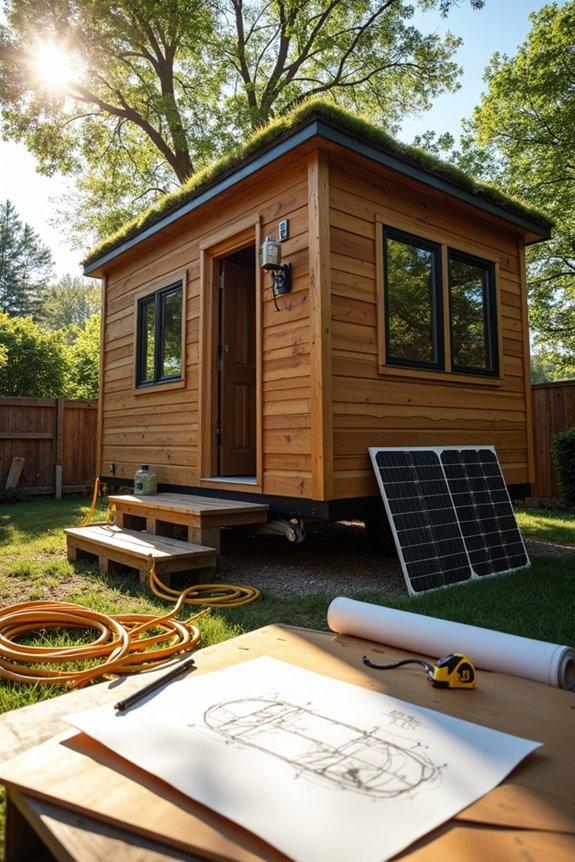
One of the biggest decisions you’ll make when building your backyard tiny home is whether you’re plugging into the main utilities or going it alone.
I’ll be honest—I wrestled with this choice too. Here’s what matters:
- Grid connection means extending water, sewage, and electricity from your main property ($5,000–$15,000)
- Off-grid setup uses solar panels, composting toilets, and rainwater harvesting for independence
- Solar readiness requires checking roof orientation, shading, and battery capacity for cloudy days
- Permitting and regulations vary by location—some jurisdictions favor grid connections while others encourage off-grid living
Your local codes really influence this decision. Some areas offer ADU programs supporting grid connections. Others reward you for going off-grid. Before deciding, chat with your city planning department and check what financing options exist in your area.
Know What Your City Won’t Let You Build (Setbacks, Height, Timelines)
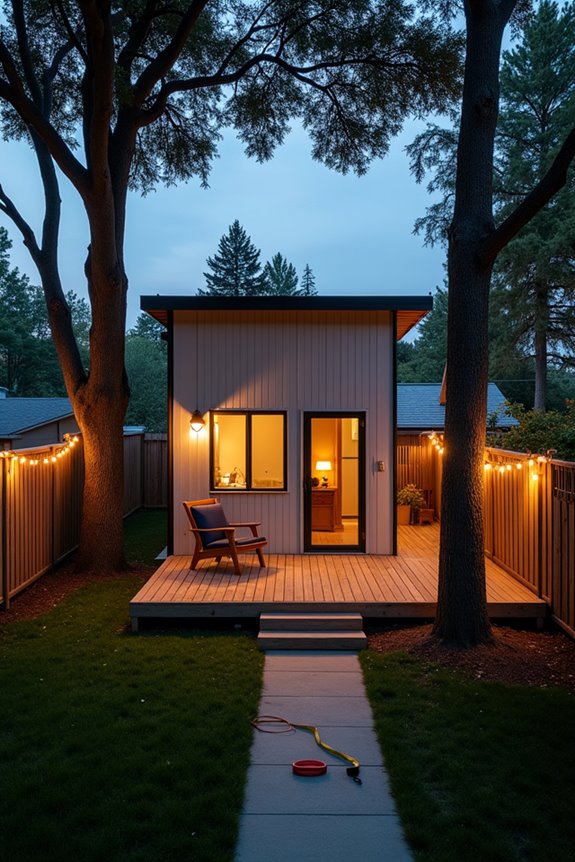
what your neighbor built in their backyard legally might be completely illegal in yours.
Zoning rules differ wildly by location. I discovered this when my perfect tiny home design violated our city’s setback requirements. You’ll need to check your local permitting rules before falling in love with any plan.
| Requirement | My City | Yours? |
|---|---|---|
| Setback Distance | 10 feet | ___ |
| Height Limit | 20 feet | ___ |
| ADU Rules | Allowed | ___ |
Setbacks typically range from 5 to 20 feet from property lines. Height limits usually fall between 16 to 25 feet. Some jurisdictions treat backyard structures as ADUs with specific regulations. Contact your planning department early. They’ll reveal what’s actually possible in your area and save you months of frustration.
Hire Pros or DIY: What You Need to Know
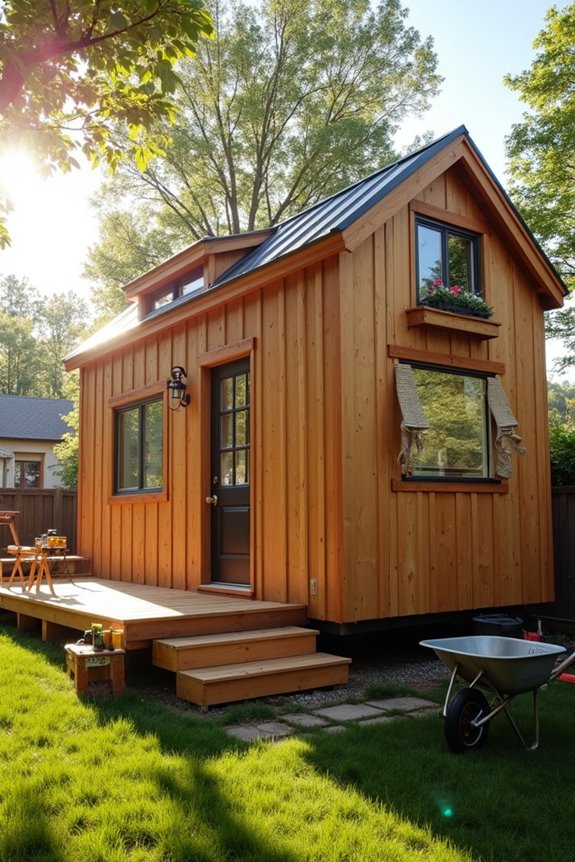
Should you swing a hammer yourself or call in the experts? I’ve learned this question isn’t simple. Here’s what I’ve discovered:
- DIY saves money upfront but risks expensive mistakes with foundations and rework
- Permits and zoning compliance require professionals who understand local rules better than we do
- Utility connections—electrical, water, sewer—need licensed expertise or you’ll face costly re-permitting
- Professional warranties protect your investment way more than your best intentions
Honestly, I’ve seen backyard projects spiral when homeowners skip the pros on critical tasks. A hybrid approach works best: design it yourself, but contract professionals for permits, foundations, and utility connections. You’ll balance costs, stay compliant, and actually finish on time. Your future self will thank you.