

A 100-foot vinyl fence can run anywhere from $1,500 to $7,800—and honestly, I’ve seen folks shocked by that gap. Your height matters (4-foot vs. 6-foot changes everything), vinyl quality affects longevity, color upgrades cost extra, and gates aren’t cheap. Installation labor, tricky terrain, and removing old fencing all add up fast. I learned the hard way that cutting corners on vinyl quality bites you later. Stick around to see exactly where your dollars actually go.
Fence Height and Style: Your Biggest Cost Driver
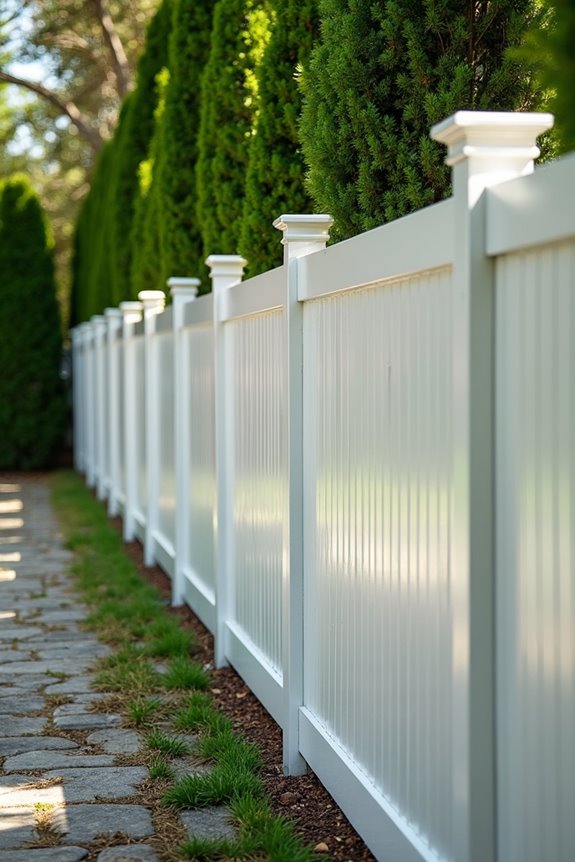
Why does a 6-foot privacy fence cost nearly twice as much as a 4-foot picket fence? I’ll be honest—I was shocked too when I first priced materials. The fence height directly impacts your vinyl fence cost because taller fences require more materials and stronger posts to stay stable. Deeper post holes mean more labor during installation costs.
Here’s what I learned: a basic 4-foot picket runs about $15–$30 per linear foot, while a 6-foot privacy fence jumps to $30–$60 per linear foot. That’s a real difference on your 100-foot project.
Style matters just as much. Solid privacy designs need more vinyl than open styles like split-rail. Add lattice tops or premium vinyl, and you’re pushing toward $6,000–$7,800 total. Your fence style choice shapes your entire budget.
Better Vinyl Costs More but Lasts Longer
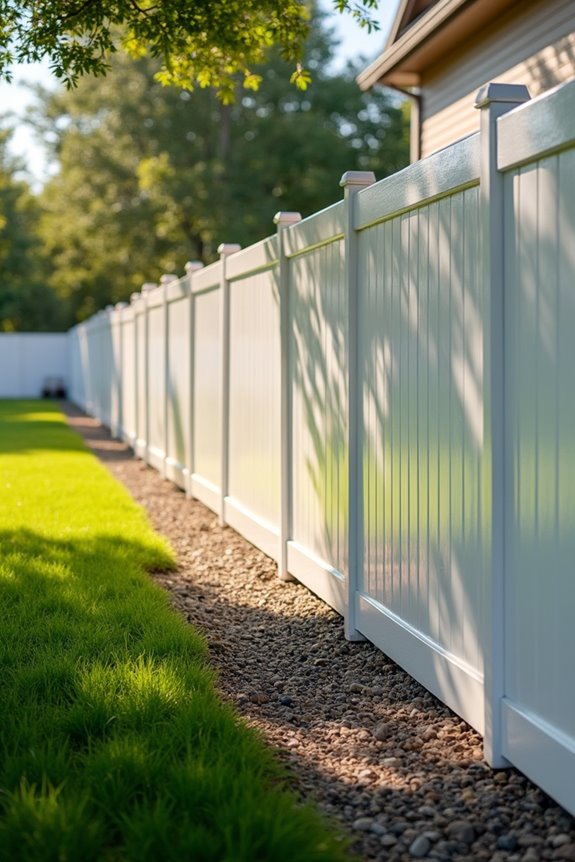
Once you’ve settled on your fence height and style, you’ll face another big decision: what quality of vinyl you’re actually buying.
I learned this the hard way. Cheaper vinyl seems smart until it cracks after three years. Premium vinyl costs more upfront, but here’s the thing: thicker profiles with UV inhibitors mean your fence resists fading and wear for decades. Reinforced panels beat hollow ones too.
Cheaper vinyl cracks within years. Premium vinyl with UV inhibitors and reinforced panels lasts decades—worth the upfront investment.
Yes, you’ll pay 10-30% extra for color or wood-grain finishes. But consider maintenance savings. Higher-grade vinyl material quality requires minimal upkeep, while budget options demand constant repairs.
Think of it as choosing between replacing your fence twice or investing once in longer-lasting durability. The long-term value of quality vinyl? Absolutely worth it.
Color and Finish: Expect 10–30% More to Your Fence Cost
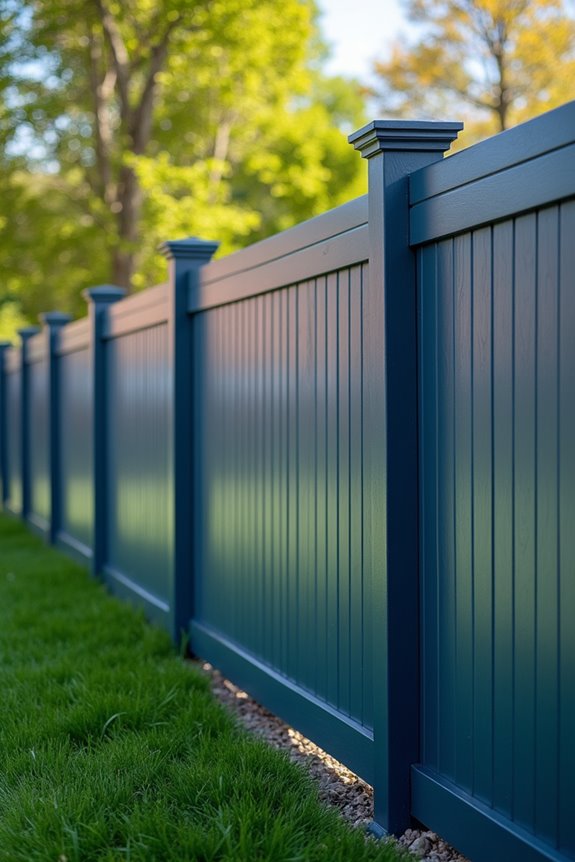
I picked basic white vinyl because, hey, it’s the cheapest option, right? Wrong. I quickly learned that color and finish options can bump up your vinyl fence costs by 10–30%. Black vinyl? That’s the priciest choice. Colored vinyl and wood-look vinyl sit in the middle. Premium finishes and texture finishes push costs even higher.
| Finish Type | Price Increase | Per Linear Foot |
|---|---|---|
| Basic White | 0% | $2.25–$6.50 |
| Colored Vinyl | 10–20% | $2.48–$7.80 |
| Wood-Look Vinyl | 15–25% | $2.59–$8.13 |
| Black Vinyl | 20–30% | $2.70–$8.45 |
| Premium/Texture | 25–30% | $2.81–$8.45 |
Smart planning means knowing these finish options upfront.
Add-Ons That Boost Your Cost: Gates and Upgrades
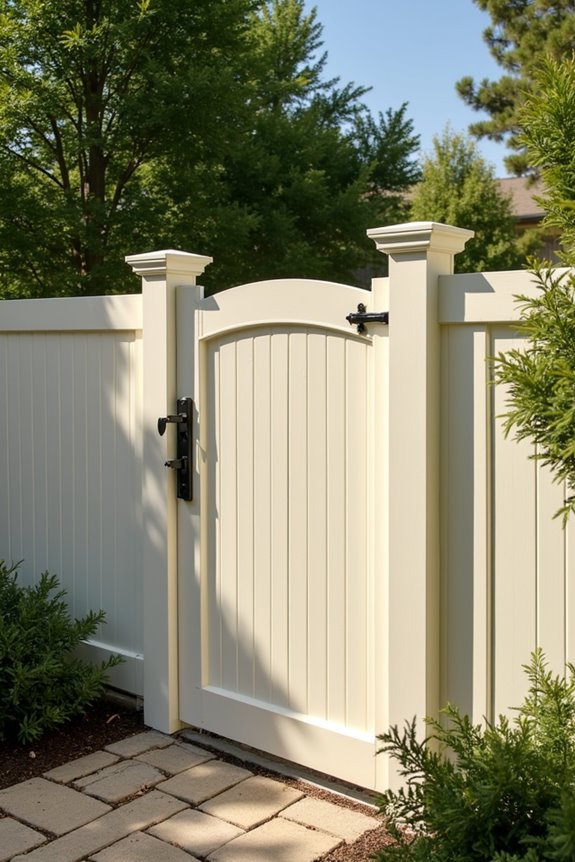
those add-ons you didn’t plan for. I learned this the hard way when I decided gates and upgrades were “optional.” They’re not.
A single gate typically runs $225–$650, depending on whether you want a basic model or an automated gate that opens with a button. Then there’s post caps, lattice tops, and decorative features that look amazing but add serious costs. I’m talking $60–$78 per foot when you go all-in.
What surprised me most? The labor costs. Installing gates and accessories requires extra site preparation and alignment work. Your contractor needs time to get everything perfectly positioned around your perimeter fencing. Those post caps and decorative panels? They’re worth it, but budget accordingly.
Professional Installation vs. DIY: Where Labor Hits Hardest
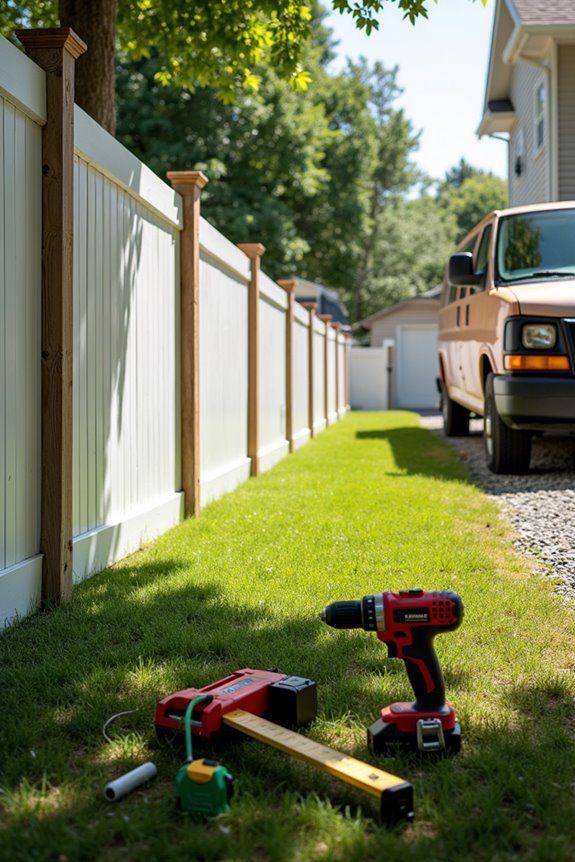
Ever wondered why your contractor’s bill is almost as much as the fence itself? Professional installation typically accounts for 20–30% of your total vinyl fence cost. I learned this the hard way when I got my first quote.
Here’s what impacts your labor costs on a 100-foot fence:
| Task | DIY Time | Professional Cost |
|---|---|---|
| Post digging | 16+ hours | Included in labor |
| Concrete work | 8+ hours | Included in labor |
| Panel assembly | 12+ hours | Included in labor |
| Gate labor | 4+ hours | $225–$650 extra |
Tough site conditions—rocky soil, uneven terrain, difficult access—make everything slower and pricier. DIY installation saves money but demands expertise for proper alignment. I’d honestly recommend professional installation unless you’re comfortable with concrete mixing and post digging. It’s worth the investment.
Uneven Terrain and Rocky Soil: Why Your Yard Costs More
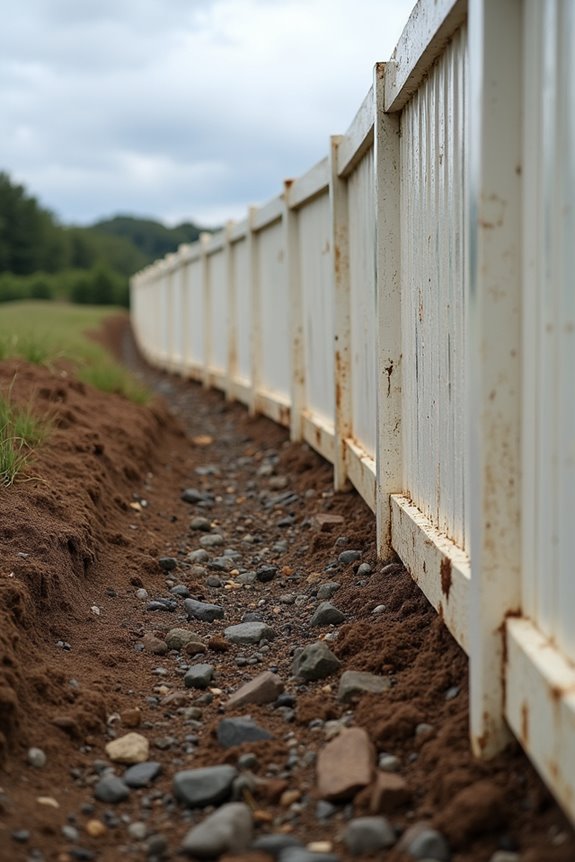
What’s hiding just below your lawn’s surface could easily add hundreds—or even thousands—to your fence bill. I’ve learned this the hard way. Uneven terrain and rocky soil transform straightforward fencing projects into complex undertakings. When installers encounter slopes or rocky conditions, they’re wrestling with serious challenges. Grading and site preparation become mandatory. Post alignment takes longer. That rocky soil? It demands expensive excavation equipment or grueling manual digging. You’ll need more concrete footing to secure posts properly. Labor costs skyrocket because installation time stretches beyond estimates. I watched my neighbor’s project timeline double when they hit unexpected rocks. Slopes require additional posts and bracing too. These site irregularities force contractors to budget extra contingency funds. Before committing to your fencing project, get a soil assessment. It’s worth knowing what’s lurking underneath.
Remove Your Old Fence: Budget $3–$5 Per Foot
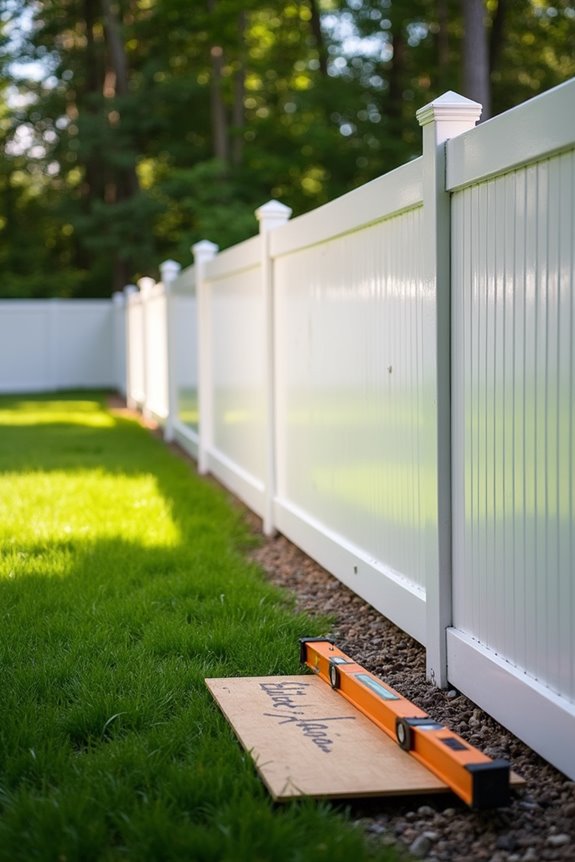
Now that you’ve dealt with the ground beneath your feet, there’s another layer to contemplate: what’s already standing on top of it. If you’ve got an old fence taking up space, removing it’ll run you $3–$5 per foot. I learned this the hard way when I discovered my removal costs nearly doubled because of unexpected concrete remnants and debris hauling fees.
The labor time varies depending on your fence’s age and condition. If gates or hardscape elements are integrated into your setup, removal coordination becomes trickier and pricier. Here’s the silver lining: many contractors offer bundled pricing when you combine removal with new installation. This approach can actually lower your per-foot costs significantly. Ask about this option—it’s worth the conversation and might save you real money.