I’ve found that skipping corn and bread is half the battle—your backyard deer actually thrive on what nature intended. Raw nuts like acorns and hickory nuts pack serious protein, while clover and alfalfa hay keep their digestion happy through winter. Fresh apples and berries make great occasional treats. The trick? Introduce new foods gradually and always balance protein with fibrous browse. Stick around to discover why processed feeds backfire so badly.
Acorns and Wild Nuts: Nature’s Protein for Deer
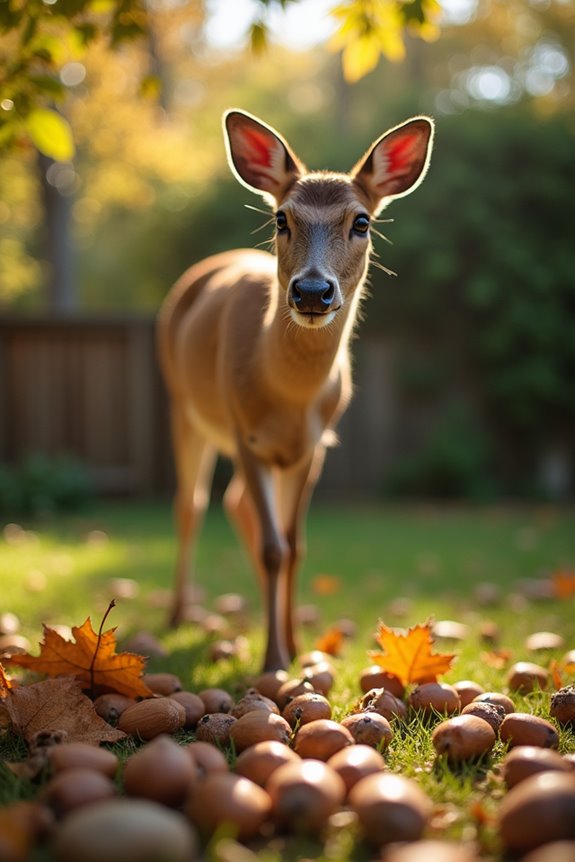
Ever wonder why deer seem to gather under oak trees in fall? They’re hunting for acorns and wild nuts—nature’s perfect snack pack. I’ve watched them work, and honestly, it’s impressive how efficiently they fill up on this mast.
Here’s the thing: these nuts pack serious energy and protein that help deer build fat reserves for winter and grow strong antlers. Acorns, hickory nuts, beechnuts, and pecans are all familiar fare in a healthy deer diet.
Want to help without causing problems? Offer raw, unsalted nuts at garden stations. Skip the processed stuff—it messes with their digestion. Balance nuts with fibrous browse and other forage so their stomachs stay happy long-term. You’re basically giving them what they’d naturally find anyway.
Safe Garden Greens: Which Plants Won’t Harm Their Digestion
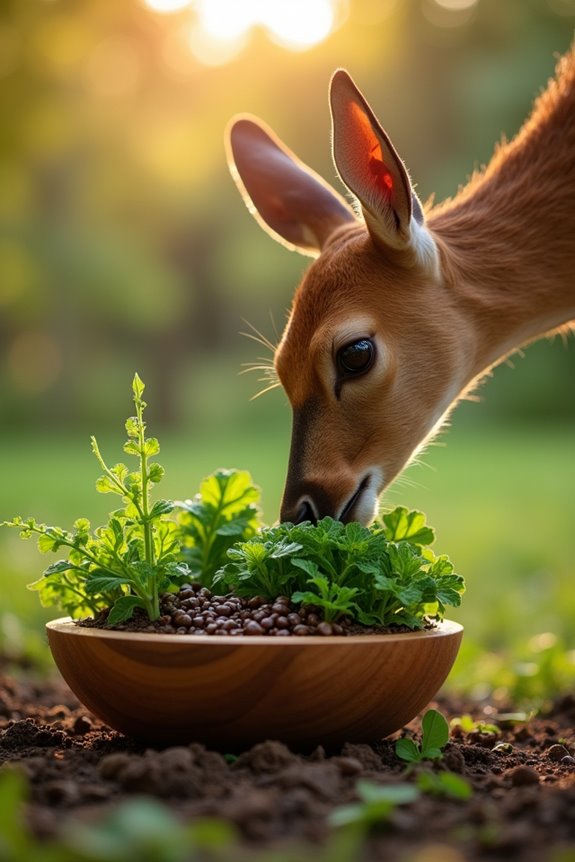
While nuts give deer the energy boost they need, garden greens offer something equally important—fiber that keeps their digestive system running smoothly. I’ve learned that fibrous greens like clover, alfalfa, and young leafy shrubs support rumen digestion without causing upset stomachs. These safe garden plants mirror what deer naturally browse in the wild, which is key to maintaining their gut health. I avoid feeding them processed veggies or high-sugar greens—trust me, I learned this the hard way when a deer got sick after I tossed out some salted lettuce scraps. Instead, I focus on untreated, tender leaves. When introducing new deer forage, I do it gradually. Watching how they respond helps me avoid digestive problems. It’s honestly simpler than it sounds.
Berries and Seasonal Fruits: When and How to Feed Them
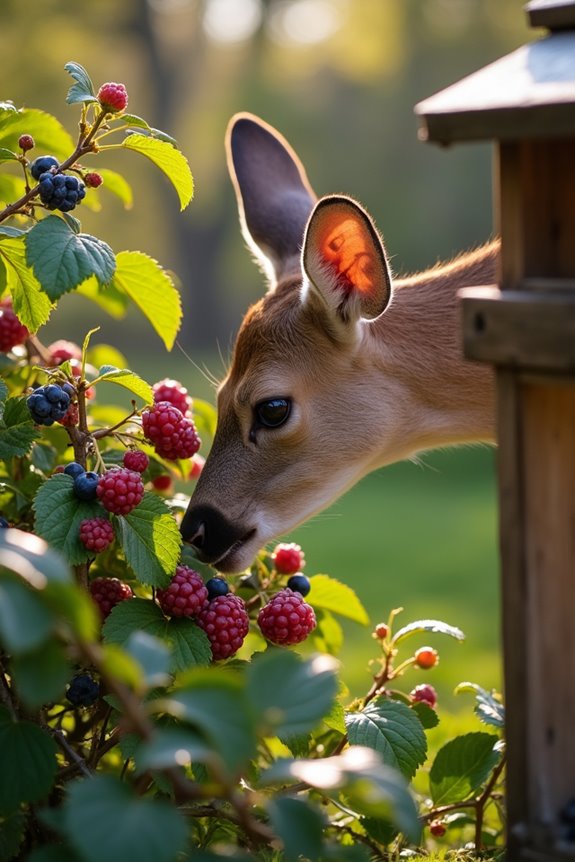
What makes berries and apples so irresistible to deer? I’ve watched them devour blackberries and blueberries like they’re at an all-you-can-eat buffet. Here’s the thing—I learned the hard way that seasonal fruits are nature’s perfect deer treat, especially in late summer and early fall when they’re storing fat for winter.
I now offer small handfuls of fresh apples or berries as supplements, never main courses. You’ll want to skip processed or sugary options; stick to what you’d find naturally in your yard. I make sure these treats complement their fibrous browse diet rather than replace it.
Honestly? Watching deer appreciate your safe feeding efforts builds real connection with your backyard visitors. That’s what transforms casual observation into genuine belonging.
Alfalfa Hay and Legumes: Building Winter Reserves Safely
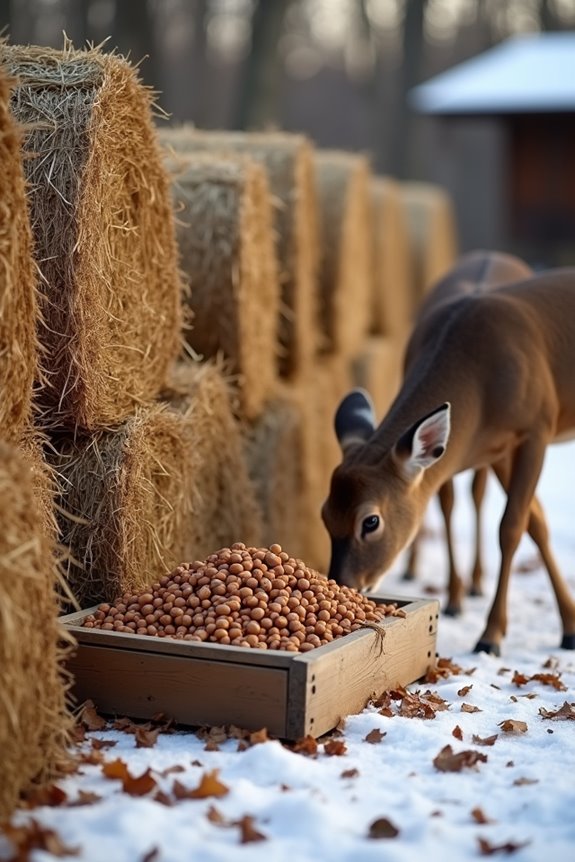
When winter hits hard and your yard turns into a frozen wasteland, deer need serious nutritional support—and that’s where alfalfa hay becomes a game-changer. I’ve learned that legumes in alfalfa pack way more protein than regular grass, helping deer maintain body condition through the cold months.
| Feeding Method | Best For | Frequency | Safety Tips |
|---|---|---|---|
| Designated Station | Controlled portions | 3-4x weekly | Prevents overfeeding |
| Scattered Around Yard | Natural foraging | Daily | Encourages movement |
| Mixed with Browse | Balanced nutrition | As needed | Prevents digestive upset |
| Limited Quantities | Health maintenance | Moderate | Avoids dependency |
I always grab plain alfalfa hay without added salts or preservatives—trust me, your deer’s digestion will thank you. I scatter some around my yard, mixing it with fibrous browse to keep things balanced. This approach has genuinely helped my local herd thrive when food gets scarce.
Foods That Poison Deer: Why Common Backyard Foods Are Dangerous
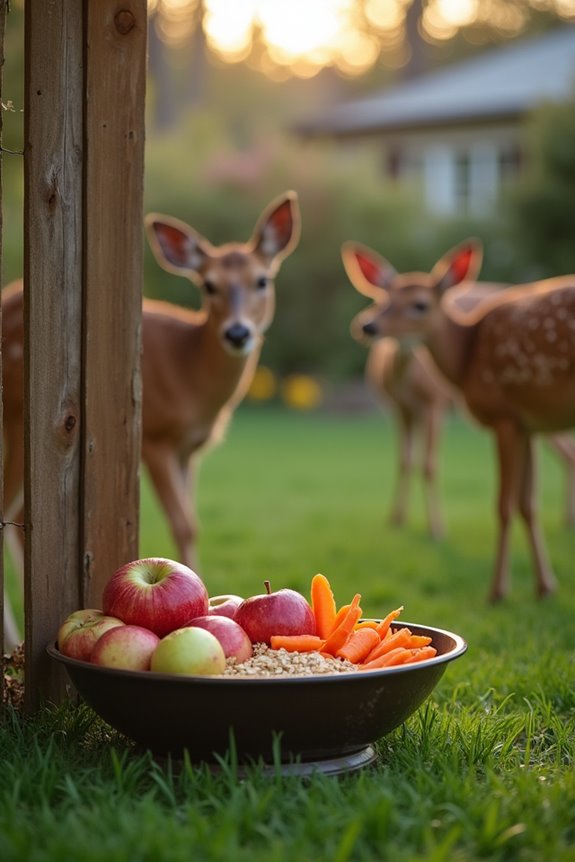
Those foods that seem harmless to us can actually wreck a deer’s digestive system. I learned this the hard way when I started tossing bread scraps to the deer visiting my property. I didn’t realize that bread and other unsafe backyard foods cause serious problems.
Corn is particularly tricky because it’s packed with carbs but lacks fiber. This disrupts their rumen and leads to dehydration. Processed feeds with added sugars and preservatives? They’re digestive nightmares.
Here’s what I discovered: relying on single food sources creates nutritional imbalances and increases disease risk. Shelled corn and nut mixes introduce additives that harm their gut microbiome.
The truth is simple. Stick with natural forage and quality hay. Your deer will thank you, and honestly, you’ll feel better knowing you’re helping them thrive the right way.