Most folks like 6 feet—it gives you real privacy without screaming “fortress.” I’ve found that height alone doesn’t cut it though; you need solid construction like board-on-board or stockade panels to actually block sightlines. If you’ve got a busy street or nosy two-story neighbors, consider 8 feet, though you’ll need beefier posts. Front yards typically max out around 3–4 feet. Check your local codes first because HOA rules can be stricter than city limits, and honestly, getting a permit saves headaches later. We’ll cover the specifics that make the difference.
Why Does Fence Height Matter for Privacy?
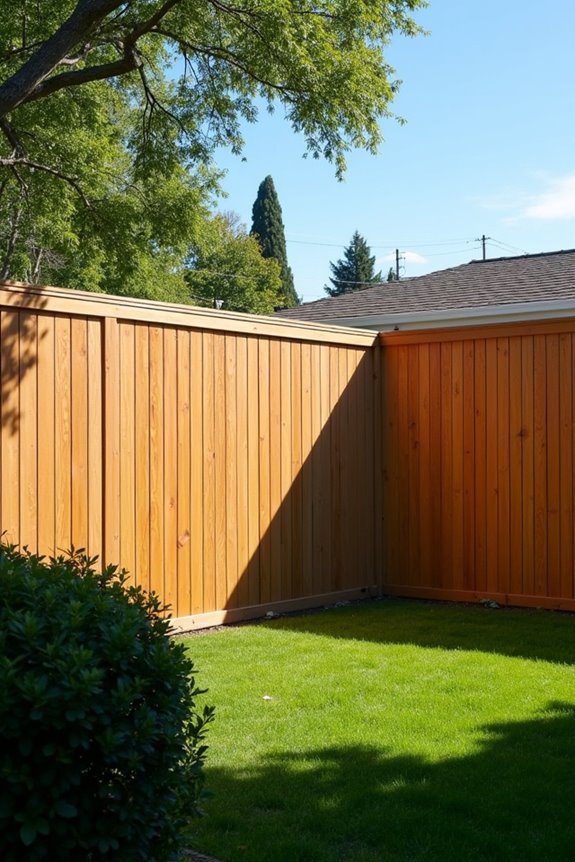
Why does fence height matter so much when you’re trying to actually keep prying eyes out of your backyard? I’ll be honest—I learned this the hard way. I thought my 4-foot fence would do the trick, but my neighbor could still see right over it. Here’s the thing: height directly impacts visibility. A taller fence blocks sightlines more effectively, which is why privacy fences typically need at least 6 feet. But here’s where I made another mistake—I didn’t realize that height alone won’t save you. The style matters just as much. Gaps between boards let visibility slip through, no matter how tall your fence stands. That’s when I understood: combining proper height with solid construction creates real privacy. You need both working together.
Standard Heights: 6 Feet for Most Residential Yards
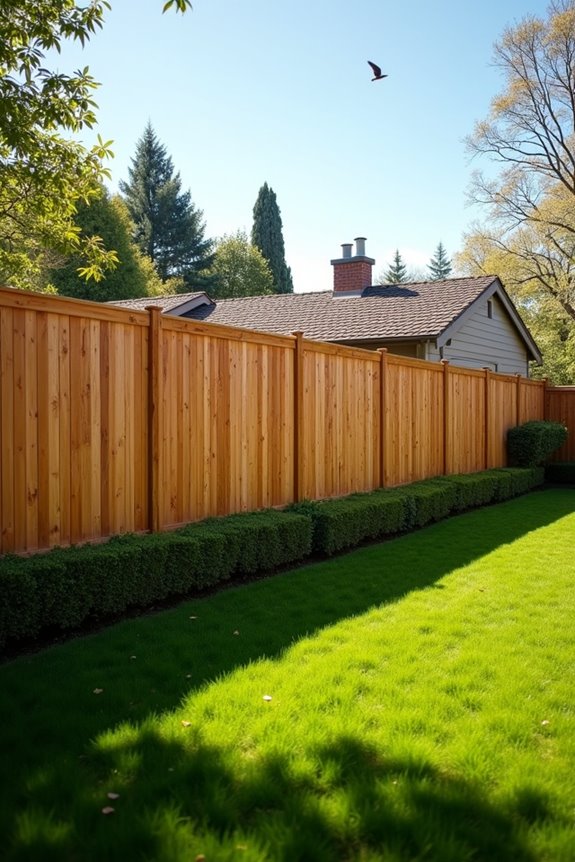
Now that you understand how height and solid construction work together, let’s talk about the sweet spot that works for most backyards: 6 feet.
Here’s why I’m a fan of this standard heights for residential yards:
- You’ll finally enjoy real privacy without feeling like you’re living in a fortress
- Your backyard becomes your sanctuary where neighbors can’t peek over during cookouts
- You’ll balance cost with results instead of overspending on overkill fencing
Most of us find 6 feet hits that perfect balance. It blocks sightlines from standing adults and shields your privacy fence height from casual glances. I’ve watched countless homeowners choose this standard height—it’s become the go-to for residential yards nationwide.
Sure, you might want taller depending on your situation, but honestly? Six feet handles the job beautifully for most backyards. It’s reliable, achievable, and your wallet won’t hate you.
8 Feet: When You Need Extra Privacy
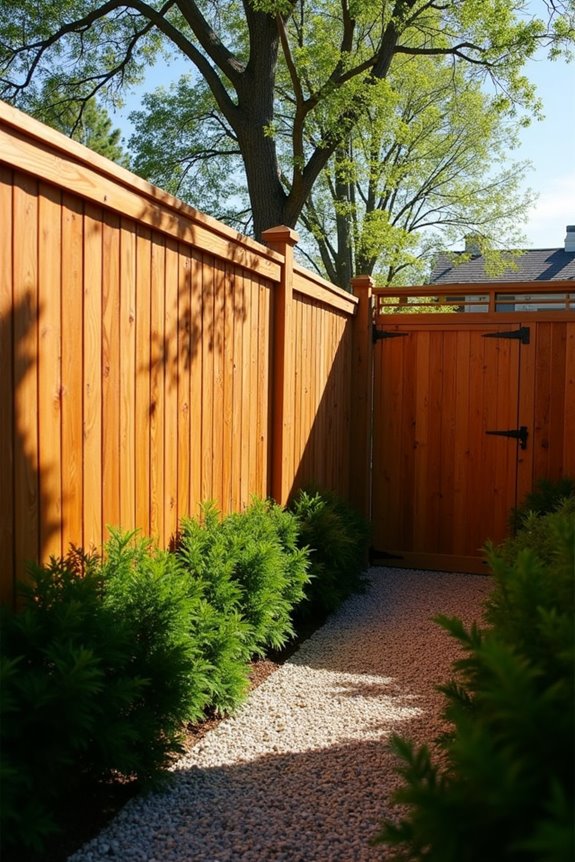
Sometimes 6 feet just doesn’t cut it, and I get it. If you’re dealing with a busy street, a sloping yard, or nosy neighbors in two-story homes, an 8-foot privacy fence height gives you the screening you actually need. I’ve been there—standing in my backyard feeling exposed while traffic zooms by.
Here’s the reality: going taller means spending more on materials and labor. You’ll likely need permits or height variances depending on local regulations in your area. Solid designs like stockade fencing work great at 8 feet, but they need proper engineering for wind resistance. Consider mixing solid panels with lattice toppers. This combo boosts extra privacy while letting air flow through, keeping your fence from looking like a fortress. Your back privacy matters.
4 to 5 Feet: Safety for Kids, Pets, and Pools
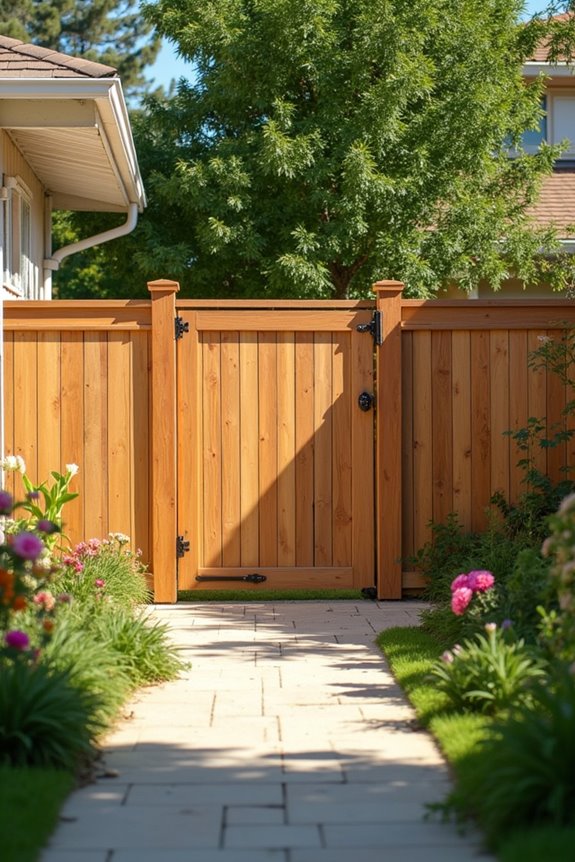
If you’ve got kids or pets running around, a 4 to 5-foot fence strikes that sweet spot between keeping them safely contained and not looking like you’re building a fortress. Pool safety codes actually require at least 4 feet in most places (I learned this the hard way when my city rejected my original plans), and honestly, that height also respects whatever zoning rules your neighborhood has in place. The real question is whether your local HOA or zoning board sets their own height limits, so I’d recommend checking those requirements before you break ground.
Containing Children And Pets
Why does a 4-foot fence feel like the magic number when you’re trying to keep your kids and dogs safely contained? It’s because this height strikes that sweet spot between practicality and protection. I’ve learned that a solid privacy fence at this height creates a secure boundary without needing expensive permits in most areas.
Here’s what makes it work for families like ours:
- Dogs can’t jump over it – Most breeds stay put, giving you peace of mind during backyard playtime.
- Kids stay visible to you – You can still peek over or see movement, maintaining supervision.
- It’s budget-friendly – Installation costs stay reasonable compared to taller fences.
The real secret? Combine proper fence height with solid panels, not gaps. That’s when children and pets actually stay contained. Trust me, I’ve tested this theory more than once.
Pool Safety Requirements
Keeping kids and pets contained in your yard is one thing, but a pool changes everything. I learned this the hard way when my neighbor’s toddler nearly wandered into their unfenced pool area. That’s when I discovered pool fence requirements aren’t optional—they’re crucial safety measures.
Most jurisdictions mandate at least 4 feet for privacy fence height around pools. But here’s the thing: height alone isn’t enough. You’ll need a self-closing gate safety feature that prevents unauthorized access. I recommend verifying your local codes with your city building department since requirements vary.
| Requirement | Standard | Why It Matters |
|---|---|---|
| Fence Height | 4+ feet | Prevents child entry |
| Gate Type | Self-closing, self-latching | Ensures automatic closure |
| Local Check | Required | Rules vary by area |
| Additional Features | Possible | Some zones need more |
| Installation | Professional recommended | Ensures compliance |
Local Zoning Law Compliance
Before you grab your shovel and start digging post holes, you’ll want to know what your local zoning laws actually allow—and trust me, I didn’t do this and ended up rebuilding half my fence.
Different cities have different rules about fence heights, local codes, and permits. Here’s what I learned the hard way:
- Front yards typically max out at 3–4 feet to keep sightlines clear
- Backyards usually permit up to 6 feet for real privacy
- Permits become required above certain heights, usually around 6 feet
Check your city or county regulations before breaking ground. HOA rules? Even stricter sometimes. I called my local planning department and felt relieved knowing exactly what I could build. You’re not alone in this process—most of us need a quick clarification before starting. Save yourself the headache and the rebuild.
How Does Fence Style Affect Privacy More Than Height Alone?
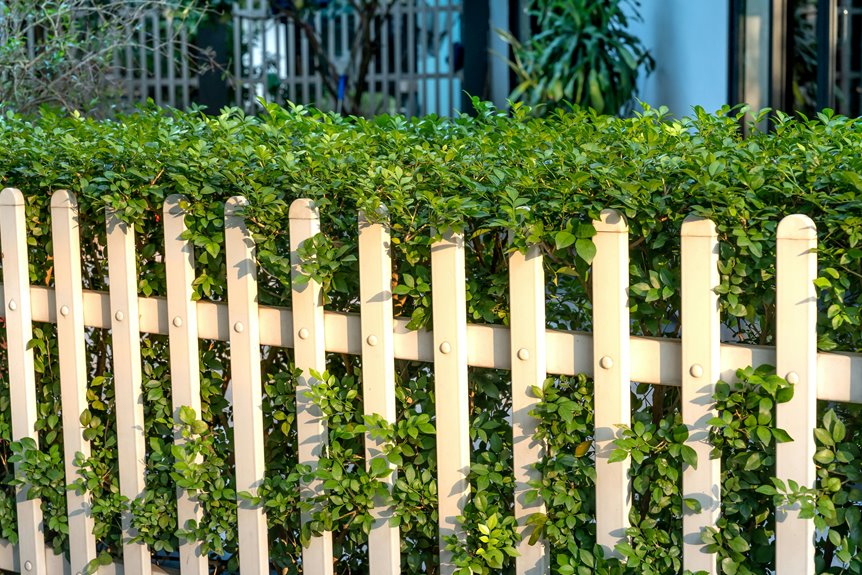
I learned this the hard way: I built a 6-foot fence with wide spacing between boards, thinking height alone would hide my messy garage, but my neighbor could still see right through those gaps. The real privacy game-changer isn’t just how tall you go—it’s whether you choose solid construction like board-on-board or stockade panels versus decorative styles with gaps or lattice toppers that basically invite sightlines. So before you spend money on extra height, consider whether a solid design at a lower height might actually give you the privacy you’re after.
Material Choice And Gaps
Ever notice how two fences can be the exact same height, yet one shields your backyard completely while the other lets neighbors peek right through?
Here’s what I’ve learned: material choice and gaps matter way more than you’d think. I’ve stood behind 6-foot picket fences feeling exposed, then behind a 6-foot solid board-on-board and felt genuinely private. That’s the difference.
Consider these three game-changers:
- Solid vinyl or stockade panels block sight lines completely
- Tight board-on-board construction overlaps boards so nothing shows through
- Decorative lattice tops let air flow while keeping prying eyes out
Wood shrinks and warps, creating unwanted gaps. Vinyl stays consistent. I’d rather invest in quality materials upfront than constantly battle visibility issues later. Your privacy depends on what you choose, not just how tall you build it.
Solid Construction Versus Decorative
Now here’s where solid construction actually beats height every single time. I learned this the hard way—I built a tall fence with decorative lattice thinking height alone would give me privacy. Spoiler alert: it didn’t. My neighbors could still see right through the gaps.
Here’s the truth: a solid 6-foot fence with no openings blocks way more than an 8-foot fence with spaces. Solid styles like board-on-board or stockade deliver real visual blockage because they’re tightly aligned and continuous. Those decorative elements? They look nice but they’re privacy killers.
The takeaway: focus on solid construction over height. Tight panels, proper alignment, and reinforced posts matter most. You’ll get genuine privacy that actually protects your space.
Front Yard vs. Backyard Fence Heights: Know Your Local Rules
Why are front yard fences so much shorter than backyard ones? It’s all about safety and sightlines. Your front yard fence typically maxes out at 3–4 feet, while backyards often go up to 6 feet. Here’s what you need to know before building:
Front yard fences max out at 3–4 feet for safety and sightlines, while backyards often reach 6 feet.
- Check your local building department—height limits vary wildly by location
- Review your HOA rules if you’ve got them, because they can be stricter than city codes
- Consider corner-lot visibility and easements that might restrict your front yard even more
I learned this the hard way when my neighbor’s fence violated setback requirements. Always verify local rules and height limits first. Corner lots, pools, and utility easements add extra complications. Trust me, spending an afternoon checking regulations beats removing a fence later. Your community has specific codes for good reasons—they protect everyone’s property values and safety.
Local Zoning and Fence Height Permits: What You Need to Know
Before you buy a single fence post, you’ve got to know what your local government actually allows—and trust me, this part matters more than you’d think. I learned this the hard way when my neighbor’s fence got flagged by code enforcement. Your local zoning regulations and fence height permits exist for good reasons: safety, sightlines, and neighborhood harmony.
| Location Type | Typical Height Limit |
|---|---|
| Front yard | 3–4 feet |
| Backyard | 6 feet or more |
| Corner lots | Varies with visibility rules |
| Pool areas | Special restrictions apply |
| HOA communities | Often stricter than local codes |
Check your city or county building department first. HOA rules might be even stricter than local zoning. Get permits before building—it saves headaches and fines later.
Measuring Fence Height Correctly
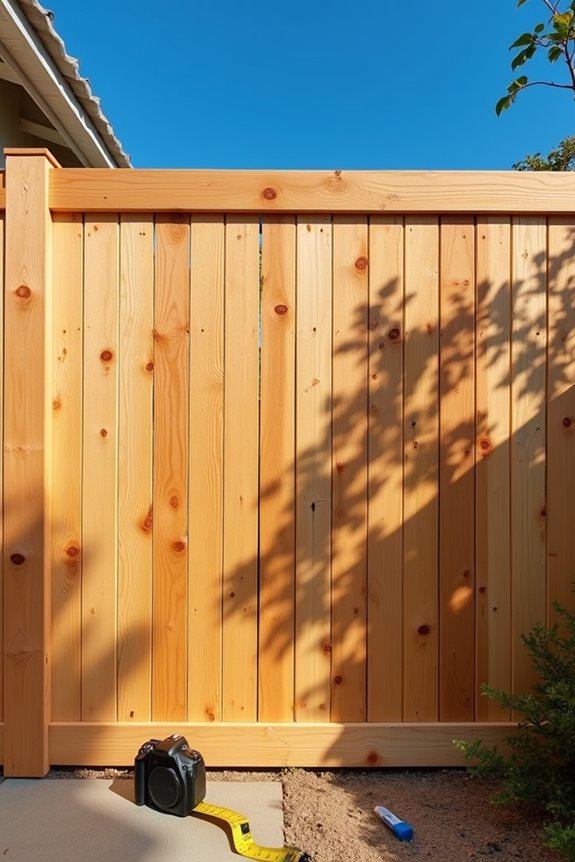
Now that you’ve checked your local regulations, it’s time to actually measure your fence—and I’ll be honest, I’ve bungled this step more than once by not accounting for my uneven yard. You’ll want to measure from ground level straight up to the top of your fence boards, starting from the highest point of soil beneath each section so you’re not accidentally measuring from a dip. Getting this right means the difference between a fence that looks professionally installed and one that screams “I eyeballed it,” plus it keeps you compliant with those height rules we just covered.
Ground Level Measurement Basics
How you measure your fence makes all the difference between getting it right and discovering mid-project that you’ve miscalculated.
I learned this the hard way. When measuring ground level, you’ll want to:
- Start from the lowest point where soil meets your fence line—this is your true baseline
- Account for uneven terrain by measuring from the highest ground spot beneath each section
- Mark your measurements clearly so you don’t second-guess yourself later
Your height guidance depends entirely on accurate ground level measurement. I always use a long level and tape measure together. If your yard slopes, measure each section individually. Trust me—taking five extra minutes here saves major headaches when your fence is halfway done. Ground conditions vary across properties, so don’t assume flat ground anywhere.
Uneven Terrain Considerations
What happens when one side of your yard sits three feet higher than the other? You’re dealing with uneven terrain, and I’ll be honest—it tripped me up at first. Here’s the thing: you measure height measurement from the highest ground point beneath your fence section, not the lowest. Ground variation is totally normal, and that’s exactly why this matters. If your yard slopes, that high spot determines whether you’re compliant with local codes. I learned this the hard way when my inspector pointed to my fence’s tallest section. Measure from the peak of ground under each section to your fence’s top. It feels tedious, but this single step prevents headaches down the road.
Height Compliance and Tolerance
Once you’ve figured out where to measure from, there’s the matter of actually getting the number right—and I won’t sugarcoat it, this is where things get a bit finicky.
Here’s what I’ve learned matters most:
- Nominal vs. actual sizes trip everyone up – your boards might say 6 feet but measure slightly less, and that’s totally normal
- Small height tolerance variations exist – most codes allow minor differences, so don’t stress over a quarter-inch
- Permits kick in around 6 feet – check your local rules before building higher
I always measure twice because fence height compliance actually matters for permits and neighborhood harmony. Those small tolerances exist for real-world reasons. You’re building something that’ll last years, so getting close counts just fine. Your neighbors will appreciate the effort.
Keeping Tall Fences Standing: Why Posts Need Reinforcement
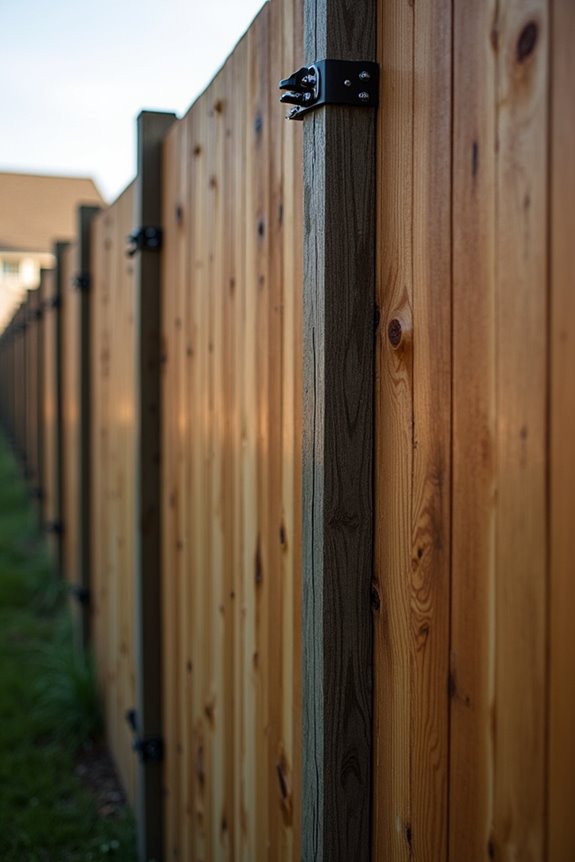
If you’ve ever watched a tall fence wobble in the wind, you’ll understand why posts need serious reinforcement—and I’m speaking from experience here, having seen a few fences lean awkwardly after their first big storm.
Fences taller than 6 feet face serious wind load challenges. I learned that concrete backfill up to 22 inches above grade makes a real difference in keeping posts plumb. You can also insert aluminum post reinforcements inside the posts for extra stability.
Here’s what I’ve found works best: dig post holes 30-40 inches deep (go 40 inches for really tall fences), then backfill with concrete. This post reinforcement method prevents post buckling when storms hit. Trust me, investing in proper support upfront saves headaches later.
What Makes Installing Tall Fences So Tricky (And How to Get It Right)
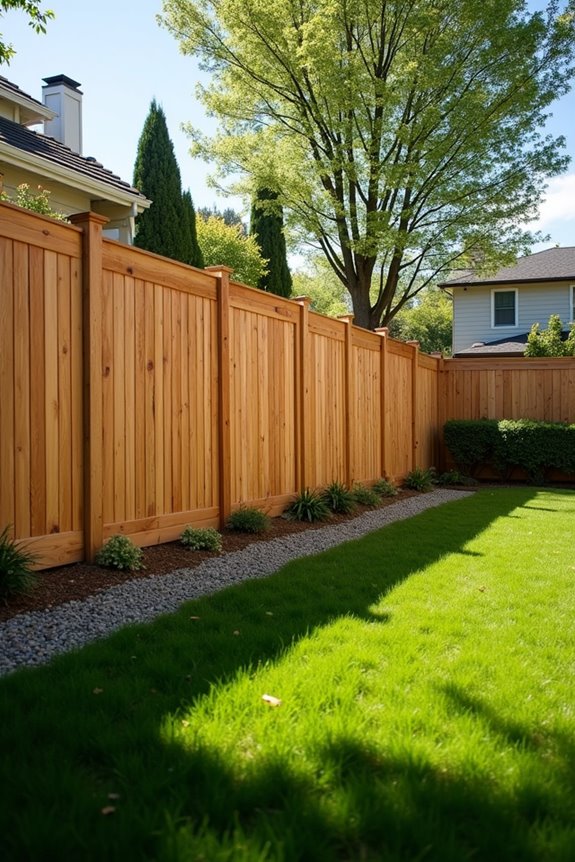
Why do tall fences demand so much more attention than shorter ones? I’ll be honest—I learned this the hard way. When you’re pushing fence height limits, installation challenges multiply fast. You’re wrestling with heavier materials, battling wind resilience concerns, and following a strict sequencing that can’t be skipped.
Tall fences demand meticulous attention—heavier materials, wind concerns, and strict sequencing can’t be rushed or shortcuts emerge.
Here’s what trips up most folks:
- Getting posts perfectly level and aligned before adding anything else—skip this and everything falls apart later
- Digging deeper holes (30–40 inches) and securing posts properly so they don’t buckle under pressure
- Timing your fasteners and braces right so panels stay square and stable
The real trick? Set your posts first like your life depends on it. Then assemble panels methodically. I’ve seen beautiful fences fail because someone rushed the foundation work. Take your time here, and you’ll join the ranks of folks with fences that actually last.
Keeping Your Privacy Fence Looking Good for Decades
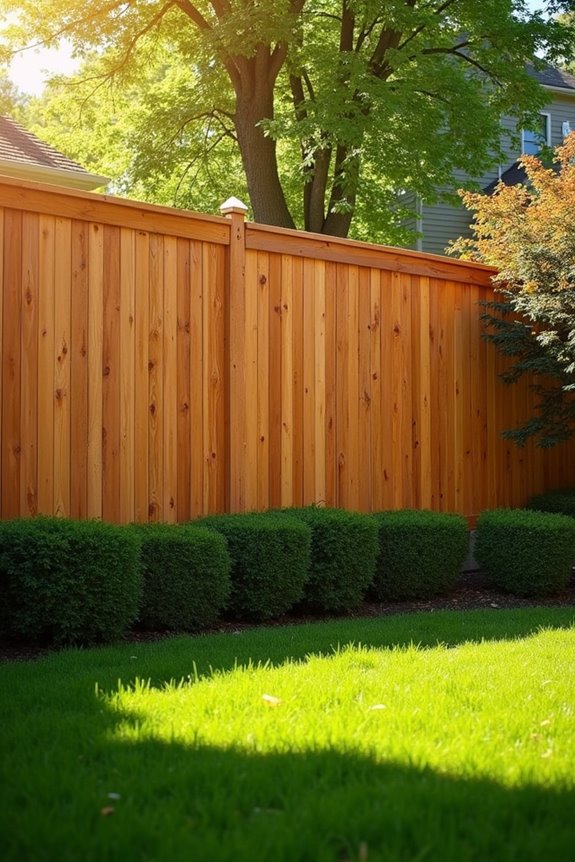
The difference between one that looks great in year ten and one that’s falling apart comes down to how you treat it now. I’ve learned this the hard way after watching my neighbor’s fence deteriorate while mine stayed solid.
Here’s what I do: I inspect my privacy fence annually, checking for loose posts or storm damage. I wash it yearly to prevent mildew buildup. For vinyl, this means a simple garden hose and occasional scrubbing.
The real secret? Proper installation matters most. I ensured my posts went deep with concrete backfill and stayed plumb. This foundation supports longevity better than anything else.
You don’t need fancy products. Regular maintenance—cleaning, inspections, addressing small issues early—keeps your fence looking new for decades. It’s honestly easier than I expected.
Getting the Right Permit and Inspections for Your Fence
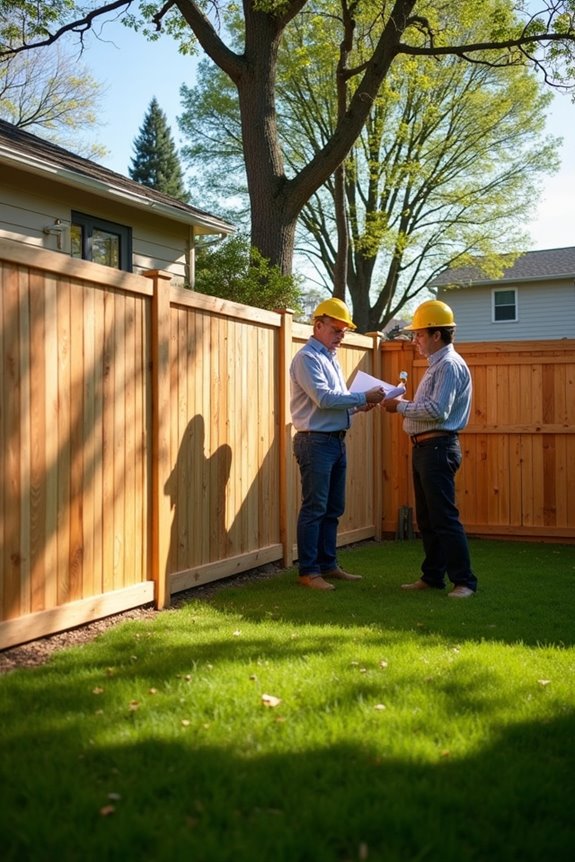
Before you order materials or grab a shovel, here’s something I wish I’d done first: check your local building codes.
Before ordering materials or grabbing a shovel, check your local building codes first.
Getting permits and inspections might feel like a hassle, but I learned the hard way that skipping this step costs way more later. Here’s what I now do:
- Contact your local building department to ask about permits and height restrictions for your specific lot
- Review your HOA rules if you have one—they often have stricter rules than the city
- Schedule inspections at required stages so you won’t face fines or removal orders
Most jurisdictions require permits for fences over 6 feet. Your inspector will verify your fence meets setback requirements and height limits. I know it’s extra work upfront, but getting this right protects your investment and keeps your neighbors happy.