You can technically paint vinyl, but I’ve seen enough peeling disasters to warn you: vinyl’s slick, non-porous surface fights paint adhesion like crazy. Temperature swings make vinyl expand and contract, which cracks paint right off. Plus, painting voids your warranty and costs $325–$1,000 for results lasting only 3–5 years. Honestly, I’d explore whether pre-colored vinyl might save you from this maintenance headache altogether—there’s more to contemplate here.
Can You Paint a Vinyl Fence?
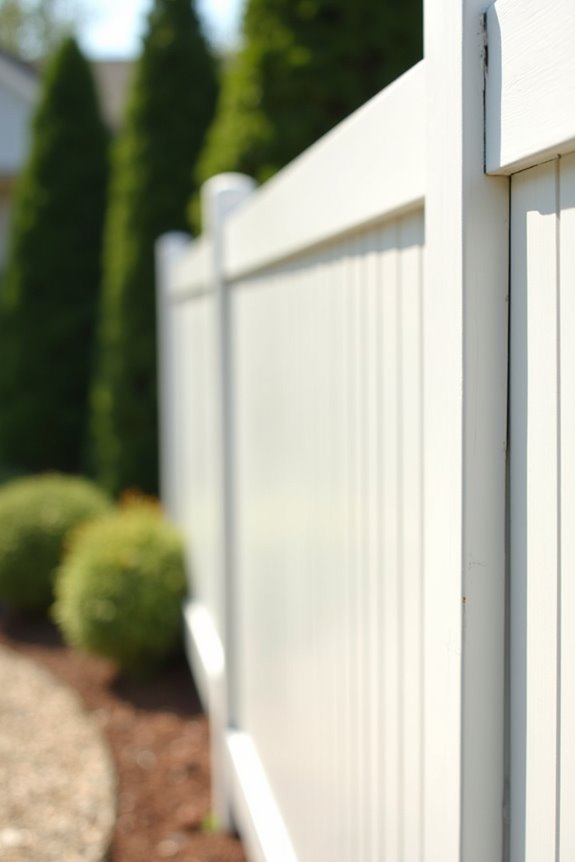
you *can* paint a vinyl fence, but I’ll be honest with you—it’s trickier than slapping paint on wood, and I’ve learned this the hard way. Vinyl’s non-porous surface makes paint adhesion genuinely challenging. I discovered that regular latex paint just peels right off within months. That’s when I switched to epoxy-based acrylic paint with a vinyl primer, and the difference was night and day. You’ll need that primer to help the paint stick properly. Just know that painting voids your warranty and demands ongoing maintenance. Darker colors trap heat and risk warping your fence. It’s doable if you’re committed, but honestly? Pre-colored vinyl or wraps might save you future headaches and frustration.
Why Homeowners Want to Paint Vinyl Fences
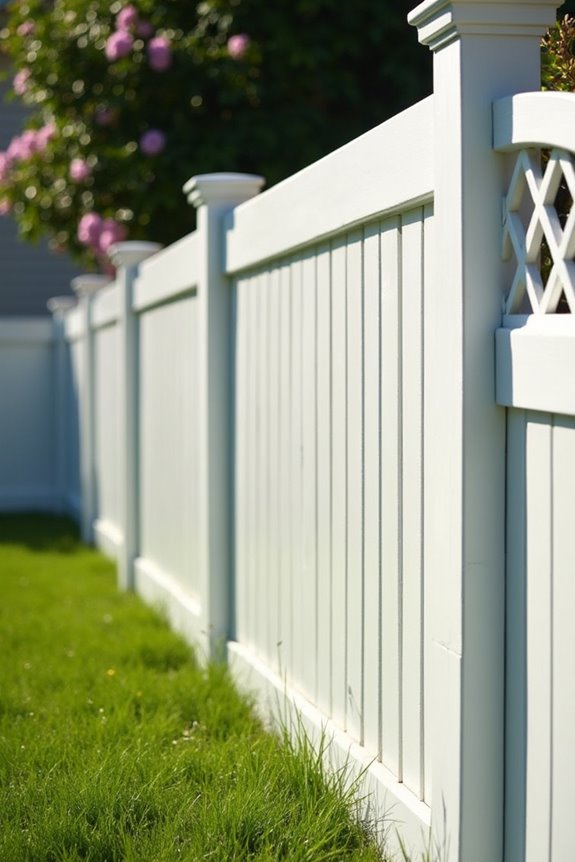
I get it—your once-bright white fence now looks dingy and gray after a few years of sun exposure, and you’re wondering if a fresh coat of paint could be the answer. Maybe you want your fence to match your newly painted house or coordinate with that gorgeous deck you just built, so the whole yard finally feels put-together instead of mismatched. The truth is, plenty of homeowners like us have been tempted by the idea that painting could be a quick, lasting fix to bring back that curb appeal we’re craving.
Fading And Discoloration Issues
Why does that pristine white vinyl fence you installed five years ago now look tired and dingy? Sun exposure hits hard. UV rays gradually fade that bright white into chalky, yellowed, or even gray tones. I’ve watched my own fence transform from showstopper to eyesore without doing much of anything.
Discoloration creeps up slowly. You might notice chalk residue on your hands after touching it, or subtle yellowing that catches you off guard one morning. Weather doesn’t pause—rain, heat, and constant sun work together against your vinyl fence’s surface.
Here’s the thing: paint offers a real solution. Rather than accepting faded vinyl or expensive replacement, painting lets you address discoloration directly. With proper surface prep and maintenance, you’re looking at a refreshed fence that matches your home’s updated aesthetic. That’s worth considering.
Aesthetic Coordination With Home
When’s the last time you walked past your fence and thought, “That’d look amazing if it matched my new siding”? I’ve been there. Your vinyl fence doesn’t have to clash with your home’s exterior anymore. Painting weathered vinyl lets you create seamless color coordination that ties your whole outdoor space together. Maybe your fence has that dingy beige that clashed with your recent renovation. A fresh coat transforms it into something that actually complements your landscaping and architecture. You’re not stuck with whatever color came with your house. This simple maintenance step—paint—gives you control over your home’s appearance. When everything works together visually, your yard feels intentional and polished. That’s the power of thoughtful color coordination.
Why Paint Won’t Stick to Vinyl (And Why That Matters)
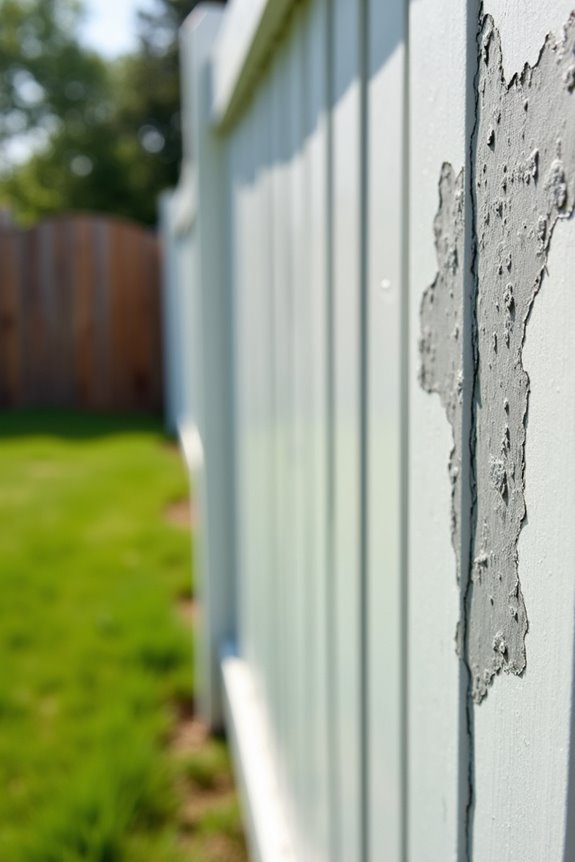
Here’s the thing—vinyl’s slick, non-porous surface is basically paint’s worst enemy, kind of like trying to stick a Post-it note to glass. When temperature swings happen (and they always do), your vinyl expands and contracts while that paint film just sits there brittle and angry, which is why you’ll see it cracking and peeling within a year or two. I learned this the hard way after watching my neighbor’s painted fence look like it’d been through a war, so understanding *why* paint fails on vinyl is honestly your best defense against wasting time and money on a job that probably won’t last.
Vinyl’s Non-Porous Nature
The real reason paint struggles on vinyl comes down to one stubborn fact: vinyl’s surface is completely sealed and smooth, with zero pores for paint to grab onto. I learned this the hard way when my first fence project failed miserably within eighteen months.
Unlike wood or concrete, vinyl’s non-porous nature means paint can’t penetrate or bond properly. Without those tiny openings, adhesion becomes nearly impossible. The paint just sits on top like water on glass, eventually peeling away.
Here’s what makes it trickier: vinyl expands and contracts with temperature changes, creating additional stress on your paint adhesion. That’s why surface preparation matters so much—meticulous cleaning is non-negotiable for any chance at long-term durability. Skip this step, and adhesion failure is almost guaranteed within a couple years.
Thermal Expansion Complications
Even if you manage to get paint bonded to that slick vinyl surface, you’re not out of the woods yet—and that’s where things get really frustrating. Here’s the problem: vinyl expansion happens constantly as temperatures shift. Your paint film simply can’t keep up. When your fence heats up, the vinyl underneath expands differently than the paint coating does. This mismatch creates stress that leads to cracking, peeling, and flaking—sometimes within just one season. Dark paint makes it worse because it absorbs more heat, accelerating vinyl expansion and warping. I’ve watched uneven expansion across wide fence runs cause wrinkles and gaps. The thermal expansion cycle repeats endlessly, breaking down paint adhesion over time. Without proper preparation and quality products designed for vinyl surfaces, your paint won’t stand a fighting chance against temperature fluctuations.
Painting Voids Your Warranty and Costs More Long-Term
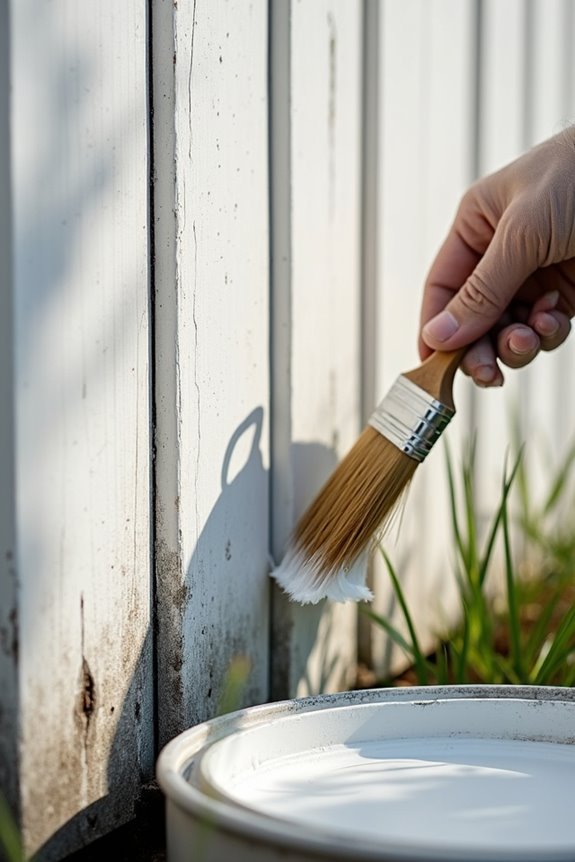
Did you know that picking up a paintbrush to refresh your vinyl fence actually erases your manufacturer’s warranty? I learned this the hard way. Once you paint, you’re on your own for repairs and replacements.
Here’s what I discovered about the real costs:
- DIY painting runs $325–$1,000 but only lasts 3–5 years
- Professional painting costs $1,500–$2,500 for 5–7 years of wear
- Vinyl replacement costs $4,000–$7,000 but lasts 25+ years
- Repeated painting creates adhesion problems and maintenance headaches
When I did the math, replacing my fence with quality vinyl featuring UV blockers made more sense. Yes, the upfront replacement vs repainting seemed pricey. But after accounting for long-term maintenance expenses and warranty loss, I stopped throwing money at painting. A fresh fence beats perpetual touch-ups.
How to Paint Vinyl Fencing (If You’re Still Determined)
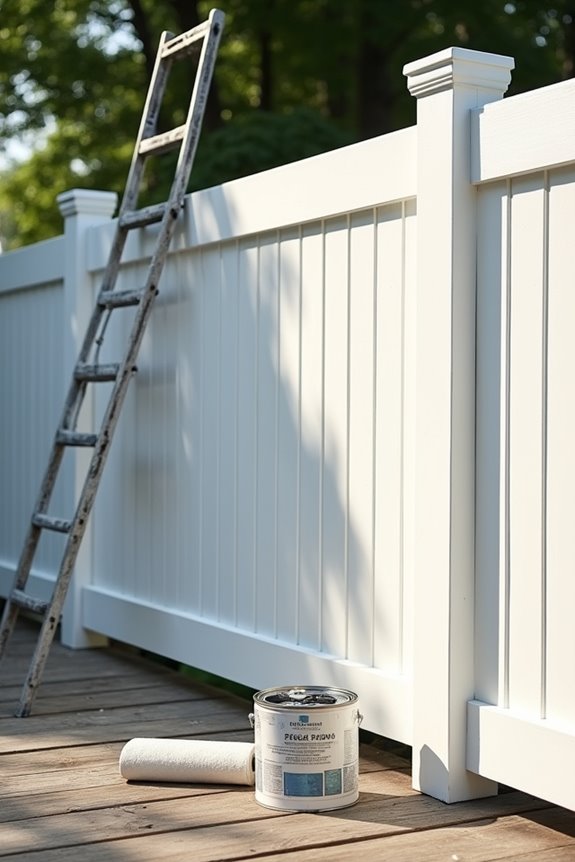
So you’ve decided to paint your vinyl fence anyway—I get it, and I won’t judge. Here’s how to do it right. First, clean everything thoroughly with soapy water or vinegar, then let it dry completely. I’ve learned this the hard way—moisture ruins everything.
Next comes surface prep. Light sanding with 220-grit sandpaper helps your epoxy-based acrylic paint stick better. Wipe away that dust carefully. Then apply a vinyl-specific primer—trust me, this step matters for adhesion and prevents mold growth.
Now spray painting two thin coats works way better than brushing. Let each coat dry fully before applying the next. Finally, seal everything with UV-resistant clear sealant to prevent fading and chipping. Your fence will thank you.
Why Dark Paint Makes Vinyl Warp and Buckle
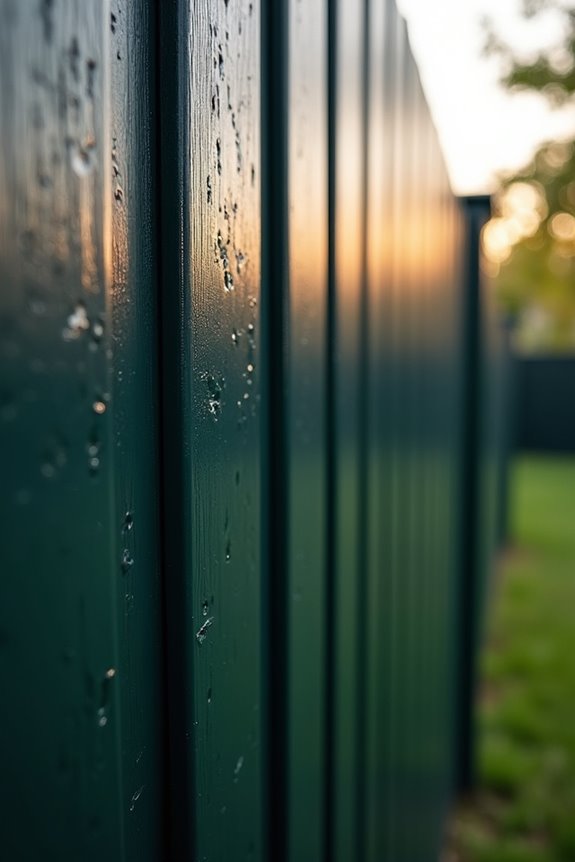
There’s one thing I wish someone had told me before I painted my vinyl fence dark gray: darker colors are basically heat magnets.
Here’s what I learned the hard way:
- Dark paint absorbs direct sunlight intensely, causing your vinyl fence to heat up way more than lighter colors
- Thermal expansion becomes aggressive, making panels expand and contract unevenly, which stresses joints and connections
- Warping and buckling happen faster in hot climates or areas with poor airflow where heat can’t escape
- Your warranty takes a hit because manufacturers specifically warn that dark pigments compromise vinyl stability
I watched my fence bow within months. The darker the paint, the more your vinyl flexes and bends under temperature stress. If you’re determined to paint, stick with lighter shades. Your fence—and your wallet—will thank you later.
Pre-Colored Vinyl: The Paint-Free Alternative

After my fence-painting disaster, I discovered the solution I should’ve chosen from the start: pre-colored vinyl. Instead of wrestling with brushes and buckets, I learned that manufacturers like Weatherables offer vinyl fencing color options already built in during extrusion. The integrated color means no painting, no touch-ups, no adhesion headaches.
What impressed me most? This paint-free approach gives you fading resistance for your fence’s lifetime. The color isn’t slapped on afterward—it’s part of the vinyl itself. You get whites, tans, and other palettes without maintenance worries.
Here’s the bonus I didn’t expect: warranty protection. Since pre-colored vinyl eliminates painting concerns and heat-related warping risks, you’re covered. I wish I’d known this before my painting fiasco. Join the smarter fence owners—skip the paint entirely.
Quality Vinyl Fencing: Why It Beats the Paint-and-Repaint Cycle

Why do I keep seeing neighbors repaint their vinyl fences every few years? The answer’s simple: they’re caught in the paint-and-repaint cycle. I learned this the hard way.
Quality vinyl fencing eliminates this headache entirely. When you choose premium vinyl with built-in color-retention and UV blockers during purchase, you’re investing in durability that actually lasts. Painted vinyl? It peels, cracks, and fades within 3–7 years. That’s constant maintenance and frustration.
Here’s what makes quality vinyl different:
- Pre-colored vinyl resists fading for decades
- No coating adhesion problems or heat-related warping
- Built-in UV blockers protect your investment
- Zero repaint cycles needed
Professional vinyl installation means you’re done with painting altogether. Your fence stays looking fresh without the yearly touch-ups. Trust me—your weekends will thank you.