I’ve learned that cleaning outdoor cushions isn’t as intimidating as it sounds. Start by brushing off loose debris, then mix a simple 3:1 solution of warm water and mild soap. Apply it with a soft brush, tackle stubborn stains with diluted vinegar, and rinse thoroughly until suds disappear. Finally, air dry them completely in a well-ventilated spot—this part’s essential for preventing mold. Trust me, getting these fundamentals down transforms your whole approach, and there’s plenty more technique to discover.
Remove Loose Debris and Identify Your Cushion Type
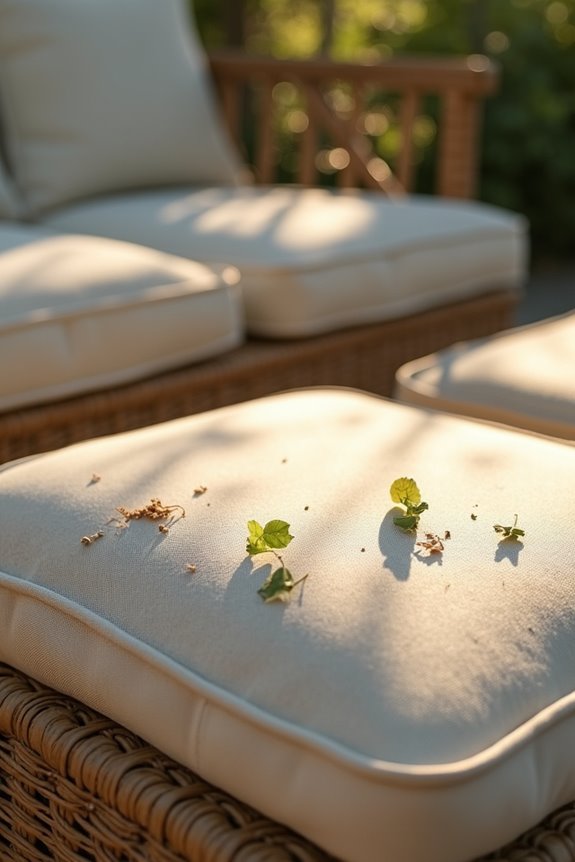
Where do you even start with outdoor cushions that’ve been sitting through a season of neglect? I’ll be honest—I’ve stared at mine wondering the same thing. First, grab a soft brush or handheld vacuum and gently remove loose debris. I learned the hard way that snagging tassels or buttons ruins your day, so take it slow.
Next, examine your cushion covers closely. Are they removable or permanently attached? Check what fabric type you’re working with—polyester, acrylic, olefin, or a blend. Each matters. Inspect those seams and folds too; they’re magnets for hidden dirt and loose decorations.
Before you start actual cleaning, make sure everything’s completely dry. Wet cushions trap dirt deeper, making stains permanent. Finally, peek at that care label. I skip this step sometimes and regret it when colors fade.
Mix Your Cleaning Solution and Gather Your Supplies
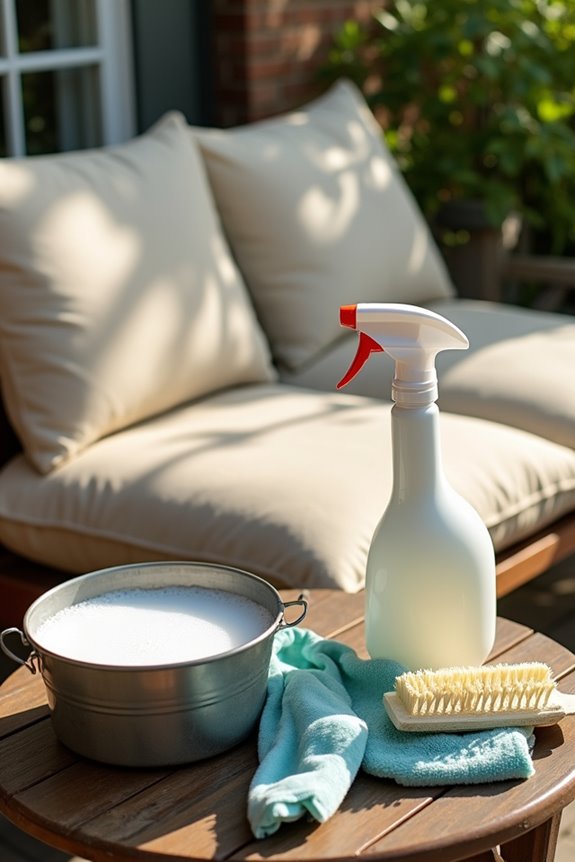
Now that you’ve got your cushions prepped and know what you’re dealing with, it’s time to gather what you’ll actually need. I’ll be honest—I used to skip this step and regretted it halfway through.
First, mix your cleaning solution using a 3:1 ratio of warm water to mild soap or specialized cleaner. This balance works like magic without damaging fabric. Grab a bucket, soft bristle brush, and microfiber cloth for spot cleaning afterward.
Mix your cleaning solution at a 3:1 ratio of warm water to mild soap—this balance works like magic without damaging fabric.
Don’t forget white vinegar or mold cleaner for those stubborn mildew spots—trust me, you’ll want this backup plan. A vacuum handles loose debris quickly, and a garden hose rinses everything thoroughly.
Finally, plan your drying strategy. I keep shaded, well-ventilated storage ready because damp cushions invite mildew. These cleaning supplies set you up for success.
Apply Cleaner and Tackle Tough Stains
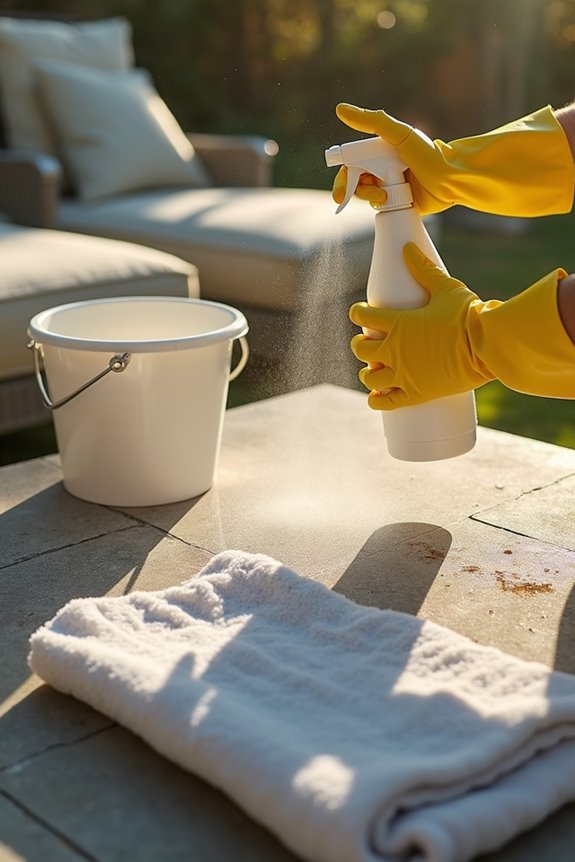
Ready to actually see those stains disappear? I’ve been there, staring at mystery marks on my outdoor fabrics wondering if they’d ever come clean. Here’s what actually works.
For general grime, I pre-treat cushions with a soft-bristle brush using my 3:1 water-to-soap mixture, working along the fabric grain. For those stubborn marks that mock my efforts, I grab white vinegar diluted 1:1 with water. Let it sit 10–15 minutes—seriously, don’t skip this part. Then I scrub gently with that same soft brush.
Mold and mildew? I use a dedicated mold cleaner, diluted per instructions, before scrubbing. Bird droppings require dry removal first with cardboard, then soap and water for any residue.
These cleaning methods really do work when you’re patient and consistent.
Rinse Away All Soap Residue
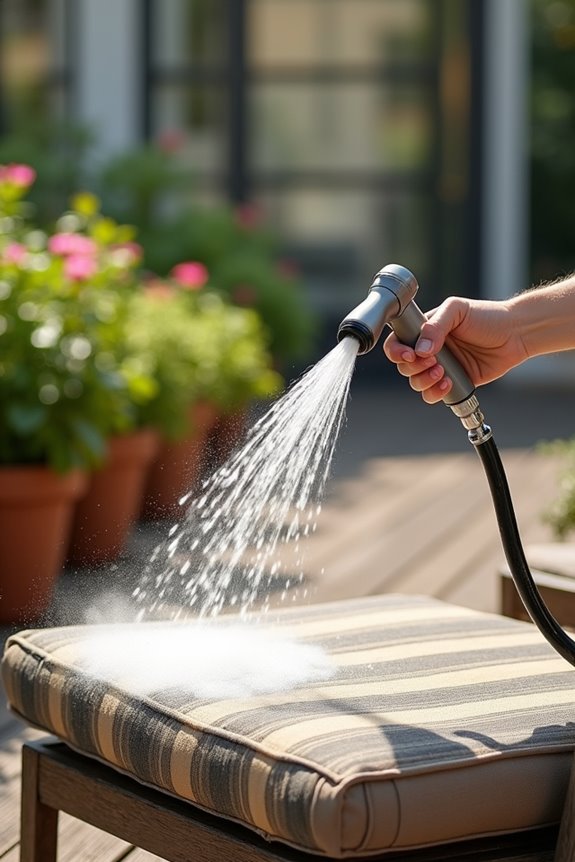
All that scrubbing means you’ve got soap sitting on your cushions—and I’ve learned the hard way that leaving it there is asking for trouble. Grab your garden hose and rinse from top to bottom, using steady pressure instead of high-powered spray that’ll damage your cushions. I always check for suds as I go, then do a second pass if needed. That detergent removal step? It’s non-negotiable for preventing dirt from sticking back on. If your covers are removable, flip them inside out while rinsing so soap doesn’t sneak into seams. This takes patience, but trust me, thorough clean water rinsing prevents mildew and odors from ruining your cushions later. You’ve got this.
Air Dry Your Cushions to Prevent Mold and Odor
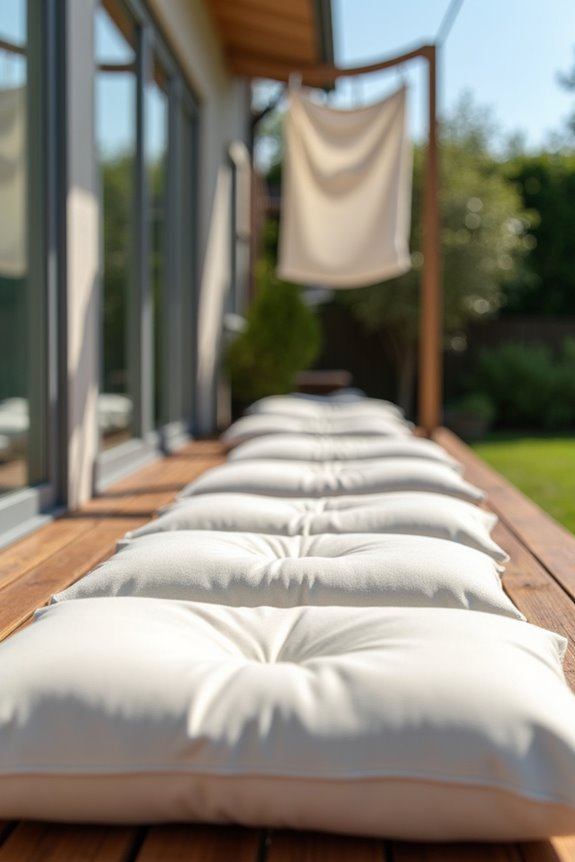
What’s the difference between cushions that smell fresh for years and ones that develop that gross mildew stench? The answer’s simpler than you’d think: proper air drying.
I learned this the hard way after stuffing damp cushions into storage. Big mistake. Now I lay mine flat or on their side in a well-ventilated spot, letting excess moisture drain completely. This prevents mold from taking hold in your outdoor spaces.
Here’s my trick: I gently press out water with a clean towel instead of wringing them like laundry. Skip direct sunlight though—it’ll fade your fabric faster than you’d expect.
The key? Let your cushions dry fully before storing or using them again. Trust me, waiting the extra day beats dealing with that stubborn odor later.