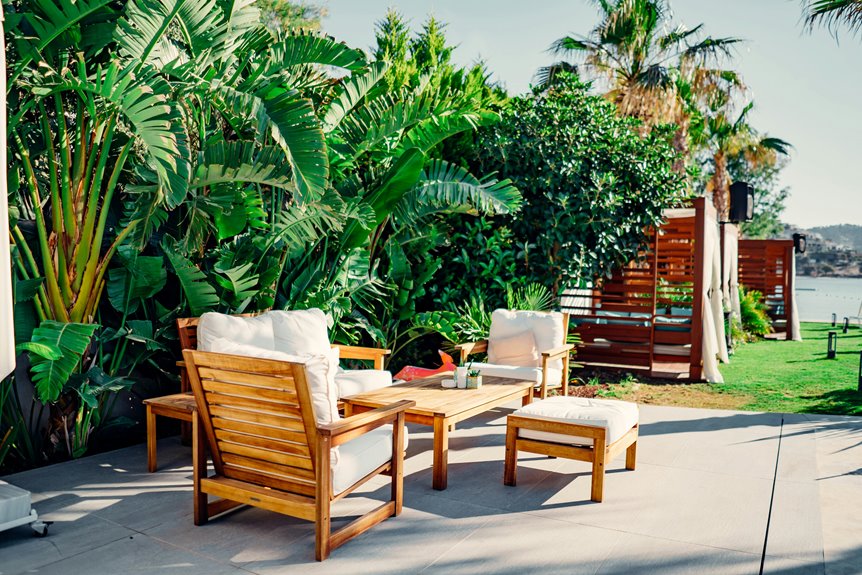
Yes, patio furniture can get wet, but don’t panic—most outdoor pieces handle moisture just fine if you act fast. I’ve learned the hard way that the real damage happens when water lingers in cushions and hidden joints. Your best defense? Wipe down puddles immediately after rain, position furniture to catch sunlight, and dry everything within 30 minutes. Applying sealants every 6–12 months creates a moisture barrier that’s honestly game-changing. Stick around to discover exactly which materials resist water best and how to seal those sneaky spots that invite rot.
Can Patio Furniture Actually Get Wet Without Damage?
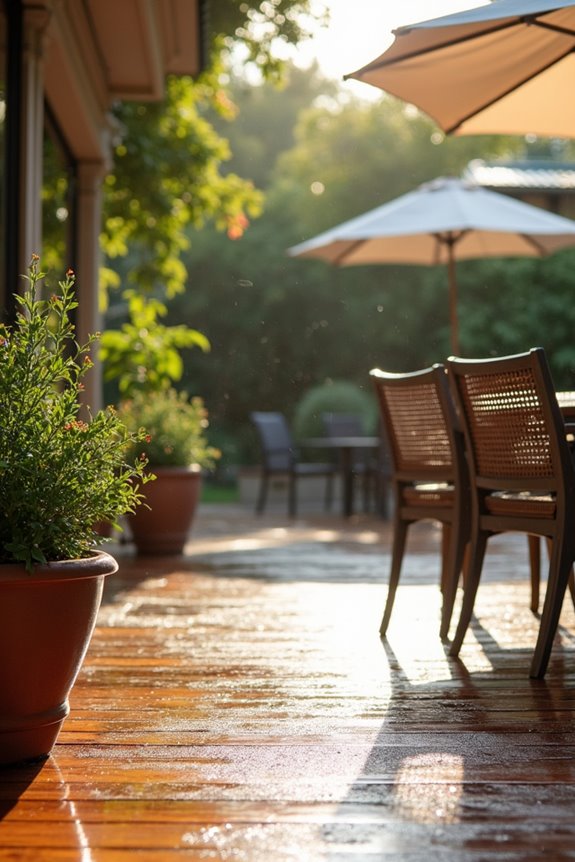
yes, your patio furniture can handle getting wet—but with a big asterisk. I’ve learned this the hard way. Weather-resistant materials like teak, cedar, aluminum, and resin wicker genuinely shed moisture better than untreated wood or plain iron. However—and this matters—most outdoor fabrics aren’t actually waterproof. They’re water-resistant, meaning they repel moisture initially but still need drying afterward.
I discovered that cushions sitting damp overnight invite mold and mildew faster than I’d expect. For effective water damage prevention, you’ll want outdoor furniture protection strategies. Air out cushions after rain. Let surfaces dry in sunlight. These simple cushions drying practices prevent that musty smell nobody wants. Weather-resistant materials buy you time, but quick action keeps everything fresher longer.
Why Rain Damages Patio Furniture in Dry Climates?
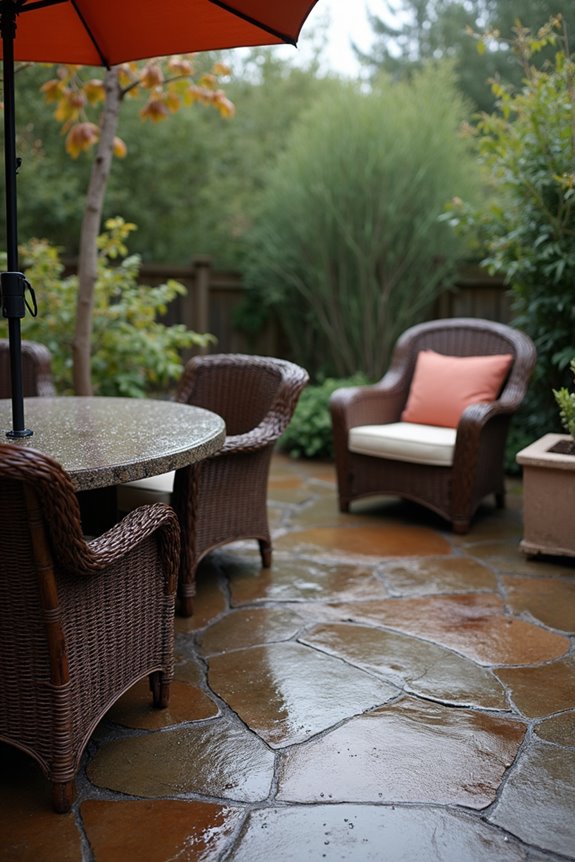
Even though Boise gets less rain than most places, I’ve learned that those occasional downpours actually hit harder on furniture that isn’t used to constant moisture—the wet-dry cycles stress wood fibers and metal coatings more than steady, predictable rain would. When water sneaks into cushion seams and joint crevices after a rainstorm, it gets trapped there longer in our dry air, giving mold and mildew the perfect breeding ground before things finally dry out. I used to think “low precipitation climate” meant I could skip protection, but I quickly discovered that’s when damage sneaks up on you.
Moisture Infiltration in Dry Climates
Why does rain damage patio furniture more than you’d expect in places like Boise, where it barely rains? I’ve learned the hard way that sporadic downpours hit differently in dry climates. When rain finally comes, it sneaks into joints, cushions, and hidden corners where moisture dries slowly—perfect conditions for swelling, fading, and mold.
Here’s what I’ve discovered protects my furniture:
- Weatherproof covers shield fabric and wood from water contact during sudden storms
- Elevated furniture on raised decks keeps ground moisture from creeping underneath
- Quick-drying fabrics and water-repellent finishes reduce damage from dry-then-wet cycles
The key? I treat protection seriously even when skies stay clear. Boise’s unpredictable weather taught me that dry climates aren’t immune to water damage—they’re just less forgiving when it happens.
Stress From Wet-Dry Cycles
The real culprit behind water damage in dry climates isn’t the occasional rainstorm itself—it’s what happens when your furniture keeps switching between soaking wet and bone dry. I’ve watched wood swell after rain, then crack as it dries out. Your cushions become breeding grounds for mold when moisture lingers in hidden joints. The repeated stress weakens wood joints and rusts metal hardware faster than you’d expect. Here’s what I’ve learned: quick drying makes a huge difference. After rain, I wipe everything down and let weather do the rest. I also reapply sealant every 6–12 months to keep moisture out. Using covers and elevating furniture off the ground reduces direct contact. These small habits protect your investment without demanding much effort.
Which Materials Withstand Water Best
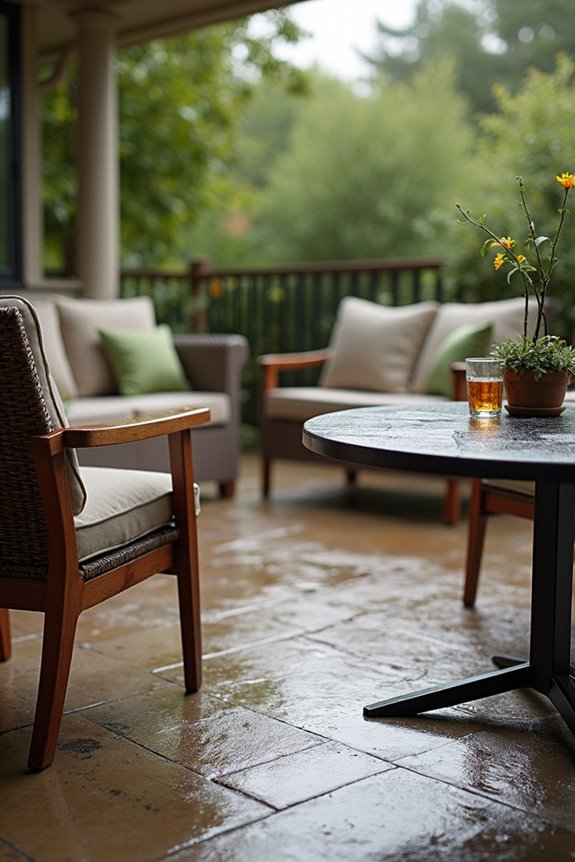
When I first started furnishing my patio, I quickly learned that not all materials handle water equally—some actually thrive in wet conditions while others need a little help from you. Cast aluminum became my go-to choice because it naturally resists rust and requires almost zero maintenance, while hardwoods like teak and cedar offer that classic look and built-in moisture tolerance that makes them surprisingly practical for rainy climates. The real game-changer, though, is understanding that even the best materials benefit from sealants; I’ve seen a difference in my own furniture by applying a protective coat annually, which honestly takes less time than complaining about water damage.
Cast Aluminum’s Rust Resistance
If you’ve ever watched rust creep across old metal furniture like an unwelcome stain, you’ll appreciate why cast aluminum is such a relief for outdoor spaces. I’ve seen friends struggle with iron furniture that deteriorates after one wet season, but cast aluminum simply doesn’t rust.
Here’s what makes it different:
- No rust chimneys forming – Water rolls right off without creating those stubborn orange stains
- Lightweight enough to move – I can easily relocate pieces for drainage and quick drying after rain
- Non-porous surface – Moisture can’t seep in and cause hidden damage
Cast aluminum’s rust resistance means you’re joining a community of smart patio owners who’ve ditched constant maintenance worries. Honestly, minimal cleaning with soap and water keeps it looking fresh for years. It’s the material that actually lets you enjoy your outdoor space instead of babying it.
Hardwood Durability and Sealants
While cast aluminum handles rain without breaking a sweat, wood furniture needs a bit more TLC—but that doesn’t mean you’re stuck with constant repairs. I’ve learned that certain woods like teak, cedar, and redwood naturally resist weather better than others. The real game-changer? A quality wood sealant. This creates a moisture barrier that prevents rain from soaking in and causing swelling, cracking, and rot. I apply sealant every 6–12 months to keep my pieces protected. Here’s my confession: I used to skip this step and regretted it. Now I clean and sand surfaces first, then seal them properly. After rainfall, I dry everything thoroughly before resealing. Elevating furniture off wet ground helps too. With consistent outdoor wood care, your hardwood pieces stay beautiful for years.
Choose Between Patio Covers and Furniture Covers
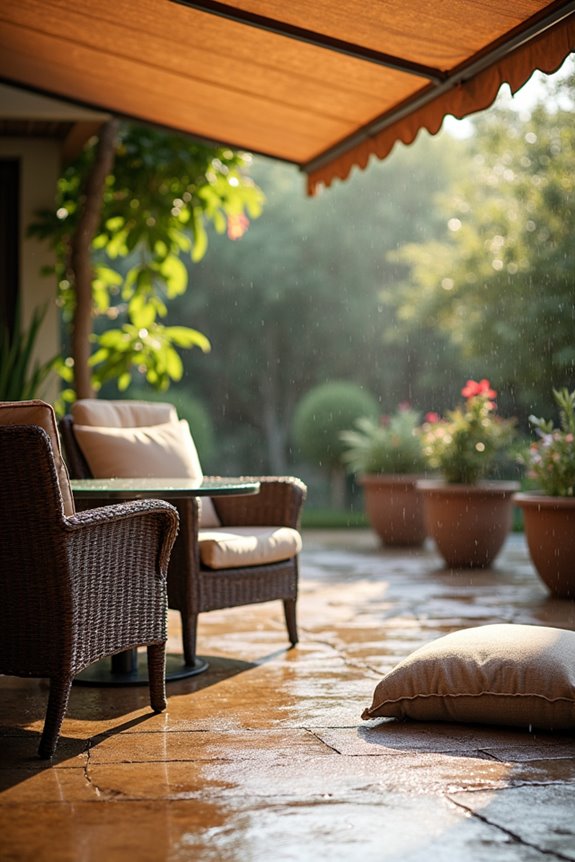
You’ve basically got two solid routes to keep your outdoor furniture from getting waterlogged.
First, there’s the patio cover approach—decks, pergolas, or awnings that shield your whole setup. I’ve found these work wonders because they block rain and sun while letting you quickly grab furniture when you need it. Then there’s the individual furniture cover option, which I honestly prefer when space is tight.
Here’s what makes sense:
- Patio covers offer permanent weather protection and reduce debris buildup
- Furniture covers work great for specific pieces and prevent moisture damage
- Combined approach gives you maximum water damage prevention
I’ll be honest—I started with just covers, but adding an awning changed everything. The covers prevent water buildup and cut drying time dramatically. Energy Center-Manhattan Pool can help you pick durable, weather-resistant options that actually fit your space and budget.
Position Furniture for Better Drainage and Airflow
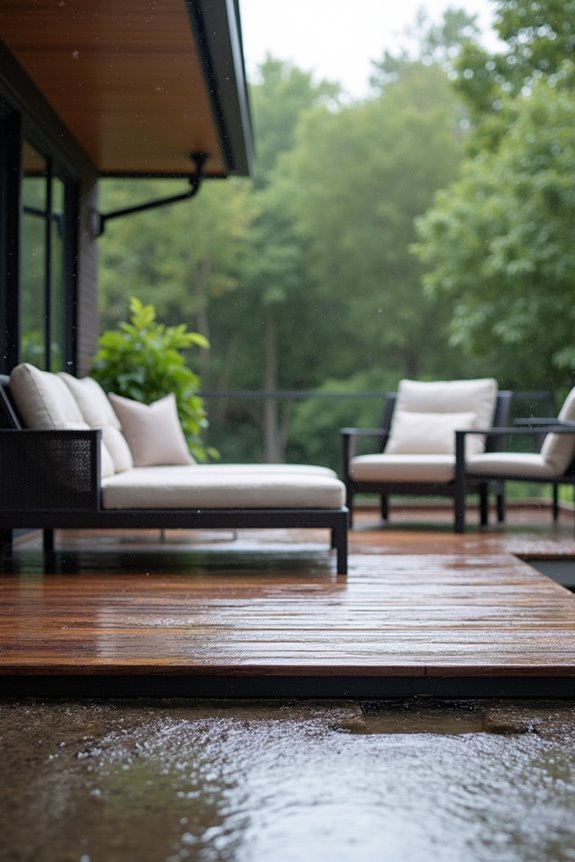
Covers and awnings get you halfway there, but where you actually place your furniture matters just as much. I’ve learned that patio furniture placement isn’t just about aesthetics—it’s about survival.
I elevate everything using concrete pads or raised decks to keep moisture from pooling underneath. Think of it like giving your furniture feet a fighting chance. Position pieces under pergolas or partial roof areas for natural shelter while still allowing airflow to do its job.
Space furniture with gaps between them. I used to crowd mine together (rookie mistake), and they’d stay damp for days. Now I leave breathing room.
Even weather-resistant covers work better when there’s airflow around items. Drainage and airflow are your secret teammates for preventing water damage. They’re the difference between furniture that lasts and furniture that doesn’t.
Waterproof Wood Before Rain Season Hits
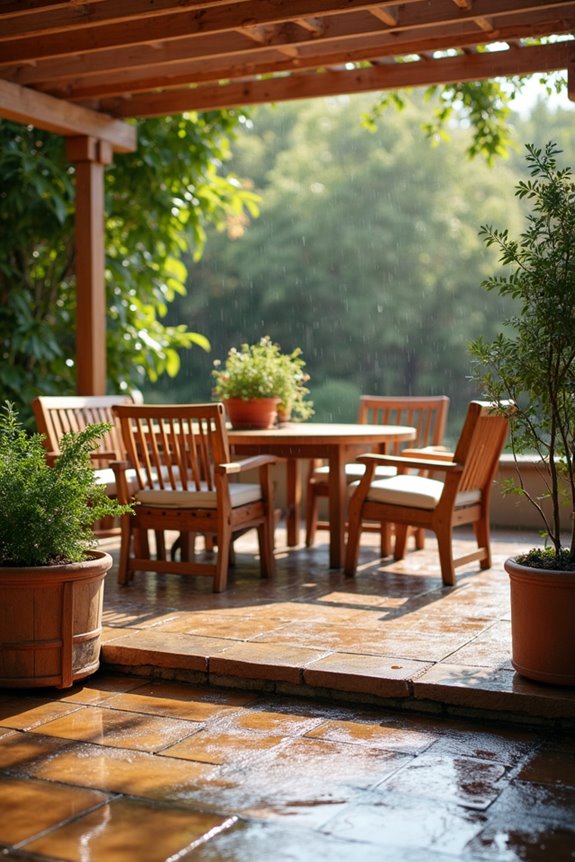
How much damage can water really do to wood furniture? I’ve learned this the hard way—warping, cracking, and rot aren’t fun to deal with. That’s why I waterproof my outdoor furniture before rain season arrives.
Here’s what I do:
- Apply a protective sealant to create a moisture barrier that slows water absorption into the wood
- Use outdoor wood oils on teak, cedar, or pine and reapply every 6–12 months for lasting water resistance
- Dry surfaces promptly after rain by wiping down and letting sun exposure do its thing
I’ll be honest—skipping this prep work costs me way more in repairs later. Taking a few hours now saves headaches (and money) when those heavy rains hit. Your outdoor furniture will thank you.
Dry Your Furniture the Right Way After Rain
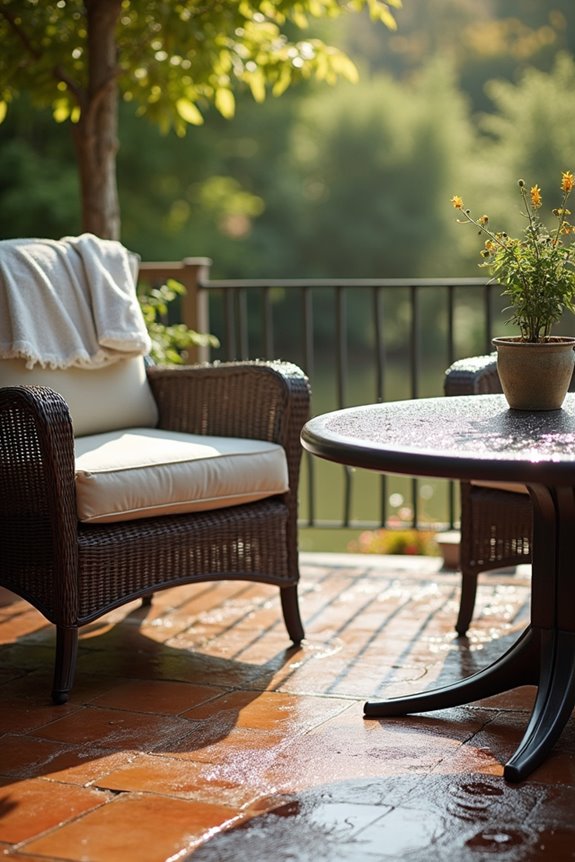
Once that rain stops, I’ve learned the hard way that what you do in the next few hours makes all the difference between furniture that lasts and furniture that starts rotting from the inside out. Here’s what I do now: I wipe down puddled water immediately—don’t skip this step. For outdoor cushions, I flip them upright to maximize air circulation. Sunlight’s your best friend here; I position everything where it’ll catch rays. I’ve ruined cushions by leaving them damp too long, so I’m obsessive about drying now. Proper moisture control means opening umbrellas fully and spreading cushions out. This prevents mold, mildew, and rust on hardware. Trust me, spending thirty minutes on drying beats replacing furniture entirely.
Seal Your Outdoor Furniture: Oils and Sealants Explained
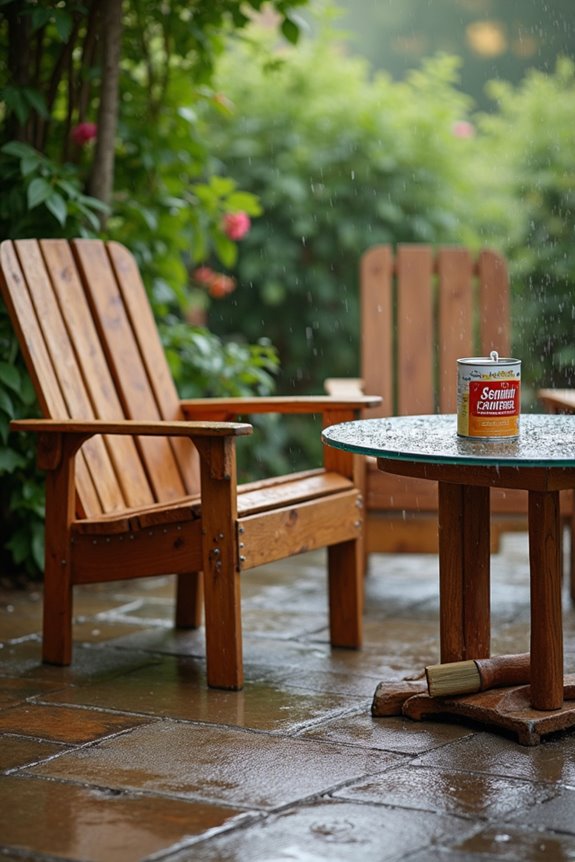
Once you’ve dried your furniture, it’s time to seal it—and I’ll be honest, this step is what actually keeps my outdoor pieces from falling apart after a few seasons. You’ve got two main weapons here: oils like teak oil that soak into the wood and create a moisture barrier, and sealants like spar urethane that sit on top and repel water like a raincoat. The trick is picking the right one for your material (teak and cedar love oils, while wicker needs that outdoor varnish), getting your surfaces totally clean and dry first, and then reapplying every 6 to 12 months—kind of like how you’d renew sunscreen.
Wood Sealants And Oils
Why do some people’s wooden patio chairs look pristine after five years while others splinter and crack within two? I’ll tell you—it’s all about wood sealants and oils. I learned this the hard way after my first cedar set warped beyond recognition.
Here’s what actually works for moisture protection:
- Outdoor furniture oils nourish bare wood and slow water absorption, though you’ll need reapplication every 6–12 months
- Water-repellent sealants designed for outdoor use create a protective barrier that prevents swelling and cracking
- Don’t forget hidden spots—seal exposed nooks and furniture leg bottoms to stop hidden rot
After rain, I wipe everything down and let it fully dry before resealing. Following manufacturer guidelines sounds tedious, but it’s genuinely the difference between furniture lasting decades versus seasons.
Application Timing And Frequency
When should you actually seal your furniture—right away, or can you wait? I learned this lesson the hard way. You’ll want to seal everything after it’s completely dry. I’m talking bone-dry—no damp spots hiding underneath. Here’s what I do:
| Material | First Application | Reapplication |
|---|---|---|
| Teak/Cedar | After cleaning & light sanding | Every 6–12 months |
| Wicker | After complete drying | Every 6–12 months |
| Metal | After primer & paint | As wear appears |
The protective sealants and outdoor wood oils work best on clean surfaces. Don’t skip those hard-to-reach spots—seal bottoms and feet too. I once missed my chair’s underside and regretted it. Trust me, sealing frequency matters. Reapply every 6–12 months depending on your climate. Your furniture will thank you.
Material-Specific Protection Methods
Different furniture materials need different protection strategies, and that’s where things get interesting.
I’ve learned that one-size-fits-all sealing doesn’t work. Here’s what actually matters for your setup:
- Wood furniture (teak, cedar, pine): Apply outdoor wood oils or marine varnish every 6–12 months. I seal the bottoms too—moisture sneaks in there first.
- Wicker sealant: Natural wicker needs multiple coats after completely drying. I learned this the hard way when my first coat peeled off.
- Metal furniture: Sand away surface rust before applying rust prevention primer and outdoor paint. It’s tedious, but it stops rust dead.
The key? Don’t rush. Fully dry everything before sealing. I’ve watched waterproofing wood fail when I skipped this step. Your furniture’ll thank you for the attention.
Winter Storage for Patio Furniture: Planning Ahead
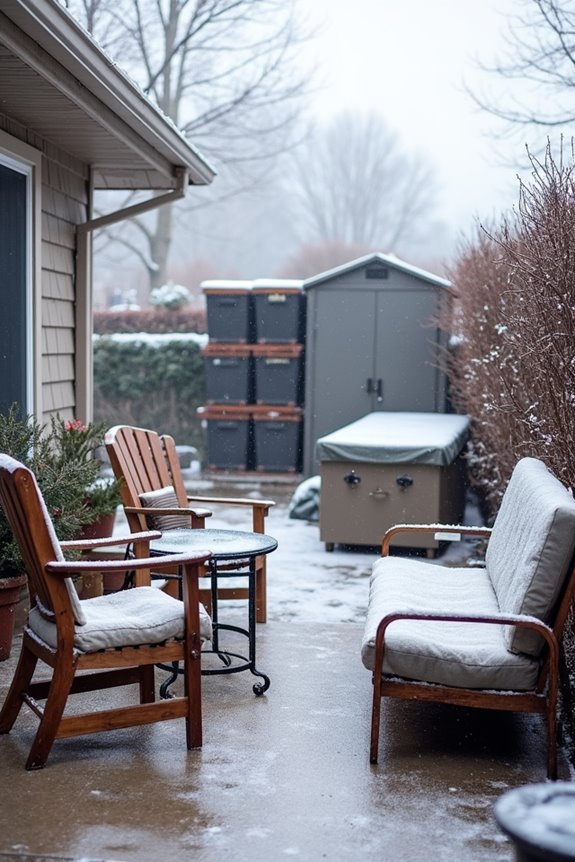
How’d you like to skip the spring cleanup headache?
I learned this the hard way: winter storage for outdoor furniture beats scrambling come March. Before heavy snow hits, I bring my pieces inside—garage, basement, wherever I can squeeze them. If space is tight, weatherproof covers work, but here’s my confession: I’ve trapped moisture under covers before. Not fun.
Here’s what actually works. I clean everything thoroughly and let it dry completely. Cushions? They live separately in breathable containers—game changer for moisture prevention. I elevate furniture on concrete blocks to keep it off damp floors. Then comes the satisfying part: sealing wood surfaces before storage protects them through winter.
Timing matters too. Don’t procrastinate like I used to. Get your outdoor furniture inside before sustained rain arrives.
When to Replace vs. Restore Water-Damaged Outdoor Furniture
After you’ve discovered water damage on your favorite patio chair or table, you’re facing a decision that’ll either save you money or cost you more down the road.
I’ve learned the hard way that some damage deserves restoration, while other situations demand replacement. Here’s what I look for:
- Visible rot or soft wood – If the wood feels spongy or crumbles when I poke it, replacement beats restoration
- Mold that returns – Persistent mold means moisture trapped deep inside; restoration won’t fix this
- Structural weakness – Wobbly frames or loose joints signal it’s time to replace rather than keep repairing
I honestly ask myself: Will repeated fixes cost more than buying new furniture? If restoration requires constant maintenance, replacement makes financial sense. Trust your gut here.