
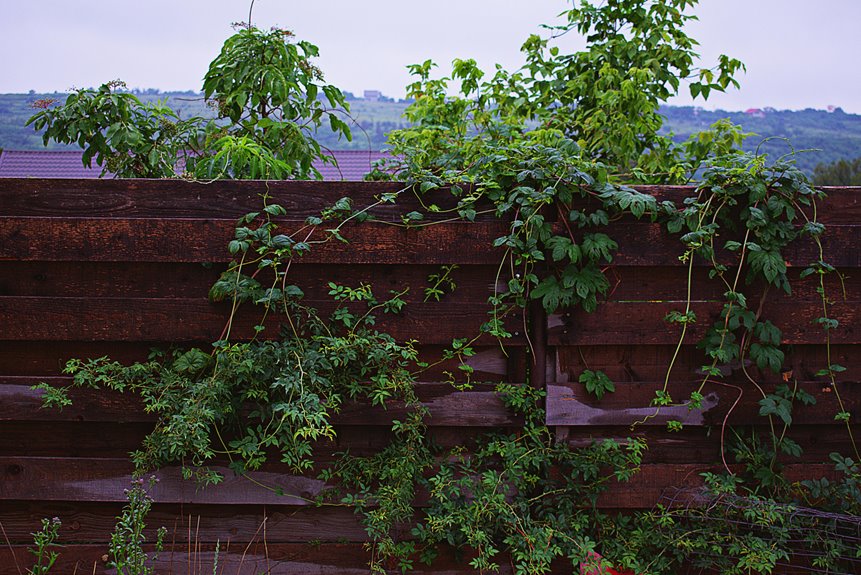
Skunks aren’t great climbers—but they’re sneakier than you’d think. Spotted skunks can scale up to 6 feet, while striped skunks usually struggle. Here’s what got me: they prefer digging under fences rather than climbing over them. Wood and chain-link fences are basically invitations since rough textures give them grip. I’ve learned vinyl or solid metal work best, but you’ll really need an underground barrier—buried 12 inches deep—to truly stop them.
Do Spotted or Striped Skunks Climb More?
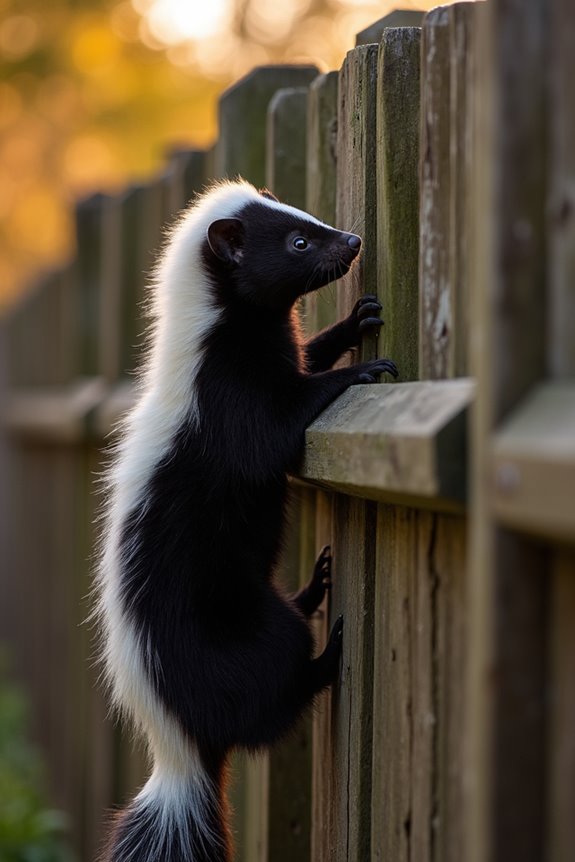
Ever wondered why some skunks seem like tiny ninjas scaling your fence while others can barely manage a small step?
I’ve learned that spotted skunks are the climbers you really need to worry about. They’re lighter and way more agile, able to shimmy up trees and walk along branches like they own the place. Striped skunks? They’re the heavier cousins who struggle with vertical climbs. I’ve watched them fail at fences that spotted skunks breeze right up.
This climbing ability difference matters big time for fence design. Spotted skunks can scale almost anything, while striped skunks have a tougher time. Their heavier bodies and weaker climbing skills work against them. Understanding your local skunk type helps you build the right defense. It’s honestly the first step toward keeping your property skunk-free.
Why Wood and Chain-Link Fences Fail Against Skunks
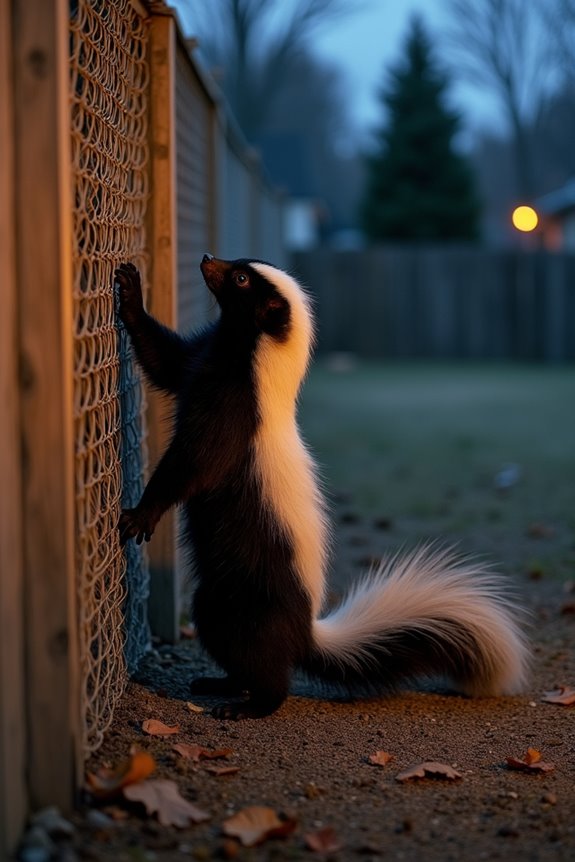
Wood and chain-link fences are basically climbing gyms for determined skunks—I’ve watched them scale both like they’re training for the Olympics. The rough texture of wooden boards and the horizontal rails give their little claws plenty of grip points, while chain-link’s diamond pattern is practically a ladder if there’s any debris or rough spots at ground level to push off from. That’s why I learned the hard way that even a “tall” wooden fence isn’t your real defense; you’ve got to think underground too, because most skunks would rather dig under your fence than exhaust themselves climbing over it.
Texture Provides Climbing Grip
When I first installed a wooden fence around my garden, I thought I’d solved my skunk problem—until I watched one shimmy up the rough boards like it was climbing a tree.
The truth? Texture is a skunk’s best friend. Those rough wooden surfaces and chain-link patterns give their long claws exactly what they need—grip and footholds. I learned that skunks are surprisingly athletic climbers, especially on uneven boards where gaps form naturally over time.
Smooth surfaces like vinyl or sealed metal? They’re your allies. Skunks struggle against slick barriers because their lightweight frames can’t find purchase without texture to grip.
If you’ve got a textured fence like I did, you’re basically inviting them up. It’s frustrating, I know—but understanding this battle between texture and climbing ability helps us fight back smarter.
Horizontal Rails Aid Ascent
Beyond texture, there’s another reason my wooden fence became a skunk superhighway—the horizontal rails themselves. I didn’t realize it at first, but those crossbars act like built-in ladders for climbing skunks. Each rail provides the perfect foothold, letting them scramble right up my fence line without breaking a sweat.
Here’s what I learned: chain-link fences are just as bad. The horizontal wires create handholds that skunks grip easily while they climb. Even striped skunks, which aren’t the greatest climbers, can manage vertical ascent when those footholds exist.
It’s frustrating, honestly. You build a fence thinking you’re protected, then discover it’s practically a climbing gym for wildlife. That’s when I switched to smooth materials without those convenient rails—a game-changer for keeping skunks out.
Material Weakness Invites Entry
Why do so many homeowners struggle with skunks breaching their fences? The answer lies in material weakness. I’ve learned that certain fence types practically invite entry:
- Wooden fences – Their rough texture and horizontal rails give skunks perfect gripping surfaces for their long claws
- Chain-link fences – Small gaps and exposed footholds let determined skunks scale right over
- Unprotected tops – Missing caps or covers leave easy access routes
I discovered the hard way that smooth, solid materials actually deter climbing better than rough ones. Ground-level gaps matter too. Even a sturdy fence fails if skunks can dig underneath it. The real fence weaknesses aren’t about height—they’re about what your barrier’s made from and how well it’s sealed. That’s where most of us go wrong.
How High Can a Skunk Actually Climb?
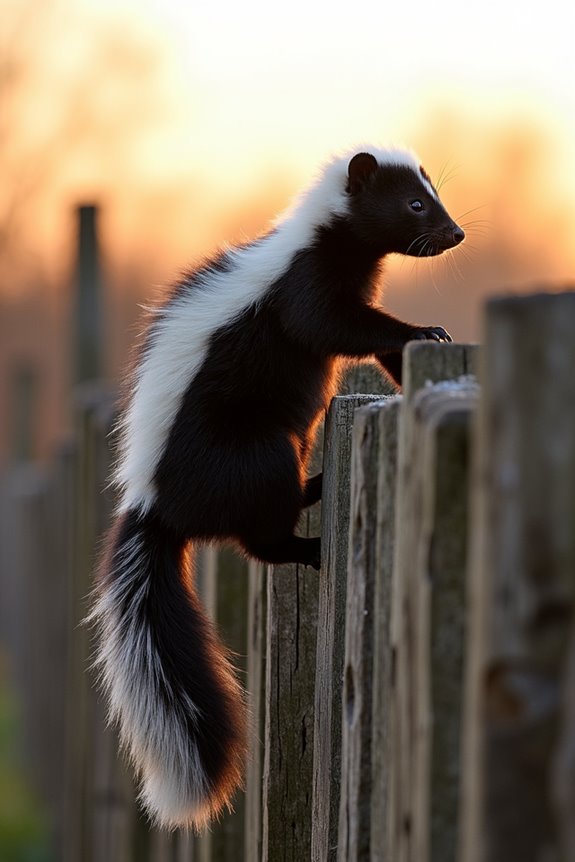
I’ve learned the hard way that not all skunks climb the same—spotted skunks can scale a 6-foot fence like they’ve got tiny suction cups on their paws, while striped skunks usually tap out much sooner since they’re basically built for ground-level living. The material your fence is made from matters just as much as the skunk species trying to breach it; rough wood and chain-link give them plenty of grip, but smooth vinyl or metal surfaces tend to stop them cold. Honestly, even if climbing isn’t their thing, I’ve watched skunks dig under barriers so determinedly that I realized the fence height alone won’t save you without a solid ground defense.
Species-Specific Climbing Heights
Just how high can a skunk actually climb? Well, I’ve learned that it really depends on which species you’re dealing with. Here’s what separates these little climbers:
- Spotted skunks reach up to 6 feet high—they’re the acrobats of the skunk world
- Striped skunks struggle with vertical climbs and rarely scale wire mesh fences successfully
- Tree access gives spotted skunks advantages striped skunks simply don’t have
I’ve noticed spotted skunks are lighter and more agile, descending trees head-first like they’re showing off. Their smaller bodies let them navigate branches easily. Striped skunks? They’re heavier with longer nails, making fence height almost irrelevant when they can’t grip properly. If you’re protecting your property, understanding these climb ability differences matters. Spotted skunks pose a genuine fence-scaling threat, while striped skunks typically stay grounded. Knowing your local species helps you plan better defenses.
Fence Material Climbing Limitations
Now that you know which skunks can actually climb, it’s time to look at something that might surprise you: the fence material itself makes a huge difference in whether they’ll even try. I’ve learned this the hard way—smooth vinyl or metal barriers are your best friends for skunk climbability. These surfaces don’t give paws anything to grip, making barrier effectiveness skyrocketing compared to rough wood or chain-link fencing. Wood vs vinyl? Vinyl wins hands down. Here’s the thing though: even the best fence material fails if skunks find ground-level gaps. I made this mistake initially, focusing only on height. Now I inspect for digging spots beneath fences since determined skunks will chew through weaker sections. Material choice matters, but ground-level security? That’s equally essential for real protection.
Skunks Dig More Than They Climb: Here’s Why That Matters
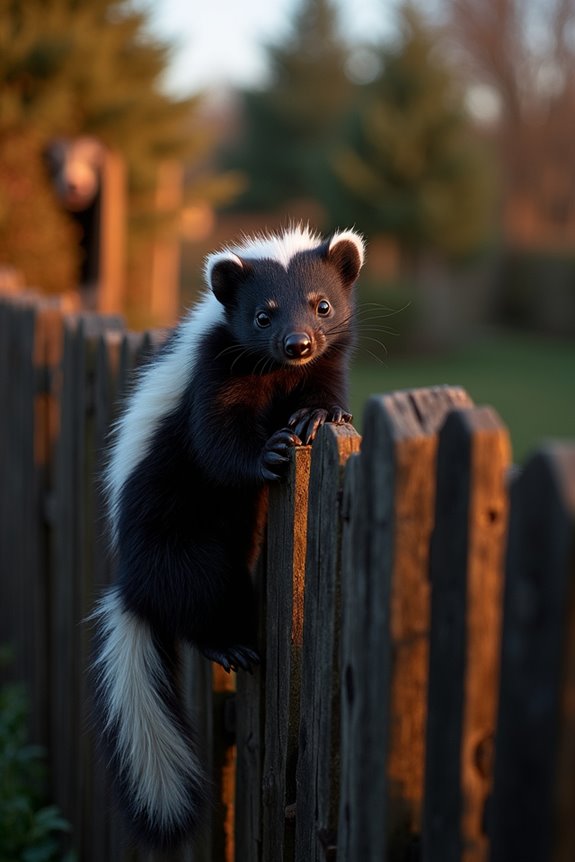
Why do skunks seem so determined to burrow under your fence instead of hopping over it? I’ve learned that skunks dig more than they climb because of their body structure and natural instincts. Here’s what matters for your defense:
Skunks dig more than they climb because of their body structure and natural instincts—so fence deterrents must focus on underground protection.
- Their heavy bodies make climbing difficult, so they naturally prefer digging
- Ground-level access is easier when searching for food or shelter
- Digging behavior means your fence needs underground protection
When I realized skunks weren’t scaling my fence but tunneling beneath it, everything changed. Their climbing ability is honestly pretty limited compared to other critters. That’s why fence deterrents focusing on digging behavior work better than tall barriers. Understanding this digging behavior helps you design wildlife fencing that actually stops them where they’re strongest.
Best Fence Materials for Skunk Prevention
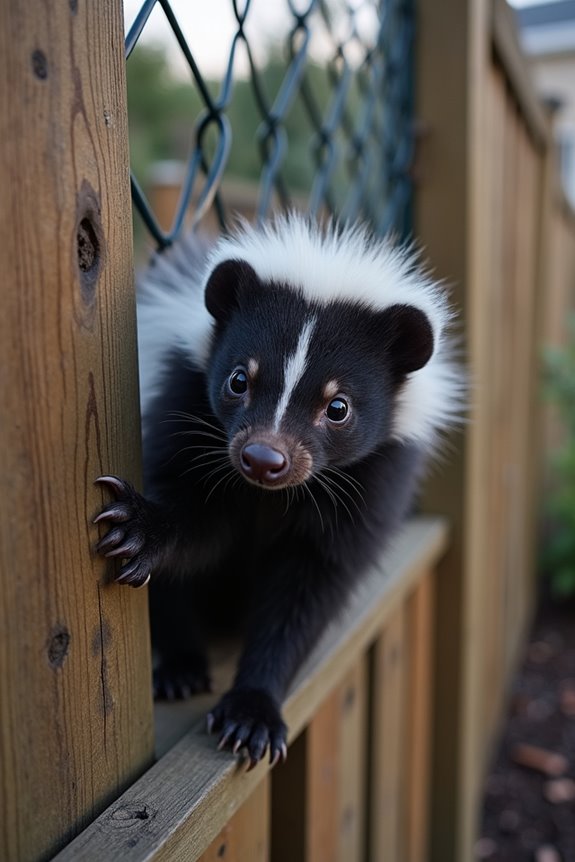
When I started looking into fence materials, I realized my wooden fence was basically a skunk climbing gym—all those rough boards and gaps gave them perfect handholds.
That’s when I learned that smooth-surfaced fences like vinyl or solid metal actually work. Here’s why: skunks need grip to climb, and slippery surfaces deny them that advantage.
| Material | Surface Texture | Climbing Difficulty | Cost | Best For |
|---|---|---|---|---|
| Vinyl | Smooth | High | Moderate | Long-term |
| Solid Metal | Smooth | High | High | Maximum protection |
| Wood | Rough | Low | Low | Not recommended |
| Chain-link | Rough | Low | Low | Not recommended |
| Wood + Hardware Cloth | Smooth reinforced | Very High | Moderate | Best budget option |
Don’t forget buried barriers though. Adding hardware cloth beneath your fence stops skunks from digging underneath. I wish I’d done this first—it’s honestly the cheapest fencing solution to prevent total access.
Buried Barriers and Ground-Level Defense
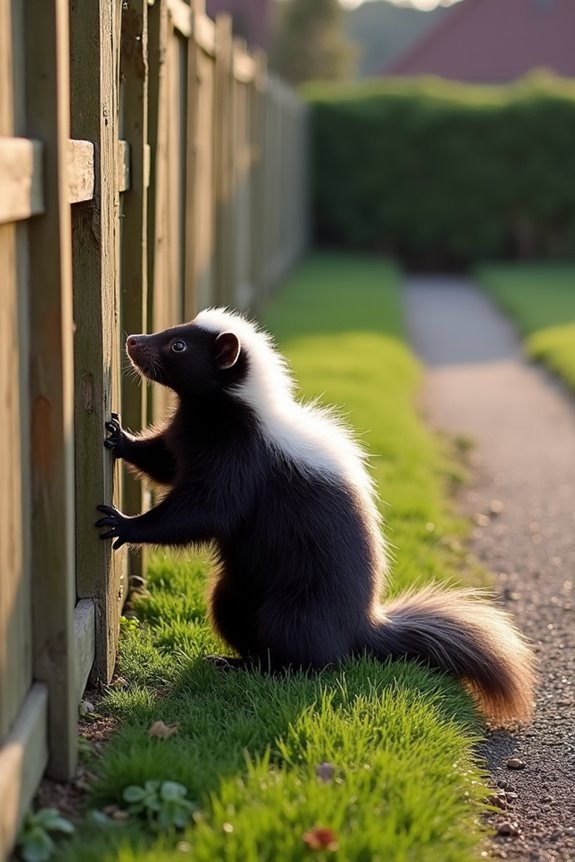
A smooth fence stops skunks from climbing up, but it does absolutely nothing to stop them from digging underneath. I learned this the hard way when I found fresh burrows right along my fence line. Here’s what actually works:
- Bury hardware cloth or wire mesh 12 inches deep and 12 inches outward in an L-shape
- Create a continuous under-fence barrier with no gaps where skunks can squeeze through
- Inspect ground-level areas regularly and reseal any spots where your buried barrier ends
This ground-level defense prevents digging under fence completely. I won’t lie—it’s work installing an under-fence barrier, but it’s worth every shovel load. Once you establish this buried barrier, your skunk deterrence becomes genuinely effective. You’re basically closing off their favorite entry method.