A standard 5-gallon pot sits about 12 inches wide and 11 inches deep, though I’ll be honest—it doesn’t actually hold five gallons of soil. You’re looking at closer to 3.5 gallons of usable space, which caught me off guard my first time around. The pot tapers slightly toward the bottom, so measure your inside rim to plan accurately. Leave an inch of space at the top for watering. Stick around to discover which plants thrive in this surprisingly versatile size.
5 Gallon Pot Dimensions: Width, Height, and Depth
So what exactly are we working with when we grab a 5 gallon pot off the shelf? I’ll be honest—I didn’t know either until I started measuring mine. You’re looking at roughly 12 inches across the top diameter and about 11 inches deep. Those numbers matter because they determine how much soil you’ll actually need to fill it properly. I learned this gardening tip the hard way when I underestimated and ended up with a half-empty pot. The width and depth work together; the pot tapers slightly toward the bottom, so the actual soil volume is a bit less than you’d think. Grab a measuring tape and check your own pot’s inside rim measurements. This simple step helps you plan soil amounts accurately and sets you up for successful planting.
Measure Your Pot in 2 Minutes (Simple Steps)
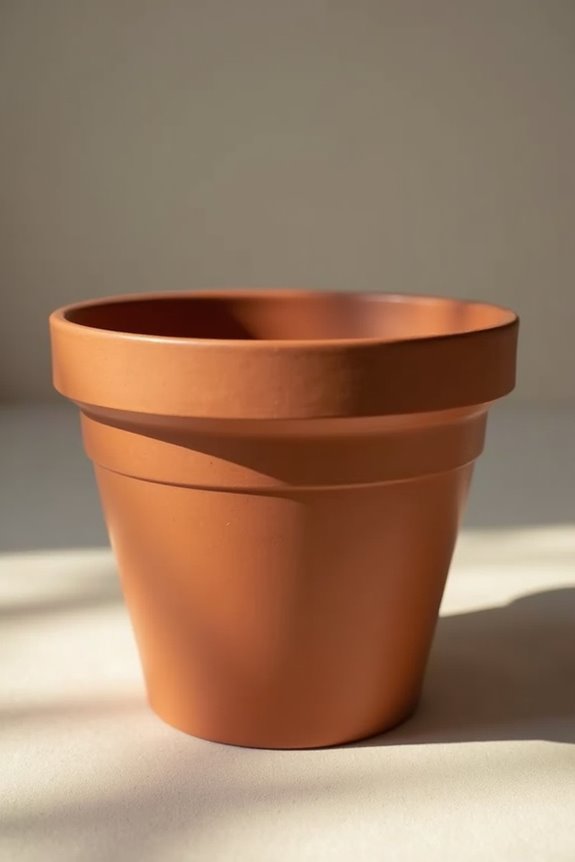
Want to know your pot’s true dimensions without overthinking it? I’ve got you covered.
Grab a measuring tape and find your pot’s widest point across the top rim—outside edge to outside edge. That’s your diameter. I always measure twice because I’m paranoid about getting it wrong. Next, measure from the bottom inside to the rim for depth. Takes literally ninety seconds.
Here’s my confession: I used to guess pot sizes and ended up with soil overflow disasters. Not fun.
These two measurements tell you everything. Jot them down and compare against a nursery chart, or fill your pot with water and see what it actually holds. No math required. Sometimes the easiest answer beats the fanciest one.
5 Gallon vs. 3, 7, and 10 Gallon Pots: What’s the Difference?
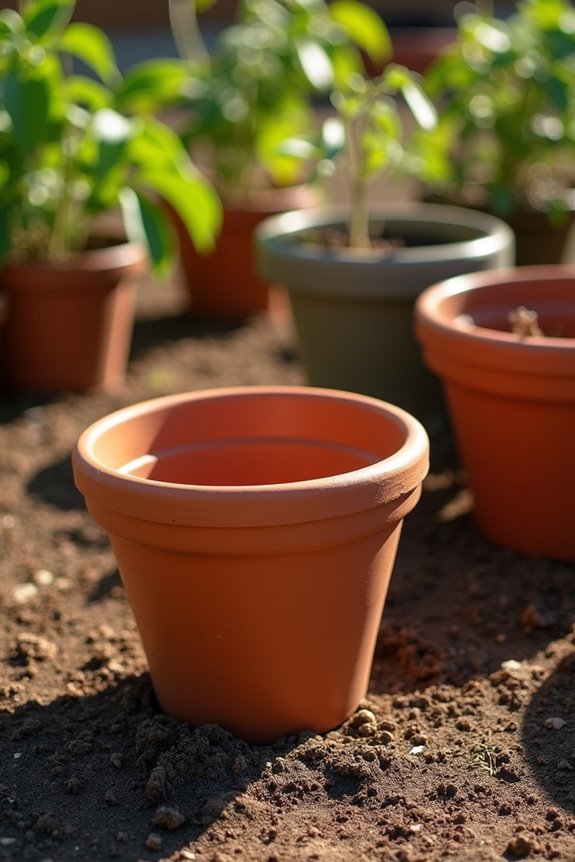
Now that you’ve measured your pot, let’s talk about what those numbers actually mean when you’re choosing between common sizes. A 3 gallon pot is noticeably smaller—I use mine for compact plants and herbs. The 5 gallon sits in that sweet spot where I get solid root space without taking over my patio. Jump to 7 gallons, and you’re looking at a wider, deeper container that handles bigger plants beautifully. The 10 gallon? That’s my go-to when I want something that’ll truly thrive for years. Honestly, I’ve learned that picking the right size prevents me from repotting constantly. Each step up means more soil, better growth, and less fussing around. It’s worth considering your space and plant ambitions before deciding.
Soil Volume and Planting Capacity
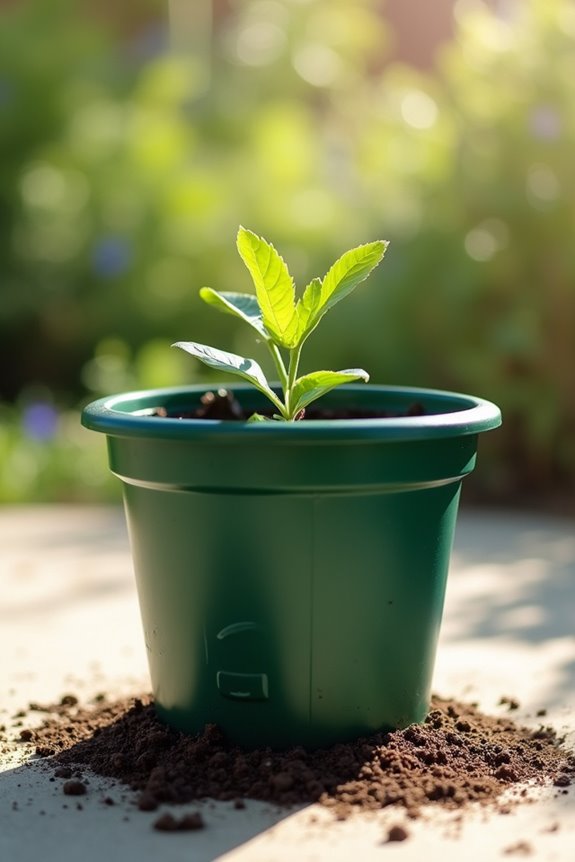
I’ll be honest—I used to just fill my 5-gallon pots without thinking, then wondered why my plants looked sad halfway through the season. Once I realized that a 5-gallon pot doesn’t actually hold five gallons of soil (it’s usually closer to 1-2 gallons depending on the shape), I started measuring my soil needs properly by calculating the pot’s depth and width in cubic feet, then subtracting about 10-15% for the space I need at the rim. Knowing your pot’s real capacity helps you mix the right amount of quality soil and gives your plants the room they need to really thrive.
Calculating Soil Requirements
How much soil actually fits inside your 5-gallon pot? I’ve learned this isn’t straightforward. A 5-gallon pot doesn’t hold 5 gallons of soil—it holds less because of the rim and how soil settles. I always reduce my estimate by 10–15% to account for this.
| Pot Shape | Interior Diameter | Usable Soil Volume |
|---|---|---|
| Short/Wide | 12 inches | ~3.5 gallons |
| Standard | 12 inches | ~3 gallons |
| Tall/Narrow | 10 inches | ~2.5 gallons |
The easiest approach? Fill your pot with water to the rim, then measure it. I’ve done this countless times—no guessing required. Different shapes hold different amounts, so checking yours saves frustration later when you’re planting.
Capacity For Plant Growth
Your 5-gallon pot’s real strength lies in how much soil it can actually hold for your plant’s roots. I’ve found that these pots hold roughly 0.67 cubic feet of soil—enough for most houseplants and small vegetables. The squat, wide shape (around 12 inches across and 11 inches deep) creates fantastic conditions for root spread, which I’ve noticed gives plants more stability than taller designs.
Here’s my confession: I used to eyeball soil amounts and wonder why plants struggled. Now I measure water volume for accuracy. You’ll want to leave about an inch of space at the rim for watering. This practical capacity makes 5-gallon pots perfect for beginners. You’re getting genuine growing room without overwhelming yourself with maintenance. That’s honest value.
Tall vs. Wide 5 Gallon Pots: Which Works Better?
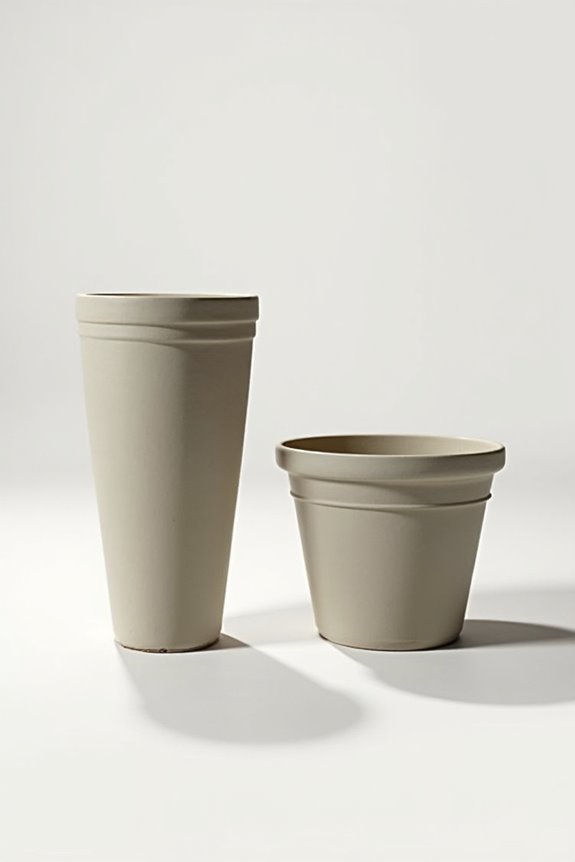
When you’re standing in the garden center staring at two 5-gallon pots that look completely different, you’ve probably wondered which one’s actually better for your plants. I’ve been there too, honestly confused by all the options.
Tall pots give your plants’ roots more room to grow downward, which deep-rooted plants absolutely love. Wide pots, though? They’re my go-to for shallow rooters since they offer more surface area. I’ve noticed tall pots need deeper soil to prevent roots from circling endlessly, while wide ones work better with shorter substrates.
Here’s what I’ve learned: measure from inside rim to inside rim to get accurate soil volume. Both hold roughly 0.93 to 1.0 cubic feet. Your choice really depends on what you’re planting. Match the pot shape to your plant’s natural root system, and you’ll see better growth.
What Plants Thrive in a 5 Gallon Container?
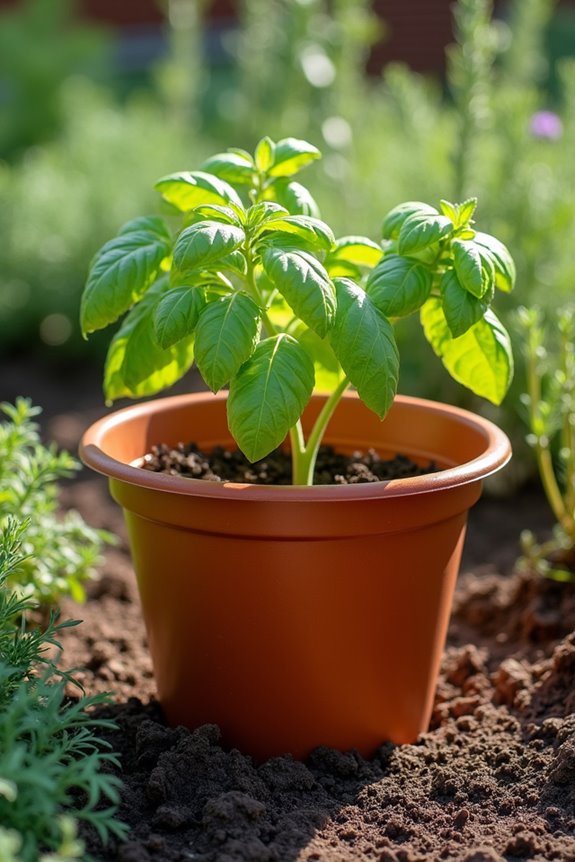
I’ve found that 5 gallon pots are goldmines for growing vegetables like tomatoes, peppers, and eggplants, plus herbs such as basil and rosemary that I honestly use faster than I can grow them. For ornamental shrubs and smaller trees, I’ve had great success with dwarf varieties and flowering shrubs that fit the roughly 12-inch diameter without getting rootbound too quickly. The key thing I’ve learned is matching the plant’s mature size to that container—I once stuffed a butterfly bush in one and spent the whole season wrestling with it, so picking the right plant from the start saves a ton of frustration.
Vegetables And Herbs
How do you know which vegetables and herbs’ll actually thrive in a 5-gallon pot? I’ve learned through trial and error—mostly error at first. Herbs like basil, parsley, and mint absolutely love this size. They’re forgiving and grow fast, which keeps me motivated. For vegetables, I’ve had great success with lettuce, spinach, and cherry tomatoes. Peppers work too, though they need consistent watering. The key is understanding that 0.25 to 0.5 cubic feet per plant gives roots enough breathing room. I honestly started cramming too many seedlings together before realizing they needed space. Now I stick to one larger plant or a few compact herbs per pot. Your success honestly depends on matching plant type to available soil depth.
Ornamental Shrubs And Trees
Moving beyond herbs and veggies, ornamental shrubs and small trees open up a whole new world of container gardening possibilities. I’ve found that 5-gallon pots work beautifully for medium-sized ornamentals that need room to establish themselves without sprawling everywhere.
Here’s what makes these containers shine for shrubs and trees:
- Foundation plantings – I tuck them against house corners for instant curb appeal
- Hedge creation – Multiple pots lined up create natural privacy screens
- Landscape beds – They fill gaps while plants mature before transplanting
- Root-friendly sizing – Enough space for established systems without requiring aggressive root pruning
The 11-inch depth gives roots genuine room to grow. Before I move anything into the ground, I let my shrubs acclimate in their containers first. It’s honestly made transplanting way less stressful for both me and the plants.