I’ve grown ten fantastic trellis plants, and honestly, the best ones are sugar snap peas, snow peas, pole beans, cucumbers, and indeterminate tomatoes—they’re reliable producers. Melons and small squash work great too if you’re willing to support heavy fruit with cloth slings. Tomatillos need a buddy for pollination, but they’re worth it. The secret? Match sturdy supports to heavier crops, use gentle figure-eight ties, and harvest constantly to keep plants producing. Stick around to discover which specific varieties thrive best in your garden setup.
Sugar Snap and Snow Peas: Lightweight Climbers for Vertical Gardens
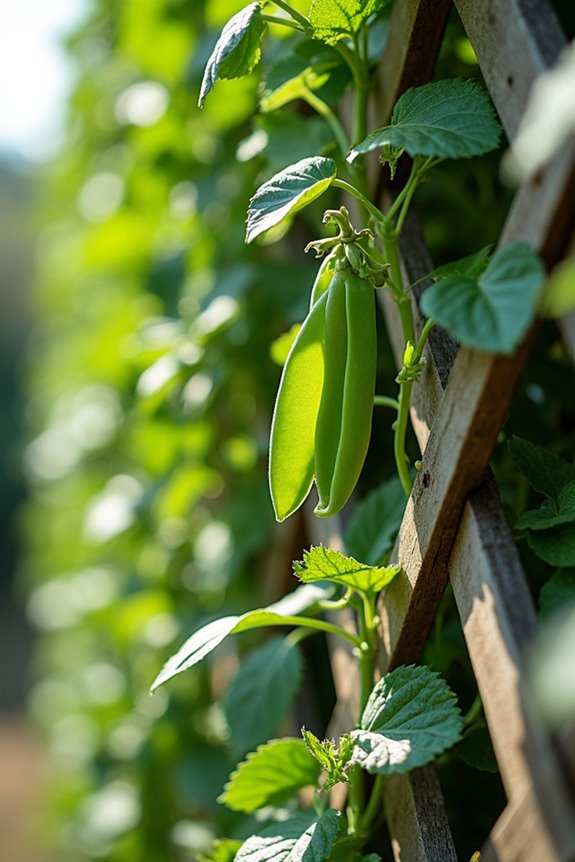
Ever wonder why peas seem to defy gravity and climb seemingly endless heights? I’ve watched sugar snap peas and snow peas do exactly that on my trellis, and honestly, they’re kind of magical. These lightweight climbers use delicate tendrils that wrap around rungs naturally—no tying required, which I appreciate since I’m lazy about maintenance.
Here’s what sold me: they reach 6 to 8 feet tall with proper support. I use tight rung spacing to keep them stable. The best part? Regular harvesting keeps them producing all season long. I pick pods constantly, and they just keep giving.
For trellis looping success, choose a sturdy, well-ventilated structure. Air circulation prevents disease, something I learned the hard way. Sugar snap peas and snow peas thrive on arches or panels without weighing anything down. They’re practically foolproof climbers.
Pole Beans: Continuous Harvests on Sturdy Trellis Support
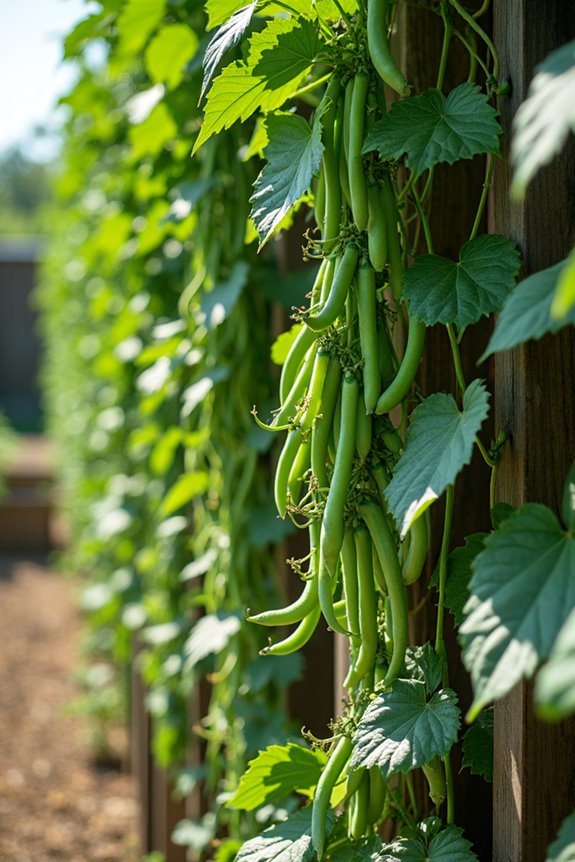
I’ve found that pole beans are my go-to choice when I want steady harvests without constantly replanting, and they’ll climb just about any sturdy support you give them—whether that’s a wooden trellis, bamboo poles, or even an old tomato cage (I’ve definitely recycled mine). You’ll want to space them about 4-6 inches apart along your trellis and pick the pods every few days, which sounds like work but actually keeps the plants producing more beans all season long. The varieties I can’t garden without anymore are Kentucky Wonder for reliability and Scarlet Runner if I’m feeling fancy, though honestly, they’re all pretty forgiving even when I’ve been a lazy gardener.
Climbing Requirements and Support
When you’re ready to grow pole beans, you’ll want to think about what they’re actually going to climb on—and trust me, I’ve learned this the hard way after watching a laden vine snap a flimsy tomato cage in mid-July. Pole beans need sturdy vertical support to thrive. I’ve found that a tall trellis works best, standing at least six feet high. These vines naturally wrap around supports without needing twine, which is honestly one of my favorite features. They’ll climb steadily through the season, producing pods continuously along the structure. Varieties like Kentucky Wonder and Blue Lake Pole get heavy when loaded with beans, so skip the wimpy stakes. Invest in strong wooden or metal framework that won’t bend under the weight. Your harvest will thank you.
Continuous Pod Production Methods
The secret to getting pole beans to produce all summer long is actually pretty simple: you’ve got to harvest them regularly. I learned this the hard way after ignoring my trellis for two weeks!
Here’s what keeps the magic happening:
- Pick pods every 2-3 days when they’re young and tender, before seeds bulge inside
- Use a sturdy trellis that won’t buckle under the weight of mature vines and heavy harvests
- Plant in succession every two weeks so you’ve got fresh waves of flowering plants
When you harvest consistently, your pole beans think they need to make more pods. It’s like they’re in a friendly competition with themselves! Kentucky Wonder and Blue Lake varieties are absolute rockstars for this continuous pod production. You’ll feel part of an amazing trellis gardening community watching your vertical garden deliver all season long.
Variety Selection and Spacing
Kentucky Wonder, Blue Lake Pole, and Scarlet Runner are the champions here—they’ll reward you with pods constantly as they climb. Here’s the thing: spacing matters more than you’d think. Give each plant about six inches of room along your trellis so they’ve got breathing room. Crowded beans get grumpy and stop producing.
I used to cram mine together like sardines. Now I space them properly, and my harvests have honestly doubled. Your trellis will thank you too—less tangled mess means happier vines.
Indeterminate Tomatoes: Training Vines for Maximum Yield
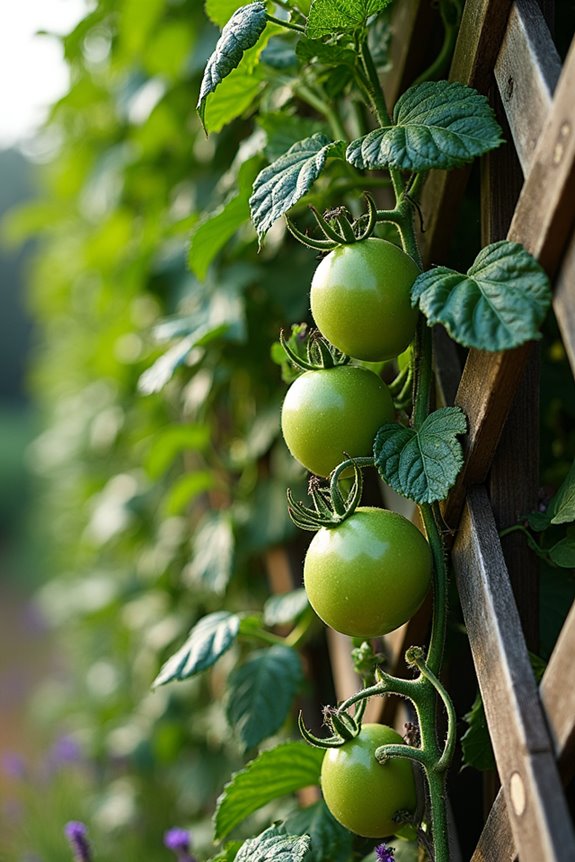
I’ve learned the hard way that indeterminate tomatoes need sturdy metal cages or stakes—not those flimsy wire ones that collapse under the weight of fruit—plus consistent tying every couple of weeks to keep the vines climbing instead of sprawling everywhere. Pruning off those wild suckers (the shoots that sprout between the main stem and branches) might feel harsh, but I promise it channels the plant’s energy into fruit production rather than leafy chaos. Once you get into a rhythm of training and maintenance, you’ll notice your harvests skyrocket and your vines stay healthy and manageable all season long.
Sturdy Support Structures
Why do indeterminate tomatoes need beefier support than their determinate cousins? These vigorous vines grow 6–10 feet tall, producing heavy fruit-laden branches that’ll snap a flimsy trellis faster than you can say “oops.” I’ve learned this the hard way.
Your trellis support needs serious muscle. Here’s what I recommend:
- Metal frameworks or heavy-duty netting withstand substantial weights better than bamboo alone
- Proper anchoring systems prevent collapse when vines reach their peak productivity
- Sturdy framework inspection catches wobbles before disaster strikes
I tie my vines using a gentle figure-eight pattern—keeps stems from rubbing and improves airflow. Regular maintenance matters too. Check those supports frequently, prune suckers to manage vigor, and honestly? It takes effort. But when those robust plants reward you with abundant harvests, you’ll understand why I’m passionate about getting the foundation right.
Pruning and Maintenance Techniques
Once your indeterminate tomatoes start climbing that trellis, you’ll need to get your hands dirty with regular pruning and maintenance—trust me, it’s worth the effort. I learned this the hard way after my first tangled mess of vines.
Start by selectively removing suckers—those pesky side shoots—to prevent excessive foliage that blocks sunlight from ripening fruit. I check my plants weekly, snipping what looks overcrowded. Next, inspect your support stability regularly. I’ve had ties rub stems raw, so I adjust them as vines grow taller, using figure-eight loops with slack.
For trellis maintenance, remove any diseased or dead leaves to boost air circulation. This simple habit prevents disease better than anything else I’ve tried. These tasks keep your plants thriving and your harvest bountiful.
Cucumbers: Strong Tendrils That Climb Easily
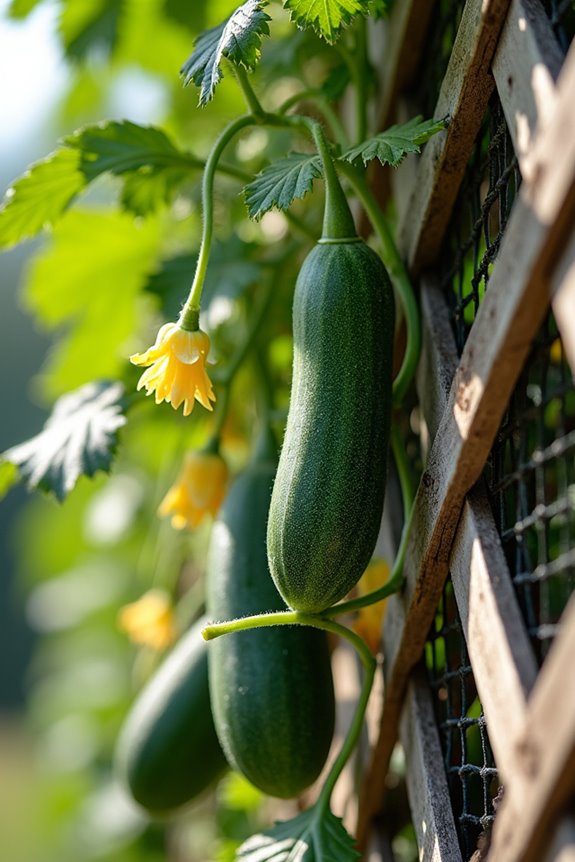
How’d you like to grow cucumbers that practically climb themselves? I’ve discovered that their strong tendrils do most of the work for you. Here’s what makes them trellis superstars:
- Natural climbers: Their tendrils grab onto supports automatically, so you’re not constantly tying vines
- Better air flow: Getting plants off the ground prevents disease and keeps leaves healthier
- Easier harvesting: Cucumbers dangle at eye level instead of hiding under leaves
I’ll be honest—my first attempt was messy until I invested in a sturdy trellis. Now I use an A-frame design that’s rock-solid. The payoff? My cucumber production skyrocketed, pollinators found flowers easily, and I actually enjoyed picking fruit. Strong, durable construction matters here. Trust me, your back will thank you.
Melons: Supporting Heavy Fruit With Cloth Slings
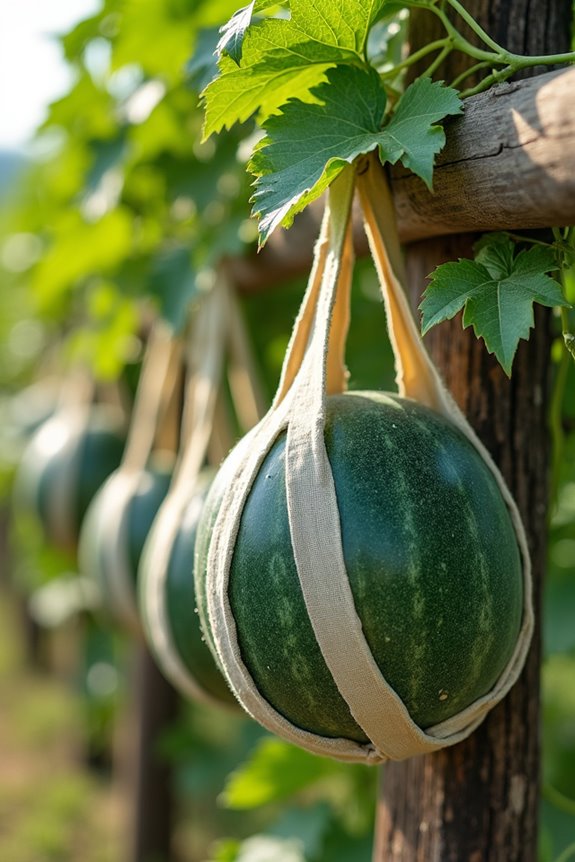
When I first tried trellising melons, I quickly learned they’re nothing like cucumbers—these heavy fruits demand serious support, so you’ll need a trellis that can actually handle the weight without buckling under pressure. I’ve found that cloth slings (basically strips of old t-shirts or fabric scraps tied around the fruit and anchored to the trellis) work like a charm, distributing that growing melon’s weight evenly so it doesn’t snap the vine or crash to the ground mid-season. The trick is planning ahead: make sure your anchors and horizontal supports are beefy enough to handle sustained load, and you’ll keep those melons healthy, off the dirt, and way less likely to rot or attract pests.
Weight Capacity Requirements
Why do melons need extra support when they’re growing vertically? I’ll be honest—I learned this the hard way when my first melon crashed down mid-summer. Here’s what I discovered:
Melons get heavy fast, and your trellis needs serious load-bearing capacity to handle them. That’s where cloth slings become your secret weapon. Here’s what makes them work:
- Distribute weight evenly across the trellis structure instead of stressing one vine spot
- Adjust as fruit grows without damaging developing melons or limiting their size
- Prevent ground contact that causes rot and pest damage
I now prioritize sturdy trellises built for real weight, not flimsy frames. Cloth slings aren’t optional—they’re essential. Your trellis weight rating should exceed your heaviest mature melon by at least double. Trust me, you’ll appreciate the security when harvest time arrives.
Sling Construction Methods
Building a sling doesn’t require fancy materials or special skills—I’ve made them from old t-shirts, pillowcases, and even worn-out dish towels.
I cut fabric into strips about four inches wide and tie them gently around developing melons. The key is using breathable material so air circulates and prevents rot. I’ve learned the hard way that plastic won’t work.
Next, I attach the sling to my trellis using soft knots that won’t dig into the vine. As melons grow, I check them weekly and loosen the support if needed—nobody wants an accidentally girdled fruit.
Honestly, my first attempts were clumsy, but you’ll develop a feel for it quickly. The payoff? Melons that ripen beautifully without cracking or snapping stems. Your trellis garden will thank you.
Fruit Support Techniques
Once you’ve got your slings tied, the real work begins—keeping those heavy melons from dragging down your entire trellis. I learned this the hard way when my first melon broke clean off mid-summer. Now I follow these essential steps:
- Position slings early. Don’t wait until your melons are massive. I slip fabric supports underneath developing fruit within weeks of flowering to prevent stem damage.
- Inspect regularly. I check my slings weekly, adjusting as melons grow heavier. Loose slings create dangerous stress points.
- Space fruit strategically. I keep melons on elevated trellis sections with good airflow between them, preventing mold issues that plagued my first season.
Your fruit support system makes or breaks your harvest. Stay ahead of growth, and you’ll enjoy healthy melons all season long.
Tomatillos: Thriving in Heat on Trellises
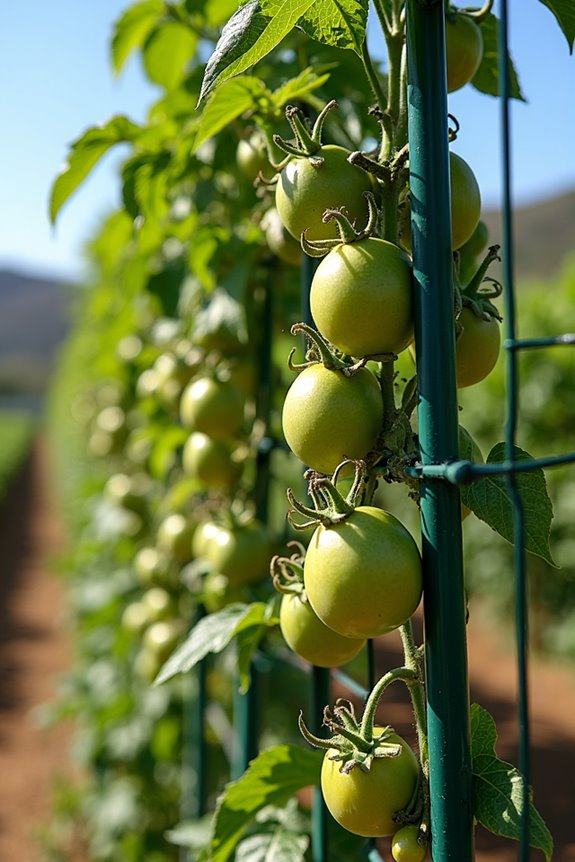
| Setup Tip | Benefit |
|---|---|
| Plant two tomatillos together | Better pollination & yields |
| Use sturdy trellis support | Handles heavy fruit loads |
| Position in full sun | Maximum growth & fruiting |
| Ensure well-draining soil | Prevents root rot issues |
The best part? Trellised tomatillos stay clean and off the ground, seriously reducing rot problems I used to battle. You’re joining a community of gardeners who’ve ditched ground-level growing. Your harvest will thank you.
Small-Variety Squash: Vertical Training for Bush Types
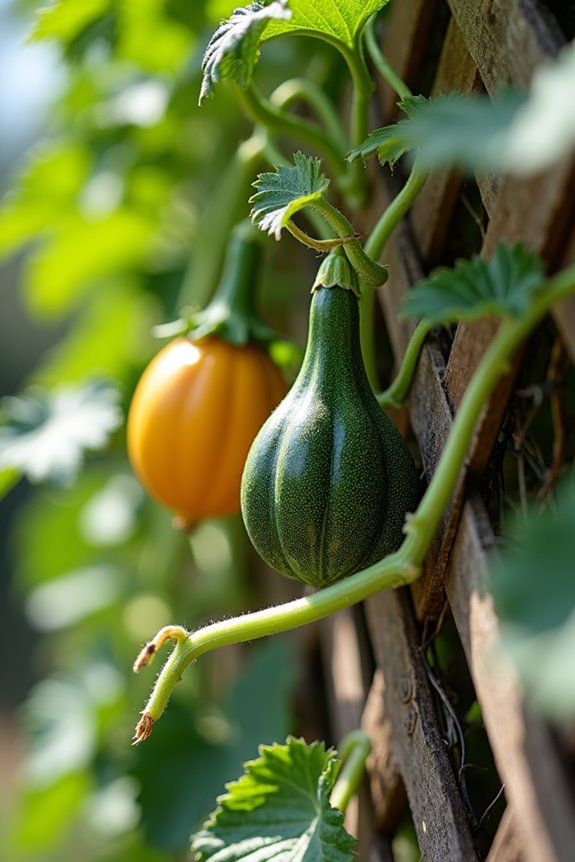
While tomatillos climb high and stay pristine on their trellises, I’ve found that small-variety squash—especially the compact bush varieties—can join that upward party too. I’ll admit, I initially thought all squash belonged on the ground. I was wrong.
Small-variety squash can climb trellises just like tomatillos—I was wrong about them belonging on the ground.
Here’s what I’ve learned works:
- Start early: Guide trailing stems onto your trellis in spring before they spread horizontally everywhere
- Prune regularly: Remove excess foliage to boost air circulation and encourage upward growth
- Use sturdy support: Bush squash still produces surprisingly heavy fruit, so your trellis needs real backbone
Small-variety squash won’t outgrow your trellis like pumpkins will. Instead, vertical space becomes your secret weapon. You’ll free up precious ground real estate for other crops while your squash thrives overhead. It’s honestly a game-changer for small gardens.
Tying Plants to Your Trellis: Gentle Methods Without Damage
How do you secure a climbing plant without squeezing the life out of it? I’ve learned this the hard way—my first tomatoes got strangled by overly tight ties, and I felt terrible about it.
The secret? Use twine instead of rigid ties. I loop it around a trellis rung, cross it, then wrap it around my plant stem in a figure-eight pattern with plenty of slack. This gentle binding supports growth without constricting stems.
For cherry tomatoes and sugar snap peas, I check my ties weekly as they grow. Loose bindings prevent girdling, which damages vines. I also avoid anything that rubs foliage—damaged leaves invite disease and pests.
Regular trellis care means adjusting ties as plants climb, keeping them upright and accessible for harvesting. Trust me, your plants’ll thank you.
Matching Plants to Trellis Type: Height, Material, and Structure
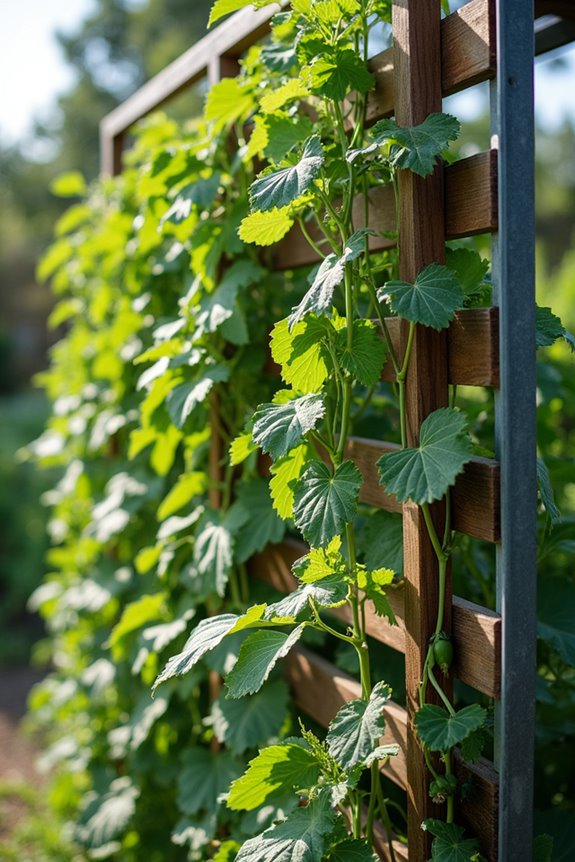
Not all trellises are created equal, and I’ve learned that matching the right structure to your plant is half the battle.
Matching the right trellis structure to your plant is half the battle—get it wrong, and your harvest suffers.
I used to slap any vine onto whatever trellis I had lying around—spoiler alert, it didn’t work well. Here’s what actually matters:
- Heavy fruit needs heavy-duty support: Tomatoes and grapes require sturdy metal trellises, not flimsy panels
- Height determines productivity: Arch trellises give tall vines more vertical space, boosting fruiting area during warm seasons
- Material affects grip: Cucumbers and pole beans need textured structures their tendrils can grab
The support structure you choose directly impacts your harvest. I’ve watched pole beans thrive on slender vertical supports while bush varieties couldn’t care less about trellises. Match your plant’s needs to its trellis type, and you’ll see real results.
Trellis Spacing and Setup: Getting the Basics Right
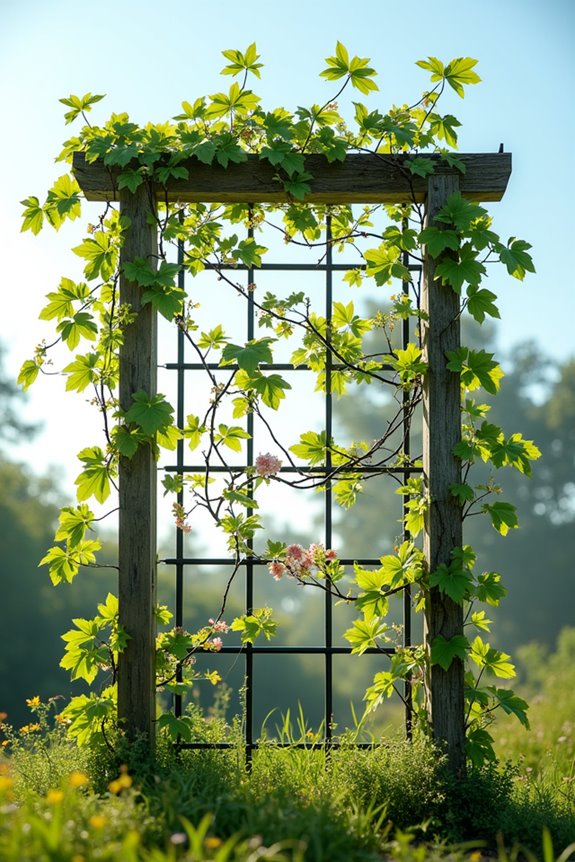
Once you’ve picked the right trellis for your plant, the next step’s getting it set up so your vines actually want to climb it. I learned this the hard way after my first trellis toppled over—turns out trellis spacing matters enormously. Space your structure to match your vine’s mature height; I aim for six feet tall since that works for most climbers I grow.
For sturdy support, I’ve ditched flimsy panels entirely. Heavy vines with fruit need metal or solid frames—trust me on this. When it comes to vine attachment, I use soft twine in figure-eight loops with plenty of slack. This prevents stem damage that’ll kill your whole plant. Getting these basics right transforms your garden from chaotic to thriving.