Before you bring home your first goat, I learned the hard way that your city’s rules matter more than what your friend across town does. You’ll need to check local ordinances for permits, verify zoning allows livestock, confirm fencing heights (usually 4-5 feet), and confirm setback distances from property lines. Don’t forget HOA restrictions either—they can override city permissions. Contact city hall first, calculate monthly costs around $60-$110 per goat, then you’re ready to dig into the specifics that’ll actually make this work.
Check Your Local City and County Ordinances First
Before you fall in love with the idea of goats munching clover in your backyard, you’ve got to do something way less fun: check your local ordinances. I learned this the hard way. Your state won’t decide this for you—it’s all about city ordinances where you actually live. Each municipality sets its own livestock regulations, and they’re wildly different. Houston’s rules differ completely from Austin’s. Some cities ban backyard goats entirely. Others allow them with specific fencing and setback requirements. Call your city hall or check their website for animal codes. Ask about housing requirements and minimum lot sizes. I can’t stress this enough: verify before you commit. Trust me, discovering restrictions after bringing home three adorable goats is way worse than spending thirty minutes on the phone now.
Understand Residential Zoning Restrictions
How’s your city actually zoned? That’s the real question before you bring home your first goat. I learned this the hard way—I almost built a shelter before checking my zoning laws.
Most cities separate residential areas into specific zones, and not all allow goat ownership. Some permit it freely on larger lots, while others cap you at three goats on smaller properties. You’ll also need to respect setback requirements, which typically demand livestock facilities stay at least three feet from side and rear property lines and ten feet from your front.
Think of these restrictions as your neighbors’ peace of mind—and yours too. They’re designed to prevent odor and escape issues. Understanding your residential zoning prevents costly mistakes down the road.
Verify Permits and Inspection Requirements
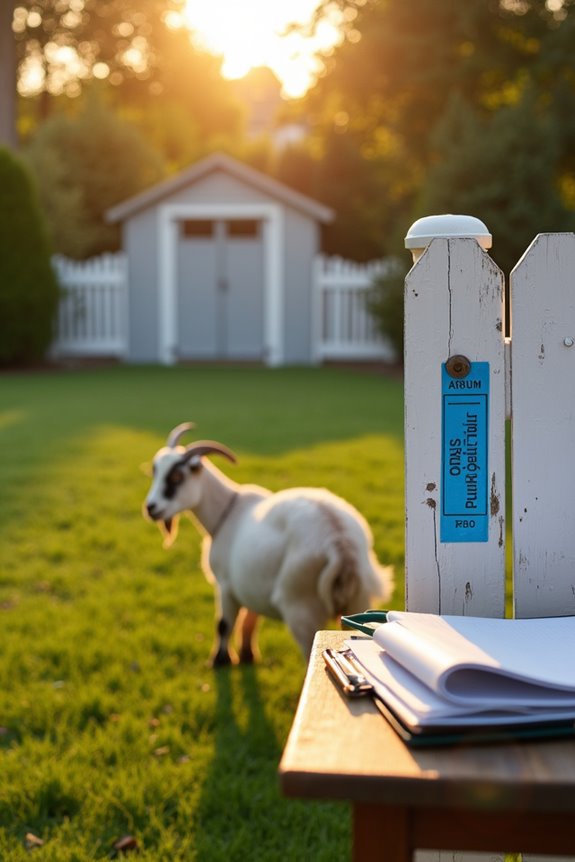
Do you actually need a permit to keep backyard goats? The answer depends on where you live. I learned this the hard way by almost buying goats before checking my local rules.
| Requirement | What You Need |
|---|---|
| Permits | Check if required in your area |
| Inspections | Some cities mandate pre-approval |
| Housing Standards | Must meet local codes |
| Fencing Requirements | Typically 4-5 feet minimum |
Some jurisdictions don’t require permits for backyard goats, but you’ll still need to follow all code standards. Others demand inspections from animal control or building officials before you bring home your first goat. I’d contact your city’s municipal code office directly—they’ll tell you exactly what’s needed. This upfront legwork saves headaches later and keeps you on good terms with neighbors.
Check HOA and Deed Restrictions for Livestock Bans
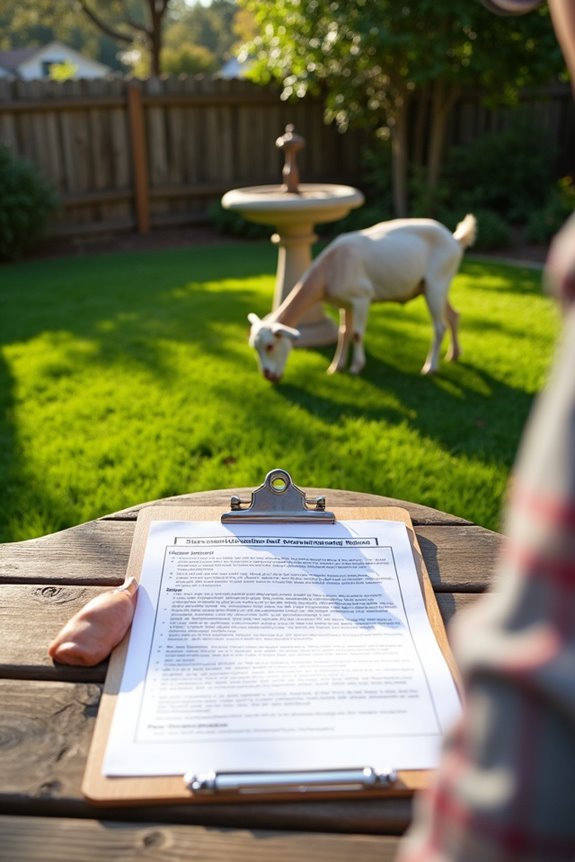
Even if your city gives you the green light for backyard goats, there’s another hurdle you might not expect: your HOA or deed restrictions.
I learned this the hard way. My neighborhood’s HOA rules actually prohibited livestock bans that were stricter than what the city allowed. Before I brought home my first goat, I needed to review my deed restrictions and architectural guidelines carefully.
Your HOA might require board approval, specific fencing heights, or setback distances from property lines. Some communities demand noise controls or housing standards you hadn’t considered. These restrictions aren’t meant to frustrate you—they protect everyone’s property values and neighborhood harmony.
Start by requesting your HOA documentation. If goats are restricted, you might pursue a variance or explore modifications that satisfy their requirements. It’s worth the effort to join your community the right way.
Find Your Goat Limit by Lot Size
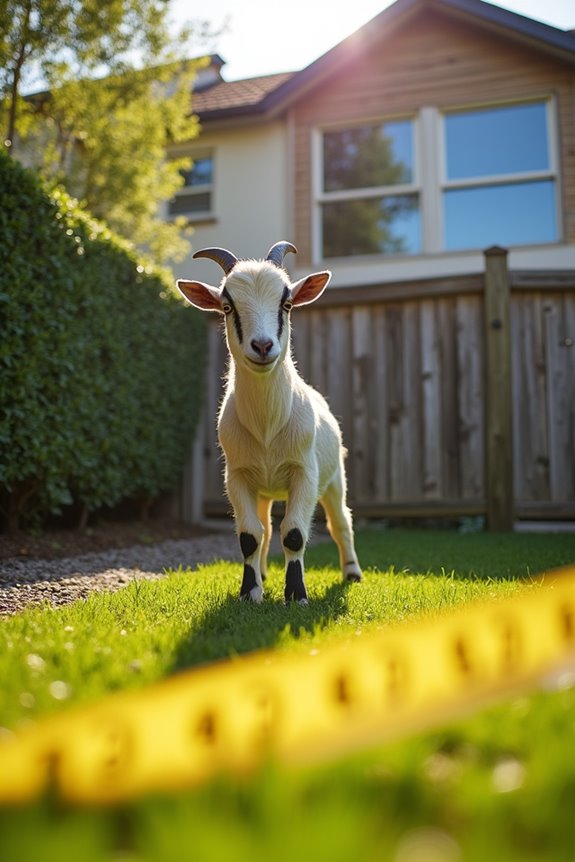
Once you’ve cleared the HOA hurdle, here’s the next question: how many goats can actually fit on your property? The answer depends on your lot size. I learned this the hard way when I almost bought three goats for my modest backyard.
If your lot is under 10,000 square feet, you’re limited to three miniature goats or sheep. Got 10,000 square feet or more? You can keep up to five. Now here’s the sweet deal: if your lot hits 20,000 square feet and has agricultural zoning or an approved conditional use, there’s no maximum stated.
One more thing—nursing babies don’t count toward your goat limit until they’re weaned, which gives you up to 12 weeks of flexibility.
Choose Between Miniature and Dairy Breeds
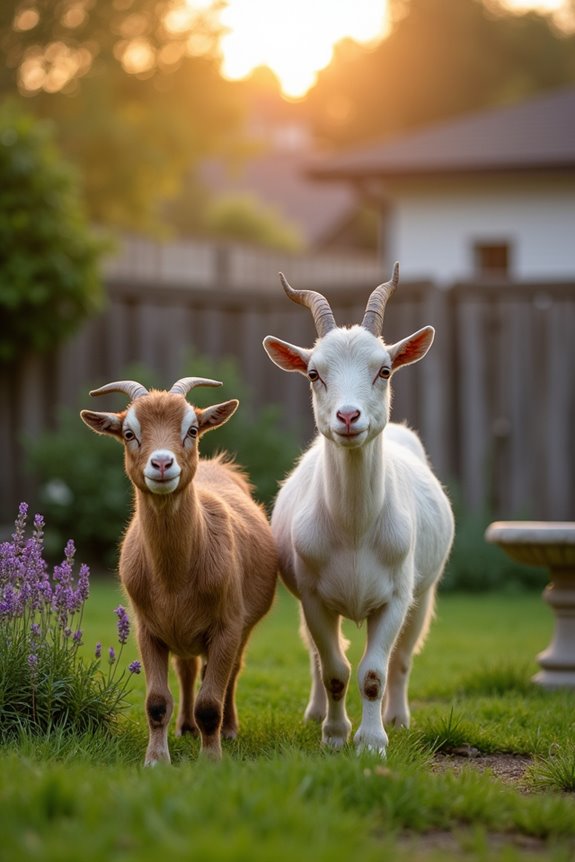
What’s the real difference between miniature and dairy goats, and which one actually fits your backyard? I’ll be honest—I struggled with this choice too.
Miniature goats like Pygmies need less space and housing, making them perfect for smaller yards. They’re easier on your wallet and simpler to manage. Dairy goats, meanwhile, demand more room but reward you with milk production if that matters to you.
Here’s my confession: I started with miniature goats for companionship, then added dairy breeds later once I understood my setup better. That flexibility helped me avoid costly mistakes.
Consider your real goals. Want low-maintenance backyard goats? Go miniature. Dreaming of fresh milk? Dairy breeds might call your name. Either way, remember that goats are social creatures—you’ll need at least two. That’s non-negotiable for their happiness and yours.
Build Shelter That Meets Housing Standards
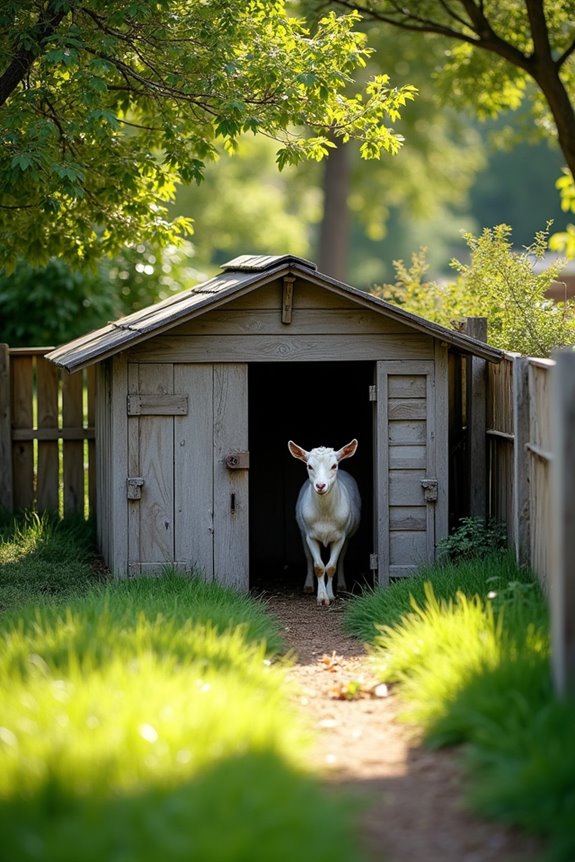
Your goats need a proper shelter, and honestly, this is where I learned that “good enough” isn’t actually good enough. I started with a flimsy structure and quickly regretted it when my goats huddled in the rain. Here’s what actually works: build a three-sided shelter facing northeast for protection. Your backyard goats need at least 10 square feet of enclosed space per animal, with good ventilation and absorbent ground cover you’ll replace regularly. Position housing standards by keeping structures at least 3 feet from side and rear property lines, plus 10 feet from your front property line. Install durable cattle panels for fencing to prevent escapes. Trust me, investing in solid construction now saves headaches—and muddy goats—later.
Install Fencing That Keeps Goats In
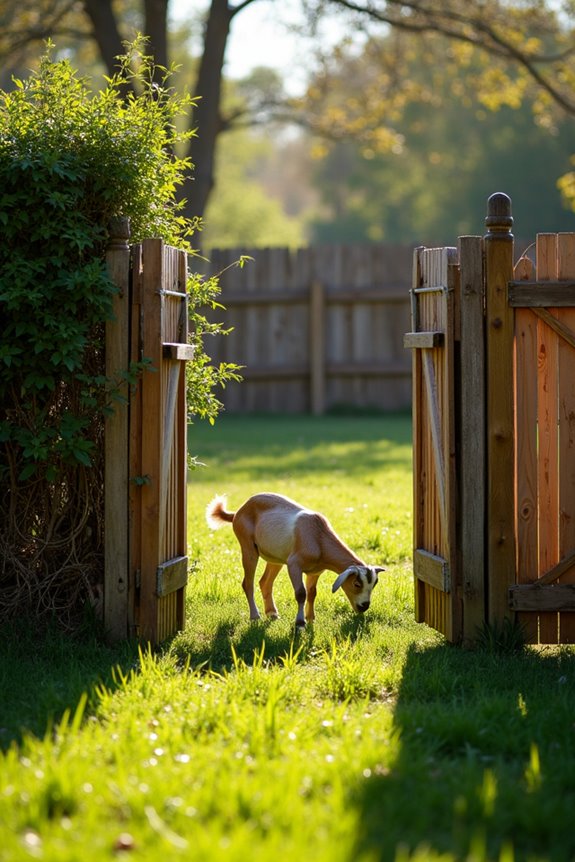
I’ll be honest—I learned the hard way that goats are basically tiny escape artists with hooves, so you’ll need sturdy fencing materials like cattle panels (they’re my go-to) and proper pen setup to keep them contained. You’re looking at least a 4-5 foot height to stop their jumping, secure base anchoring to prevent digging underneath, and reinforced gates that actually latch, because I’ve watched goats figure out simple latches faster than I can say “Oh no.” Regular inspections of your fence line, corners, and any gaps under a foot wide will save you from the panic of finding your goats browsing the neighbor’s prize roses at 7 a.m.
Secure Fencing Materials
How much trouble can a goat actually cause when it escapes? Trust me, I’ve learned the hard way. A loose goat demolishes gardens, climbs onto roofs, and infuriates neighbors faster than you’d think possible.
That’s why I’m serious about my goat fencing setup. Here’s what I’ve discovered works:
- Cattle panels or sturdy rails – These withstand climbing and jumping better than flimsy wire
- Corner bracing and proper gate hardware – Prevents the structural failures I initially ignored
- Regular inspections for gaps and wear – Catches problems before your goat does
Your enclosure containment depends entirely on these secure fencing materials. I’ve learned that investing upfront in quality materials saves countless hours chasing escapees. Honestly, spending extra on solid fencing keeps both your landscaping and your sanity intact.
Escape Prevention Strategies
Quality fencing materials alone won’t stop a determined goat—you’ve got to install them the right way. I learned this the hard way when my goats found every weak spot I’d missed. Here’s what actually works:
| Strategy | Height | Why It Matters |
|---|---|---|
| Proper Tensioning | 4-5 feet | Prevents pushing through |
| No Bottom Gaps | Ground level | Stops rooting underneath |
| Corner Posts | Reinforced deeply | Resists leaning pressure |
| Regular Inspection | After storms | Catches damage early |
| Visual Barriers | Along perimeter | Reduces escape temptation |
You’ll want to check your goat fencing weekly. Watch for rubbing damage and sagging sections. I add browse control—branches or vegetation—to distract my goats from testing fence integrity. Trust me, prevention beats chasing escapees down the street every time.
Pen Setup Essentials
Your goat’s pen is basically their entire world, so you’ll want to get the fencing right from the start—trust me, fixing it later is way more annoying than doing it correctly now.
Backyard goats need serious containment. Here’s what I’ve learned works:
- Use sturdy materials like cattle panels or reinforced wire that can handle their climbing and pushing
- Build fencing at least 4-5 feet tall because goats are sneaky escape artists
- Add a shelter inside so they’ve got protection from weather and less reason to test your fencing
Check your fencing regularly for gaps, loose posts, and chew points. Goats will find any weakness. I’ve watched mine eyeball a wobbly section like they’re planning an escape route. Lock your gates too—tamper-resistant hardware keeps determined goats contained.
Keep the Pen Clean With Proper Bedding
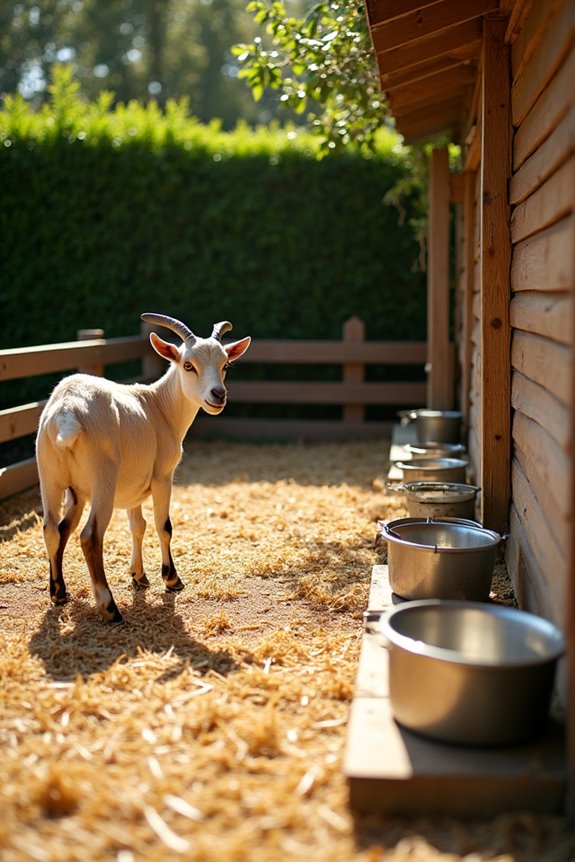
Now that your goats have a secure fence, you’ll want to focus on keeping their pen clean—trust me, I learned this the hard way when I skipped bedding replacement for one week and nearly lost my sense of smell. You’ll need absorbent ground cover like straw or wood shavings that you replace regularly (I swap mine out twice a week), plus a solid foundation of concrete or crushed stone so moisture doesn’t turn the whole setup into a mud pit. Getting this right prevents nasty odors from bothering your neighbors and stops flies and parasites from treating your pen like a five-star resort.
Absorbent Ground Cover Selection
What’s the quickest way to turn a goat pen into a smelly swamp? Skip the absorbent ground cover. I learned this the hard way with my backyard goats.
The right ground cover tackles odors, prevents hoof rot, and keeps regulations happy. Here’s what I’ve discovered works:
- Concrete or crushed stone – Easy to spray-clean and durable for wet seasons
- Dry surfaces – Minimize moisture buildup that breeds vectors and disease
- Non-toxic, dig-resistant materials – Prevent goats from destroying your setup
I replace my ground cover regularly, especially during rainy months. It’s not glamorous, but it’s essential. Your neighbors won’t complain about smells, your goats’ hooves stay healthy, and you’ll actually enjoy pen maintenance. Trust me, investing in proper absorbent ground cover beats dealing with the mess later.
Regular Bedding Replacement Schedule
Most backyard goat owners don’t realize how quickly a pen can turn into a mud pit—I certainly didn’t when I started. I learned the hard way that a solid goat pen bedding and manure management routine keeps everything sanitary and your goats happy.
I now replace bedding twice weekly during wet seasons and once weekly when it’s dry. You’ll want to adjust your bedding replacement schedule based on how many goats you’ve got and your local weather. If your ground cover is concrete or crushed stone, you can actually spray it clean between full changes.
Trust me, staying consistent with this routine prevents odors from building up and stops nasty bugs from moving in. Your future self will thank you for investing those few extra minutes.
Odor And Vector Prevention
Getting your bedding routine down is half the battle, but keeping odors and pests at bay? That’s where I realized I’d been doing things wrong. I learned that smart ground cover choices and consistent sanitation make all the difference. Here’s what actually works:
- Use absorbent bedding materials like straw or wood shavings, replacing them frequently to stop smell and pest breeding
- Choose practical ground cover—concrete or crushed stone—so you can clean and drain easily without mud disasters
- Remove manure daily because, honestly, that’s where the real odor problem starts
Your bedding management strategy shouldn’t stress you out. I started small with these basics, and my goat area stayed fresher. Once you nail this routine, you’ll join the ranks of neighbors who actually want to visit your backyard setup instead of avoiding it.
Ensure Fresh Water and Quality Feed Daily
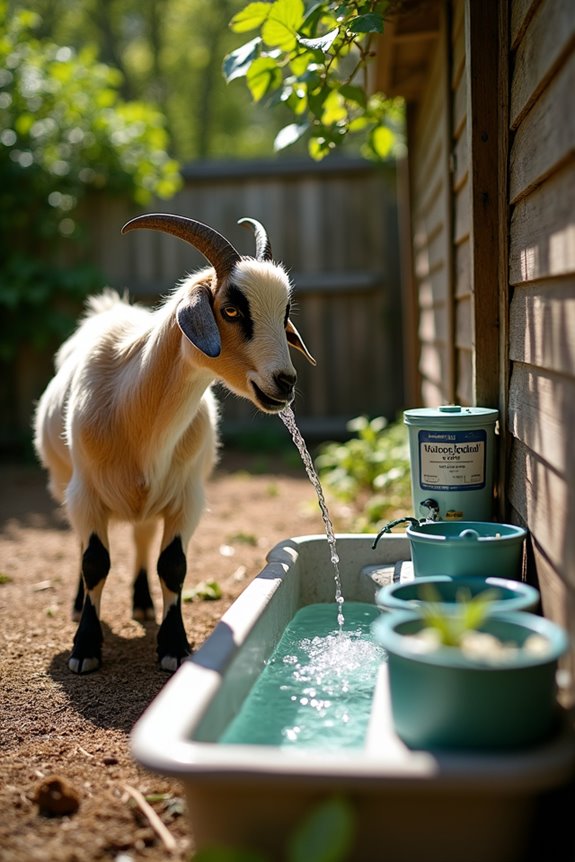
How do you keep your backyard goats healthy and happy? Daily feeding and water quality matter more than you’d think. I learned this the hard way when my goats refused cloudy water one summer.
Fresh water should be available constantly. I change mine every morning and scrub containers weekly to prevent algae growth. On hot days, I’ve added a second waterer in the shade—it really encourages drinking.
Fresh water available constantly, changed daily and containers scrubbed weekly to prevent algae growth and encourage healthy hydration.
For daily feeding, I provide quality hay as the main diet, then add goat-specific pellets for minerals and protein. It’s not complicated, just consistent. I check that any grazing areas are free of toxic plants too.
Honestly, this routine takes maybe thirty minutes daily. Your backyard goats will thrive when you prioritize these basics. It’s worth the effort.
Manage Noise Concerns With Consistent Feeding Routines
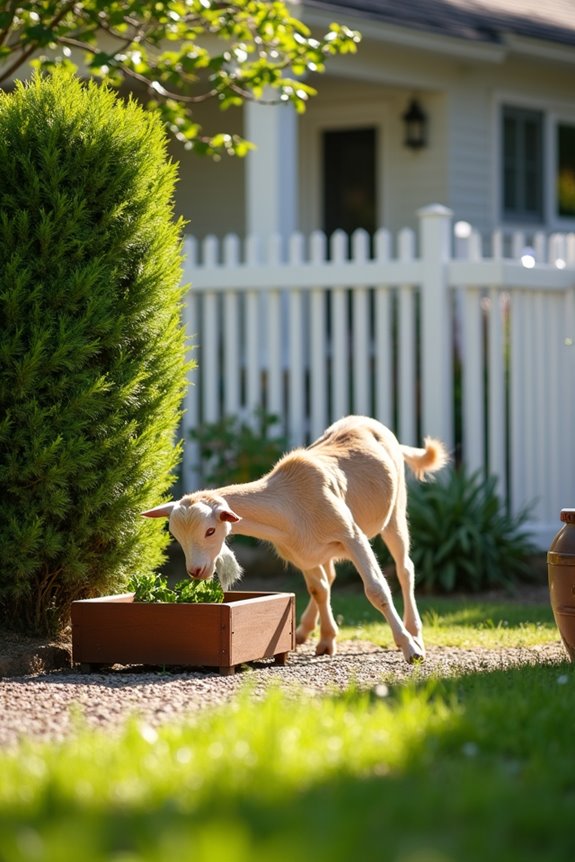
While keeping your goats fed and watered sets the foundation for their health, it’ll also help you manage something your neighbors might notice—noise.
I’ve learned that backyard goats vocalize less when they know exactly when meals arrive. Here’s my noise management strategy:
- Feed at the same times daily — I stick to morning and evening schedules, which keeps my goats’ hunger cues predictable and reduces random bleating.
- Provide plenty of forage — When my goats graze constantly, they’re too busy eating to make a fuss. I’ve noticed a real difference in their chattiness.
- Handle chores before peak noise hours — I complete watering and enrichment before dawn or dusk, when goats naturally get vocal and restless.
This feeding routine honestly transformed my neighborhood relations.
Secure Veterinary Care and Dehorning Services
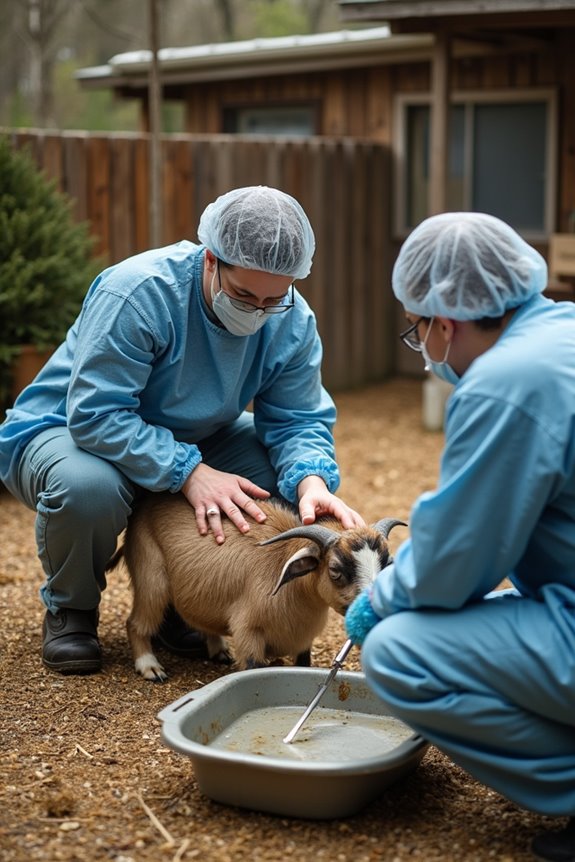
One thing I didn’t anticipate when I got my first goats was how much veterinary care they’d actually need. Finding a vet who works with backyard goats took me longer than expected, but it’s worth the effort. I learned quickly that regular hoof care, dental checks, and parasite management keep my herd healthy between visits.
Dehorning was something I initially tried handling myself—mistake. I discovered I needed a qualified person to do it properly using anesthesia. It’s safer for the goats and honestly less stressful for me. I now budget for these services annually because horns can regrow if not dehorned correctly.
Building relationships with local vets who understand backyard operations makes everything easier. They’ve become my trusted advisors, helping me maintain clean shelters, quality hay, and appropriate minerals that support my goats’ overall wellness.
Calculate the True Cost of Keeping Backyard Goats
Before you bring home your first goat, you’ll want to know what you’re actually signing up for financially—and I’ll be honest, it’s more than just the initial $150–$200 purchase price. You’ve got to budget for the steady stuff like hay, pellets, minerals, water, and vet visits, plus the bigger expenses that sneaked up on me, like reinforcing fencing with cattle panels and building or upgrading shelter with proper drainage so you’re not cleaning up a muddy mess every morning. The good news is that once you understand these three main cost areas—what you’ll pay upfront, what you’ll spend month to month, and what your setup actually needs—you can make a smart decision about whether goats fit your situation.
Initial Purchase Price
Most folks think the hardest part about getting backyard goats is just buying them—and yeah, you’ll spend somewhere between $150 and $200 per goat if you’re looking at healthy animals in decent condition. But here’s what I learned the hard way: that initial backyard goat price is honestly just the beginning.
When calculating your purchase cost, consider these factors:
- Breed and age – Purebreds cost more than mixed breeds
- Health status – Vaccinated, parasite-free goats command higher goat pricing
- Temperament – Friendly, well-socialized animals are worth the extra investment
I thought I was done spending after that first payment. Wrong. The real expenses hit once they’re home eating your hay and needing veterinary care. Your total budget needs room for those ongoing costs, not just the upfront purchase.
Ongoing Care Expenses
That $150-to-$200 price tag I mentioned? That’s just the beginning. Once you bring your goats home, ongoing care costs kick in fast. I learned this the hard way when my first vet bill surprised me.
You’ll need to budget for feed, hay, minerals, and veterinary care annually. Don’t forget shelter maintenance, fencing repairs, and bedding—these add up surprisingly quick. Different regions have different vet costs, so check your local rates.
| Expense | Monthly | Yearly | Notes |
|---|---|---|---|
| Feed & Hay | $30-40 | $360-480 | Quality matters |
| Veterinary Care | $20-30 | $240-360 | Includes checkups |
| Minerals & Supplements | $10-15 | $120-180 | Goat-specific types |
| Shelter & Fencing | $15-25 | $180-300 | Maintenance included |
Before getting backyard goats, verify local regulations and permits—many neighborhoods have specific requirements for keeping them.
Housing And Infrastructure
Once you’ve settled on getting goats, you’ll quickly realize that housing and infrastructure make up a huge chunk of your startup costs—and honestly, it’s where I wish I’d invested more upfront instead of patching things together later.
You’ll need solid backyard goat housing and proper fencing. Here’s what I’d prioritize:
- Goat shelter design – Build a three-sided structure facing northeast with a roof that sheds rain and good drainage to keep things dry
- Fencing and enclosure requirements – Install durable cattle-panel style fencing at least 3 feet from side/rear lot lines and 10 feet from the front
- Ground cover – Use absorbent materials you’ll replace regularly to control odor
These investments prevent costly problems down the road. Trust me, your goats—and your neighbors—will thank you.
Document Compliance Before Bringing Your Goat Home
Before you fall in love with a goat and bring it home, you’ll need to do some paperwork—I know, not as fun as picking out a cute name.
Here’s what I discovered when starting my backyard goats journey: checking local livestock ordinances isn’t optional. You’ll want zoning permits and confirmation your property meets setback requirements. I spent an afternoon reviewing my city’s Chapter 6 animal codes and learned about the 10-foot front-line rule I’d missed.
| What to Check | Where to Find It | Why It Matters |
|---|---|---|
| Zoning permits | City Hall/website | Legal protection |
| Livestock ordinances | Local Code of Ordinances | Setback/size rules |
| Nuisance rules | Municipal regulations | Fencing/odor standards |
Trust me—this upfront work saves headaches later.
Create a Final Compliance Checklist
Before you bring home your new goat friend, I’ve learned the hard way that you’ll want to create a checklist covering three key areas: your local city ordinances (trust me, I found out my neighbor’s town banned goats after I’d already fallen in love with mine), the physical setup like housing placement and fencing specifications, and your daily care commitments. You’ll need to verify setback distances—at least 3 feet from side and rear property lines and 10 feet from the front—plus confirm your shelter design meets weather needs and has proper ventilation so you’re not battling odor complaints. Finally, jot down your animal care responsibilities: providing clean water, quality hay, minerals, and making sure you’ve got at least two goats so they’re not lonely, because a bored goat is basically a furry escape artist waiting to happen.
Local Ordinance Requirements
How’d you like to show up at city hall only to discover your dream backyard goat setup violates three different ordinances?
I learned this the hard way. Before you bring home your backyard goats, you’ve got to understand local ordinances in your specific city. Here’s what I wish I’d checked first:
- Permit requirements – Some cities let you keep goats freely; others demand conditional use permits or special approvals
- Goat limits – Your neighborhood might allow two goats, while the next district over permits none within city limits
- Setup standards – Fencing height, setback distances from property lines, and manure management rules vary wildly by location
I grabbed my city’s Code of Ordinances online and called the planning department. That conversation saved me headaches. Check your exact local ordinances before investing in anything. Trust me.
Housing And Facility Standards
Once you’ve got your permits sorted out, it’s time to actually build the setup where your goats’ll live. Your goat housing needs solid shelter with good drainage and ventilation—trust me, you’ll notice if you skip this part. I learned that the hard way my first summer.
| Requirement | Details | Why It Matters |
|---|---|---|
| Fencing and enclosure | Durable cattle panels | Prevents escapes and protects your landscaping |
| Shelter requirements | Adequate ventilation, good repair | Keeps goats healthy and comfortable |
| Ground cover | Absorbent material, replaced regularly | Prevents odor and pests |
Position structures at least 3 feet from side and rear property lines, 10 feet from front. Keep absorbent ground cover fresh. Remember, goats need companions, so you’re building for multiple animals. Strong fencing matters because goats are escape artists.
Animal Care And Welfare
If you’ve made it this far with permits and housing built to code, the real work—and honestly, the rewarding part—is keeping your goats healthy and happy.
Your backyard goats depend on you for their daily welfare. Here’s what I’ve learned matters most:
- Fresh water and quality hay daily – I refill water troughs every morning and evening, no exceptions
- Regular hoof care and health checks – Trimming hooves every 6-8 weeks prevents serious problems I’d rather avoid
- Minerals and veterinary attention – Goat-specific minerals prevent deficiencies; call a vet immediately if something seems wrong
These aren’t just regulations to follow. They’re commitments that transform backyard goats from livestock into the rewarding companions they become. Your diligence here determines their quality of life and, frankly, your success as a goat owner.