Most residential patios need four inches of concrete—that’s what I typically recommend for basic foot traffic and outdoor furniture. But here’s the thing: if you’re planning a fire pit or outdoor kitchen, bump it up to six inches. Your soil matters just as much as thickness, though. A solid gravel base and proper compaction actually prevent more cracking than adding extra concrete. Freeze in winter? Go with a stronger concrete mix. Keep scrolling to figure out exactly what your patio needs.
Start Here: 4 Inches for Most Residential Patios
Ever wonder why concrete contractors keep mentioning “four inches” like it’s some magic number? I used to think they were just being lazy with their recommendations until I actually dug into why this concrete thickness matters so much.
For most residential patio projects, four inches is genuinely the sweet spot. It’s thick enough to handle your everyday foot traffic and support outdoor furniture without breaking a sweat. I’ve watched friends skimp on depth and regret it years later when cracks appeared.
Here’s the thing: this measurement gives your patio solid load-bearing capacity for typical use. However, if you’re planning something heavier—like a fire pit or outdoor kitchen—you’ll want to bump that up to six inches or more.
Get the concrete thickness right from the start, and you’re setting yourself up for decades of durability.
Assess Your Soil Type and Load Requirements

Before you pour that concrete, I’d honestly recommend checking what’s underneath—whether you’ve got stable soil or that problematic expansive clay that’ll shift and crack your patio later. Your soil type and what weight you’re planning to put on the slab (think heavy furniture or a hot tub) actually determine how thick it needs to be, so skipping this step is basically asking for trouble down the road. A quick soil test costs way less than fixing a settling patio, and it’ll tell you if you need that standard 4-inch slab or something beefier with a reinforced base.
Soil Stability Impact Assessment
Why does your soil matter so much when you’re planning a patio? Honestly, I learned this the hard way. Your soil stability directly determines whether your patio lasts decades or cracks within years. Before I poured my first slab, I skipped soil testing—big mistake. Soft or expansive soils need serious attention during base preparation. I discovered that solid, well-compacted soil supports a standard 4-inch slab beautifully. Weak soil? You’ll need 6 inches instead, plus a 3–6 inch gravel base for better compaction. That gravel layer reduces uneven settling that causes frustrating cracks. In freeze-thaw regions, thorough compaction prevents structural failure. Testing your soil beforehand tells you exactly what thickness and foundation depth you actually need. Trust me, this step saves headaches later.
Load Capacity and Thickness Matching
Once you know your soil can handle the job, you’re ready to figure out how thick your patio actually needs to be—and that depends on what you’re planning to put on it.
I’ve learned this the hard way. A basic 4-inch slab works great if you’re just walking around and setting out some chairs. But if you’re dreaming of an outdoor kitchen or fire pit? You’ll want 6 inches. For heavy-duty stuff like hot tubs or driveways, go with 8 inches.
Here’s the thing though—thickness matters, but it’s not everything. A reinforced base and proper joints actually impact load capacity more than just pouring thicker concrete. When in doubt, I’d go thicker anyway. Future you will appreciate the flexibility.
Why Your Base Matters More Than Concrete Thickness
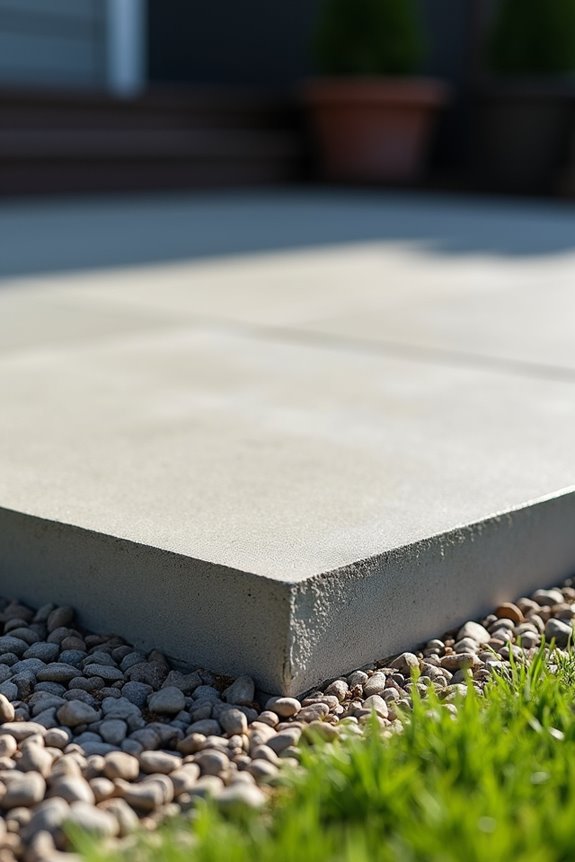
How many times have you seen a beautiful concrete patio crack just a year or two after installation? I’ll admit—I learned this lesson the hard way. Here’s what I discovered: your base matters way more than concrete thickness alone.
Your concrete patio’s base matters way more than thickness alone—I learned this the hard way.
Think of it like building a house on sand. You can’t skip foundation work. Here’s why your base is your real hero:
- Proper compaction prevents settling and sinking that thick concrete can’t fix
- Soil integrity determines whether a 4-inch or 8-inch slab survives freeze-thaw cycles
- Gravel base (3–6 inches) replaces weak topsoil and stops long-term failure
I’ve watched homeowners pour expensive thick slabs fail because they rushed base prep. Don’t be like me. Invest in removing soft soil, adding compacted gravel, and preparing properly. Your patio will thank you for decades.
When to Increase Patio Slab Thickness to 6–8 Inches
Not every patio needs the same thickness—and that’s where a lot of folks get stuck. I learned this the hard way when I first poured concrete.
Here’s the thing: if you’re planning a driveway or parking area, you’ll want to bump your slab thickness up to 6–8 inches. Vehicles are heavy, and that load-bearing capacity matters. Same goes for permanent structures like outdoor bars or fire pits—they concentrate weight in one spot.
I’ve also found that softer soils demand thicker slabs. When your ground’s unstable, a heavier concrete patio fights settlement and cracking better. Plus, reinforcing your base alongside thicker concrete creates real durability.
Think of it this way: thicker sections at stress zones are like giving your patio extra armor. Your concrete patio becomes genuinely reliable, not just a temporary fix.
Choosing Reinforcement: Rebar vs. Wire Mesh vs. Fiber
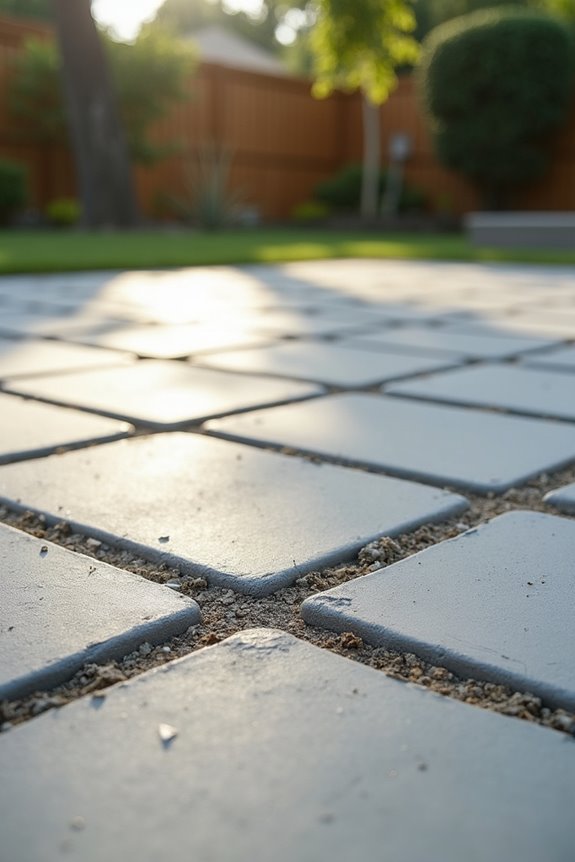
I’ll be honest: I’ve seen too many patios crack because people skipped proper reinforcement. Here’s what actually matters:
- Rebar – Use this for heavy loads like hot tubs or retaining walls. It’s your strongest option and worth the effort.
- Wire mesh – Great for controlling cracks on standard patios. It won’t carry major weight, but it distributes forces better than nothing.
- Fiber reinforcement – Helpful for surface cracks, though it can’t replace steel for load-bearing situations.
The truth? Your reinforcement materials choice depends on what you’re building. Light patio? Mesh works fine. Planning something heavy? Rebar’s your friend. Mix and match strategically.
What PSI Rating You Actually Need (Freeze-Thaw Matters)
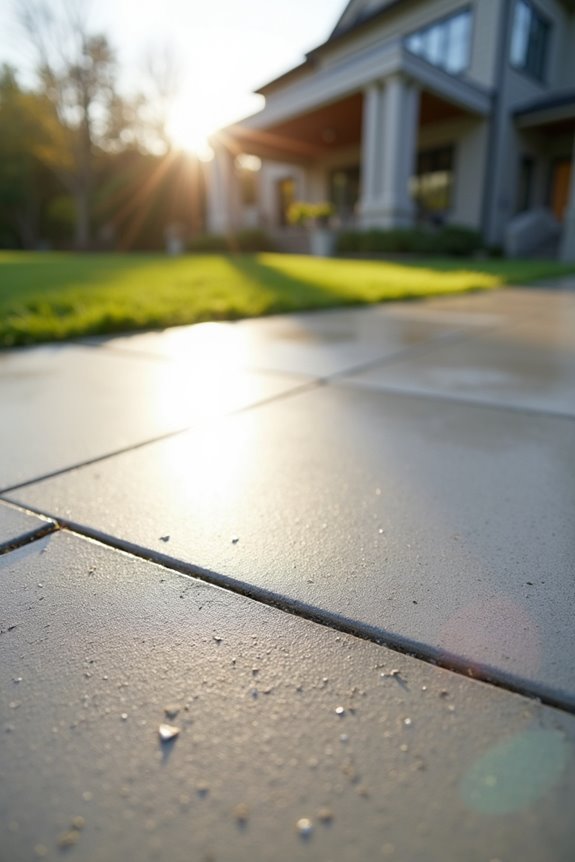
I learned the hard way that standard 3,000 PSI concrete doesn’t cut it if you live somewhere that freezes and thaws every winter—I watched my neighbor’s patio crack up like a puzzle after just two seasons. You’ll want at least 4,000 PSI for freeze-thaw areas because that extra strength helps the concrete resist the pressure from ice expansion and heavy snow loads. If your climate’s rough or you’re parking vehicles on that patio, pushing toward 4,500 PSI after a full month of curing is your safest bet.
Minimum PSI Standards
What’s actually going on inside your concrete mix?
You’re basically choosing how tough your patio needs to be. I learned this the hard way after watching my neighbor’s cheap concrete crack during winter. Here’s what matters:
- Standard patios need 3,000 PSI minimum – this handles regular foot traffic and furniture without breaking a sweat
- Freeze-thaw climates demand 4,000+ PSI – if you live somewhere cold, don’t cheap out here or you’ll regret it come spring
- Heavy loads require stronger concrete PSI – think hot tubs or vehicle parking
The concrete PSI rating works hand-in-hand with patio thickness and reinforcement. I’ve found that skimping on PSI standards today costs way more in repairs tomorrow. Your patio thickness alone won’t save weak concrete.
Freeze-Thaw Durability Requirements
you can’t just use whatever PSI rating works in warmer places.
Freeze-thaw cycles are brutal. Water seeps into your concrete, freezes, expands, and cracks your patio from the inside out. I’ve seen it happen to neighbors who cut corners.
You’ll want 4,000 PSI minimum—honestly, I’d go there rather than the bare 3,000 PSI. Higher PSI mixes resist cracking way better during those temperature swings.
| Climate Type | Recommended PSI | Why It Matters |
|---|---|---|
| Freeze-thaw areas | 4,000+ PSI | Handles expansion stress |
| Mild climates | 3,000–3,500 PSI | Basic durability |
| Extreme cold | 4,500+ PSI | Maximum protection |
Don’t skip curing moisture for at least seven days either. That’s when your concrete actually hardens and gets the strength it needs to survive winter’s punishment.
Control Joints and Expansion Joints: Preventing Cracks
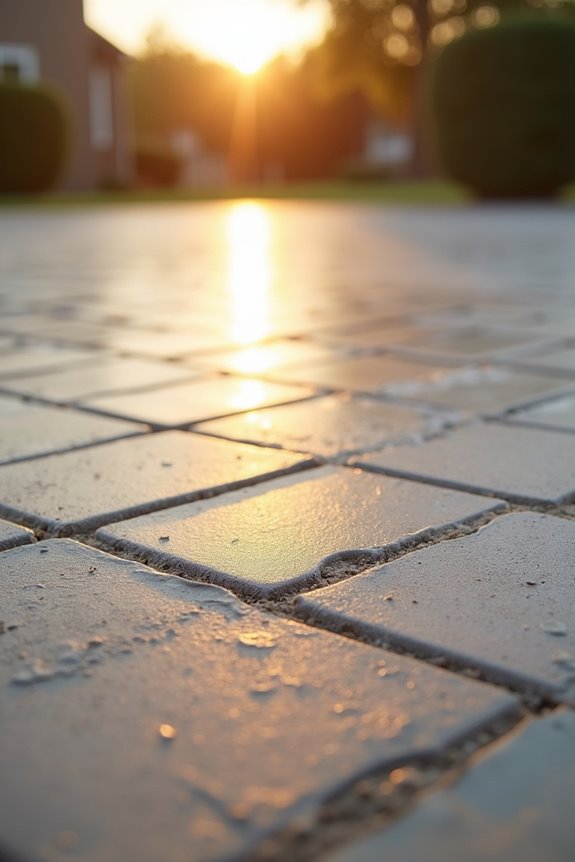
Once your concrete’s poured and curing, here’s the truth I’ve learned the hard way: concrete cracks. But you can control where those cracks happen with smart planning.
Here’s what I do to prevent random fractures:
- Space control joints every 4–6 feet to direct cracks along intentional lines instead of letting them wander randomly across your patio
- Make joints at least one quarter of your slab thickness so they’re deep enough to actually work—I’ve seen shallow joints fail miserably
- Space joints closer together on thinner slabs since 4-inch patios need more frequent joints than 6-inch ones
I also consider expansion joints for temperature and moisture changes. Fibers help, sure, but they’re not substitutes for proper joints. Trust me, spending time on this planning beats fixing a spider-web of cracks later.
Strategic Thickness Increases Within Your Patio
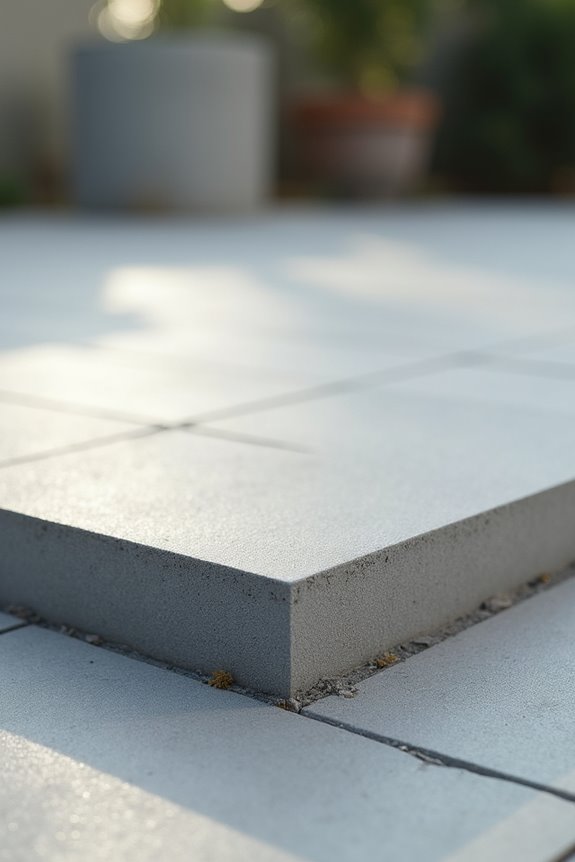
Why would you pour the same thickness everywhere when different parts of your patio actually need different levels of muscle?
I’ve learned that mixing thickness strategically within one slab is smart planning. You can keep general areas at 4 inches while boosting spots where you’ll place heavy stuff to 6 inches. This approach combines proper reinforcement and base preparation for genuine load-bearing performance where it counts most.
| Area | Thickness | Best For | Why |
|---|---|---|---|
| General seating | 4 inches | Chairs, tables | Standard use |
| Fire pit zone | 6 inches | Heavy structures | Extra durability |
| Kitchen prep area | 6 inches | Appliances | Load-bearing strength |
| Edges | 6 inches | Thickened turndown | Prevents stress cracks |
This hybrid approach gives you longer-lasting concrete without overdoing it everywhere.
Step-by-Step: From Prep to a Cured Patio
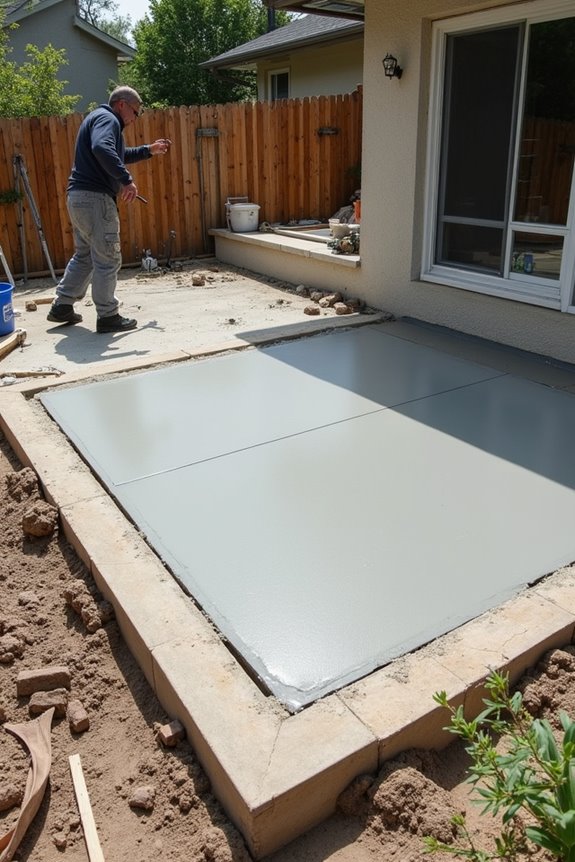
I’ll walk you through the actual work—the stuff that makes or breaks your patio—starting with what’s underneath and ending with a slab that’ll last. You’ll need to nail two critical phases: getting your base right (think gravel and compaction) and then managing the pour and cure so your concrete actually gets strong. I’ve learned the hard way that skipping these steps is where patios start cracking and settling, so let’s cover how to do it right.
Base Preparation Essentials
How many times have I started a concrete project only to realize I’d skipped the foundation work? Too many, honestly. That’s why I now treat base preparation like the MVP of my patio projects.
Here’s what I’ve learned matters most:
- Clear and level your soil – Remove that soft topsoil and any expansive clay that’ll cause trouble later
- Lay down 3–6 inches of compacted gravel – This creates the stable concrete base your slab needs to stay put
- Compact everything thoroughly – I use a plate compactor to pack down both soil and gravel until it’s rock-solid
Testing your soil first saves headaches. I’ve watched patios crack because I skipped this step. When you nail base prep, your slab thickness performs way better. Trust me—it’s worth the upfront effort.
Pouring and Curing Process
Once your base is rock-solid, you’re ready for the part that actually looks like a patio—pouring the concrete. I’ll be honest: this step intimidated me initially. You’ll want concrete with 3,000–4,000 PSI strength for standard patios, which handles most backyard activity just fine.
During pour and placement, spread that concrete carefully to avoid segregation—basically, keeping all those ingredients mixed evenly. Here’s where patience matters. After pouring, the real work begins: the curing process. I kept my surface moist for seven-plus days by misting it regularly. Sounds tedious, but it’s what develops full strength and prevents those annoying cracks we all dread.
Add control joints every 4–6 feet (at least ¼ of your concrete patio thickness deep) and expansion joints for movement accommodation. You’ve got this.
Is Thicker Concrete Always Better? Budget and Limits
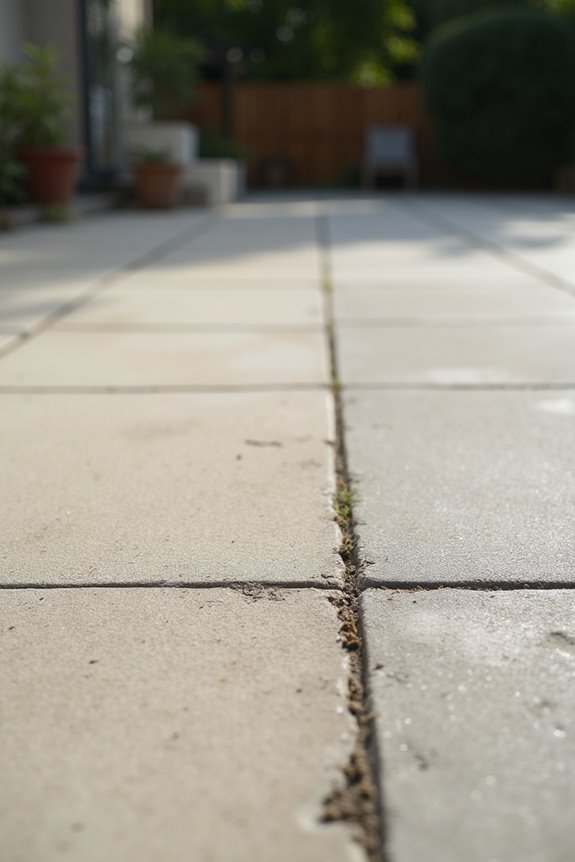
When you’re staring at concrete thickness options, you might think “bigger is always better”—I did too, until I watched my neighbor spend an extra $2,000 on an 8-inch patio slab that didn’t need it.
Here’s the truth: thicker isn’t magic. I’ve learned that what actually matters is matching thickness to your real needs and budget:
- Know your load capacity – A 4-inch slab handles light patio furniture fine, but 6 inches works better if you’re planning hot tubs or heavy use
- Don’t skip the foundation – A weak base makes thickness pointless; I’ve seen thick slabs crack because of poor preparation
- Consider long-term savings – Yes, thicker costs more upfront, but it reduces repairs later
The sweet spot? Think honestly about what you’ll actually use your patio for.
Thickness Requirements for Hot Tubs, Driveways, and Kitchens
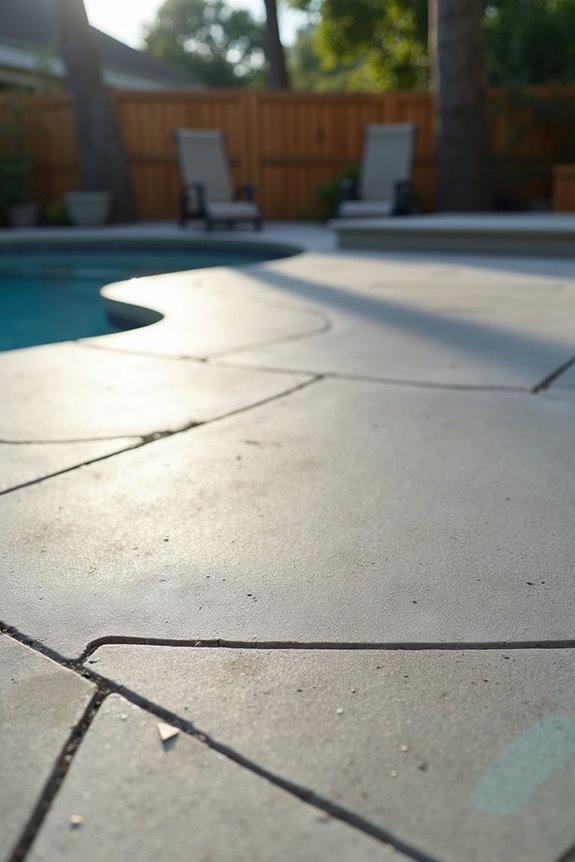
Now that you know the sweet spot for a basic patio, let’s talk about the heavy-duty stuff—because not all concrete jobs are created equal.
Planning a hot tub? You’ll need at least 8 inches of slab thickness to handle that weight without cracking. I’ve seen people skip this step, and trust me, it’s not worth the headache later.
Driveways demand similar thickness—8 inches minimum—to survive your car’s constant pounding. Kitchens without heavy equipment can get away with 6 inches, but thicker sections work better where concentrated loads sit.
Here’s my game-changer: thickened edges. These turndown beams run about 6 inches deep and prevent stress cracks where your slab meets softer ground. When in doubt, build thicker with proper reinforcement. Your future self will thank you.
Thickness Mistakes That Cause Settling and Cracking
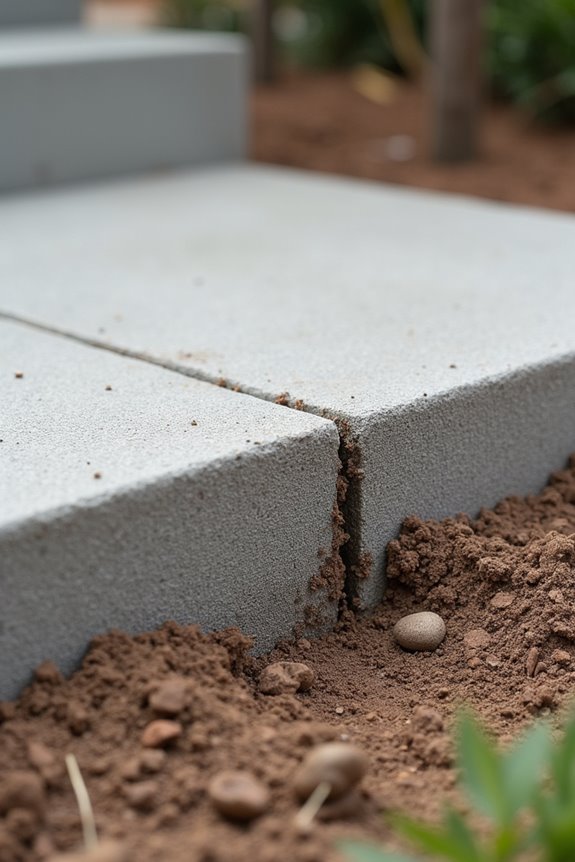
Why do some patios look like they’re doing the wave after just a few years? I’ve learned the hard way that cutting corners on concrete thickness and base preparation practically guarantees cracking prevention failures.
Cutting corners on concrete thickness and base preparation practically guarantees cracking prevention failures.
Here’s what I wish I’d known:
- Skipping proper base preparation — I once skipped the 3–6 inches of compacted gravel. Big mistake. Without it, differential settlement happens fast, and cracks follow.
- Going too thin — Using 4 inches when 6–8 inches was needed for my furniture setup created weak points that cracked within months.
- Ignoring reinforcement and control joints — Missing these invites cracks at vulnerable spots, especially under load.
The truth? Investing upfront in proper concrete thickness and solid base work saves you from expensive repairs later. Trust me on this one.
When to Get Professional Help With Patio Design
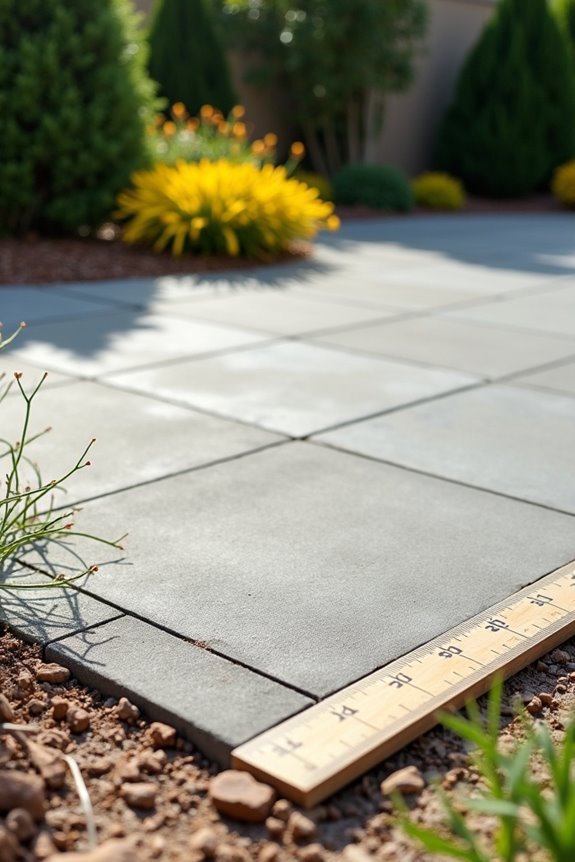
After I’d made all those thickness and base mistakes, I learned something else: knowing when to call a pro saves you from making even bigger ones. If you’re going beyond four inches or dealing with soft soil, don’t wing it—talk to someone who knows load-bearing requirements. A professional helps you pick the right thickness for heavy items like hot tubs or grills. They’ll also handle reinforcement details you might miss, like rebar placement. Think of it this way: spending a few hundred on consultation beats spending thousands fixing cracks later. Pros understand your local soil and weather too. They’re your safety net when thickness decisions get complicated.