
A standard 20-pound propane tank runs about 9–10 hours on high heat, but I’ve seen that plummet when wind kicks up or the temperature drops. The secret? I dial back to medium settings, throw up a wind shield, and stretch a single tank to 14–16 hours easily. Regular leak checks with soapy water catch fuel drains before they happen. Track your actual burn rates, and you’ll nail refill timing—no more scrambling mid-party for fresh tanks. Stick around and I’ll show you the exact math.
How Long Does a 20 Lb Propane Tank Really Last?
Ever find yourself wondering if you’ll have enough heat to get through an entire evening with friends? I’ve been there, watching that propane tank gauge nervously. Here’s what I’ve learned: a 20 lb tank holds roughly 430,000 BTUs of fuel. At high settings (48,000 BTU/hour), you’re looking at about 9 hours of continuous heat. Drop to a lower 41,000 BTU/hour setting, and you’ll stretch it to 10–11 hours. That’s real propane tank runtime you can count on.
I’ve noticed outdoor heater efficiency varies depending on how hard your unit works. Wind and cold snap drain tanks faster than calm, mild evenings. The good news? Mid-range settings can push your 20 lb tank toward 14–16 hours. Smart usage beats stressing about running out mid-party.
Three Factors That Cut Your Tank Life in Half: BTU Output, Wind, and Cold
Why does your propane tank sometimes last all evening and other times barely gets you through dinner? I’ve learned it’s not magic—it’s three culprits working against you.
First, BTU output matters hugely. I discovered that my 48,000 BTU heater burns propane twice as fast as a 24,000 BTU model on the same tank. That’s a real difference.
Wind is brutal too. I’ve watched my tank drain noticeably faster on breezy nights because the heater works overtime maintaining heat. Cold temperatures do the same thing—your heater expends more energy, shortening propane tank runtime considerably.
Here’s the reality: these three factors can cut your tank life in half. Understanding them helps you plan better. I now check the forecast and adjust my BTU settings accordingly, giving myself realistic expectations about how long I’ll actually stay warm outside.
Do the Math: Calculate Your Heater’s Runtime
How can you actually know if you’ll have enough propane to get through your backyard gathering? I’ll be honest—I used to just guess, which didn’t end well. Now I use a simple formula that’s saved me countless times.
Divide your propane tank’s total BTUs by your heater’s BTU/hour rating. That’s it. A standard 20-pound tank holds 430,000 BTUs. If your heater runs at 41,000 BTU/hour, you’re looking at roughly 10.5 hours of runtime. Want better efficiency? Drop to 75% power on a 48,000 BTU/hour model, and you’ll stretch that to 12+ hours.
This math takes minutes but prevents party disasters. I’ve learned that knowing your numbers upfront beats scrambling mid-event every single time.
Three Ways to Add 4–6 Hours Per Tank
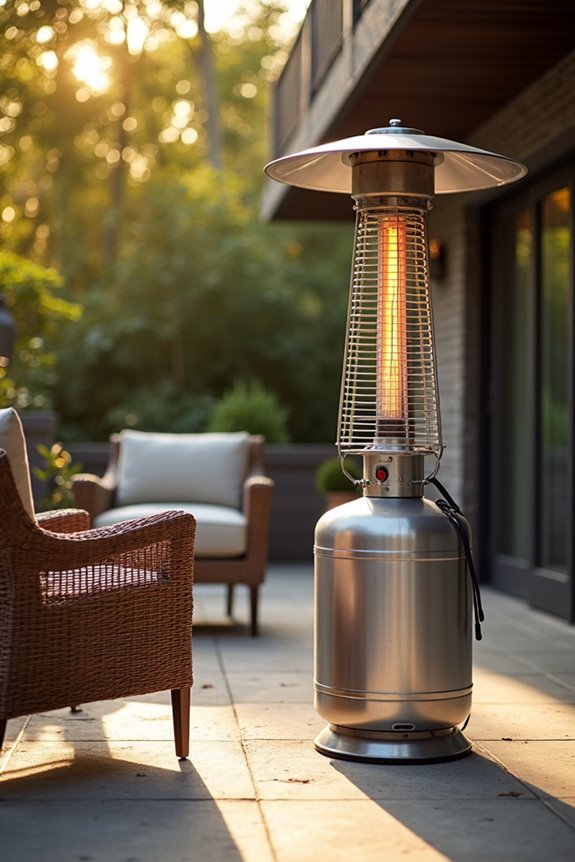
Now that you know your heater’s exact runtime, the real game-changer is figuring out how to squeeze an extra 4–6 hours from a single tank.
First, I’ve found that operating at mid-range output—around 25–30k BTU/hr instead of maxing out—dramatically extends your propane tank runtime. You’ll still feel the warmth without burning through fuel.
Second, wind shielding makes a huge difference. I learned this the hard way after watching my heater lose effectiveness on breezy evenings. A simple windbreak lets your BTU/hr work smarter, not harder.
Third, start on high to pre-warm your space, then lower the flame. This strategy, plus regular maintenance on your emitter grids, keeps everything running efficiently.
Between these tricks and keeping a spare tank handy, you’re genuinely adding hours to every outing.
What Propane Costs Per Hour
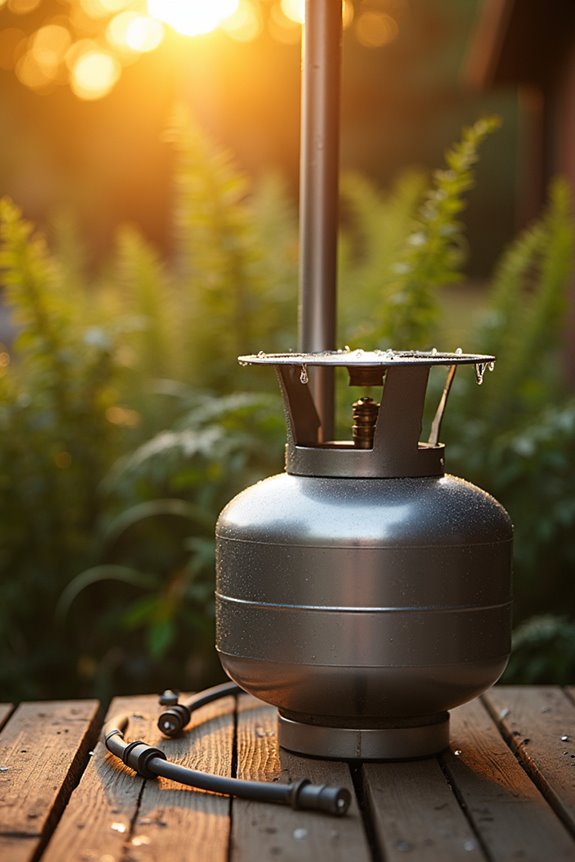
Now let’s talk money—because I’ll admit, I didn’t realize how much I was actually spending until I started tracking my patio heater bills. Running your heater on high burns through about $1.50 per hour, which adds up fast if you’re hosting weekend gatherings all season long. But here’s the good news: I’ve found that switching to medium settings or even just dropping the heat by a notch or two can cut your hourly costs substantially while still keeping you comfortable.
Operating Costs On High
When you crank your patio heater to maximum, you’re basically asking it to guzzle propane like there’s no tomorrow. I learned this the hard way during my first season. A 48,000 BTU/hour model burns through a 20-pound tank in about nine hours on high. Compare that to a 41,000 BTU/hour unit, which stretches runtime to roughly 10.5 hours. That’s a real difference in your wallet. Here’s what I didn’t expect: wind impact and cold temperatures actually increase propane consumption beyond those estimates. I’ve watched my tank drain faster on breezy nights than calm ones. If you’re serious about extending that runtime, dropping to mid-range settings stretches your propane further—I’m talking 14–16 hours instead. Small adjustments deliver big savings.
Budget-Friendly Medium Settings
If you’ve been watching your propane bill climb, medium settings might be your secret weapon. I’ve found that running my heater at 41,000 BTU/hr instead of maxing out makes a real difference in my wallet. You’ll stretch your propane tank runtime significantly while still staying comfortable.
| Setting | BTU/hr | Runtime | Cost/Hour |
|---|---|---|---|
| High | 48,000 | ~9 hours | $1.50 |
| Medium | 41,000 | ~10.5 hours | ~$1.30 |
| Medium (windy) | 41,000 | ~7-9 hours | Variable |
Medium settings deliver solid fuel efficiency without sacrificing warmth. Sure, wind impact cuts into your hours, but honestly? I’d rather extend my tank and enjoy more evenings outdoors than chase maximum heat. My strategy: pre-warm on high briefly, then dial back to medium. You’ll feel the difference in both comfort and cost.
Planning Seasonal Expenses
Once you’ve settled into that comfortable medium-heat sweet spot, you’ll want to think about what you’re actually spending over the season. I’ll be honest—I didn’t track my propane tank runtime at first and got sticker shock come fall. Here’s what I learned: at full blast, you’re looking at roughly $1.50 per hour. A refill runs about $15 per tank. By monitoring your usage patterns and understanding these cost estimates, you can budget smarter. I started keeping a simple log of when I refilled and noticed my seasonal expenses dropped substantially by running at 75% power instead. Stock a spare tank or two before peak season hits. Trust me, you’ll appreciate not scrambling for propane when friends are coming over.
Spot Leaks Before They Drain Your Tank
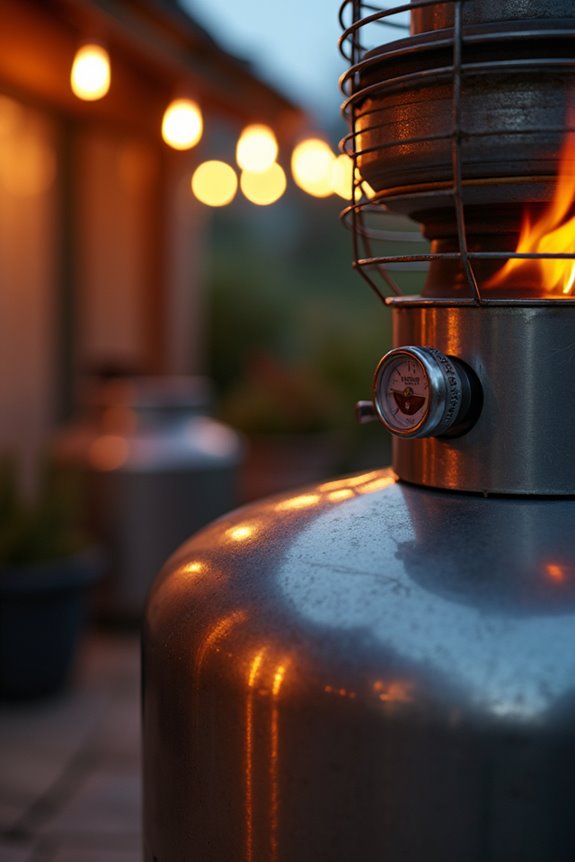
I’ve learned the hard way that catching leaks early saves both money and headaches—you can spot them yourself using simple methods like the soapy water trick, or bring in a pro if you’re hearing hisses and smelling gas. The key is checking your hoses, connections, and regulators regularly, and doing a leak test whenever you swap tanks or reconnect lines. I’ll walk you through each approach so you know exactly what to look for and when to call someone who’s got the right equipment.
Common Leak Detection Methods
How’d you know if your propane tank’s actually leaking? I’ll be honest—I missed one for weeks because I wasn’t paying attention. The easiest propane leak detection method? Grab some soapy solution and apply it to your hoses and regulators. Persistent bubbles mean gas is escaping. You’ll feel a little sheepish watching those telltale bubbles appear, trust me.
Listen for a hiss signal near your tank or heater—that’s your cue to stop immediately. I learned this the hard way. You can also grab a propane leak detector spray from any hardware store for extra confidence.
After reconnecting your tank, always check joints and valve seals with soapy water. It takes five minutes and saves headaches. If you suspect a leak, don’t ignite anything. Turn off the tank, open windows, and call a professional.
Visual Inspection Techniques
Now that you know how to spot leaks with soapy water and listen for that telltale hiss, let’s talk about what your eyes can catch before problems get worse.
I’ve learned that visual inspection is honestly your best friend when it comes to propane tank inspection. Here’s what I check every season:
- Housing and reflectors – I look for warping or damage that signals compromised seals
- Hoses and connections – Cracks and rust are dead giveaways of fuel waste
- Tank valve area – Dents or leaks here mean trouble
The emitter grid and burner venturi deserve attention too. Blockages and corrosion reduce efficiency and drain your tank faster. I also ensure the propane tank sits properly with clean connections.
These visual inspection techniques catch leaks detection issues early. Trust me, spending five minutes examining heater components beats watching your fuel mysteriously disappear.
Professional Testing and Repairs
While your visual inspections and soapy water tests’ll catch a lot of problems, sometimes you need a professional to spot what you can’t—and honestly, I learned this the hard way after spending a whole season thinking my heater was just inefficient. A technician can check things like burner alignment and regulator function that aren’t obvious to the naked eye. They’ll also verify your propane tank leaks aren’t hiding in sneaky spots. Professional testing catches issues before they waste fuel or create safety problems. I’d recommend scheduling service annually, especially before winter when you’re using your heater most. Yeah, it costs money upfront, but you’ll save way more by preventing propane tank leaks and keeping everything running smoothly. Think of it as insurance for your relaxing evenings outside.
Track Usage and Plan Refills Between Seasons
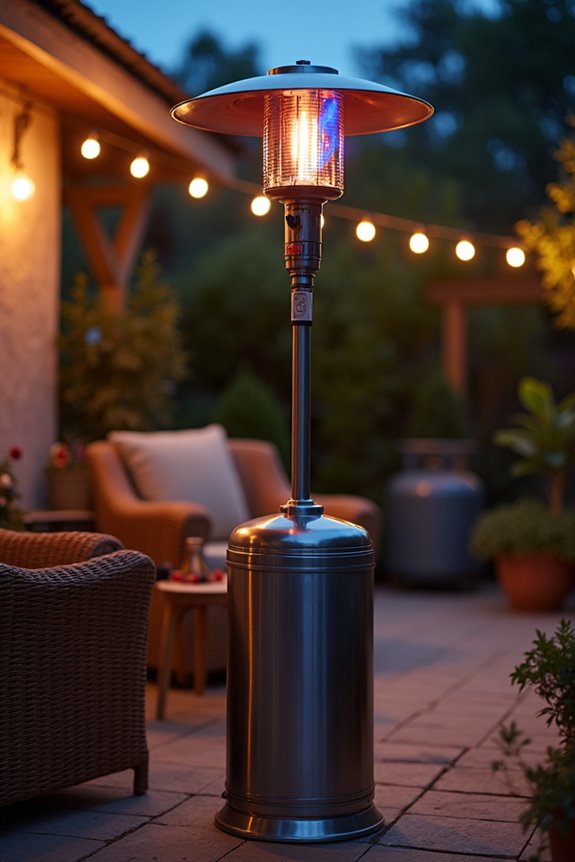
Ever wonder why your propane tank seems to empty faster some seasons than others? I’ve learned that tracking usage is game-changing. I now log my heater’s operating hours, settings, and conditions to predict when I’ll need refills.
Here’s my simple system:
- Record hours used at high or low settings each session
- Note environmental factors like wind exposure and temperature
- Calculate seasonal totals by multiplying expected event hours by your outdoor heater BTU consumption rate
A standard 20 lb propane tank lasts roughly 9–10 hours on a 48,000 BTU unit. By monitoring these patterns, I’ve stopped getting caught without fuel. I keep a spare tank handy too. Planning refills between seasons means I’m never scrambling mid-gathering.